Step-by-step guide
How to Make Kombucha at Home: 1 Gallon, First and Second Fermentation
As an Amazon Associate we earn from qualifying purchases. How we choose products.
On this page
To make kombucha at home, brew sweet tea, cool it below 95°F (35°C), add a SCOBY with its starter liquid, cover the jar with cloth, and leave it at room temperature for 7 to 10 days. A gallon batch uses about 1 cup of sugar and a few spoonfuls of tea. Then you bottle it, optionally flavor it in a second fermentation for a day or two, and refrigerate.
Kombucha sits next to wine in a home fermenter's kitchen, and it shares the wine rules: clean gear, a measured process, pressure you have to respect, and some alcohol you did not plan on. This guide follows the extension services rather than blog habit. The recipe is the kombucha tea recipe of the National Center for Home Food Preservation at the University of Georgia, the safety limits come from Virginia Tech and Kansas State, and the alcohol rules come from the federal Alcohol and Tobacco Tax and Trade Bureau (TTB). We did not run lab trials of our own.
What You Need to Make Kombucha
The equipment list is short and most of it is already in a winemaker's cupboard. The three things that matter are the culture, the tea and sugar, and a jar you can keep clean.
A SCOBY and Starter Liquid
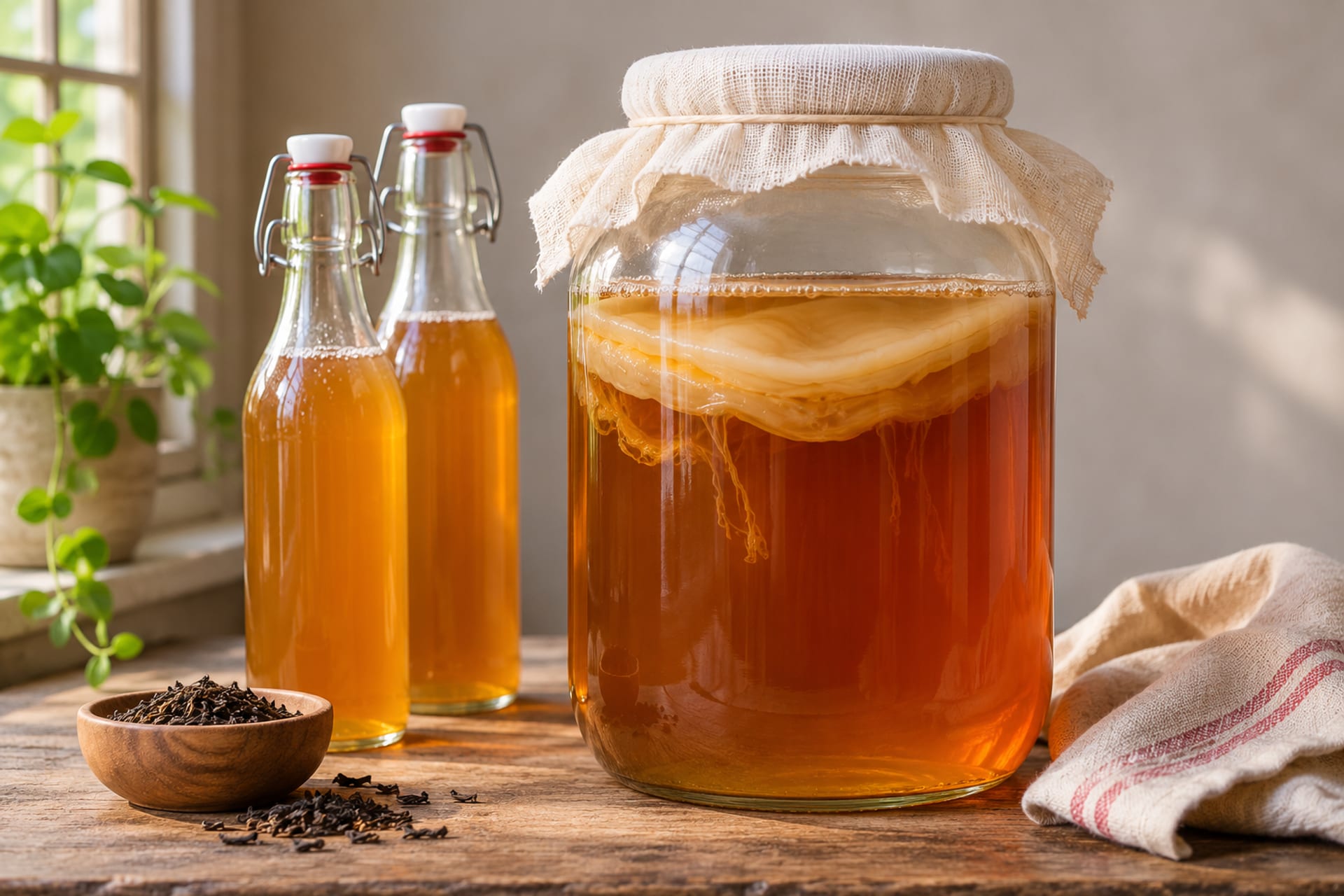
A SCOBY is a symbiotic culture of bacteria and yeast, the rubbery disk that floats in a brewing jar. Kansas State's Kombucha Fermentation fact sheet advises buying a commercial culture for the first batch, because it ensures consistency and safety, and says about 10 percent of the liquid from a previous batch works as the starter. Virginia Tech highly recommends buying the SCOBY commercially for the first use and says not to pass cultures from one person to another.
Tea and Sugar
The National Center recipe lists loose black tea at 3 tablespoons per gallon (or 6 tea bags), or green tea at 1/3 cup plus 2 tablespoons (or 13 tea bags), and 1 cup of granulated sugar. By our arithmetic that sugar is roughly 5 percent of the gallon by weight, which sits at the bottom of the 5 to 10 percent range Kansas State gives.
A Jar and the Rest of the Gear
You need a fermentation jar that holds the full gallon with room to spare, a food thermometer, pH strips, a paper towel, coffee filter or clean cheesecloth with a rubber band to cover the jar, and clean bottles. Virginia Tech says to ferment in a non metallic food grade container, and the University of Georgia's extension circular on homemade kombucha warns against glazed earthenware, which can leach heavy metals into an acidic brew. Clean everything with soap and warm water, then sanitize it by submerging it in water of at least 171°F (77°C) for at least 30 seconds, as the National Center instructs. Our guide to using Star San covers the no rinse sanitizer many winemakers use, but for kombucha the extension sources specify heat, so follow those first.
Kombucha Recipe, 1 Gallon
This is the National Center for Home Food Preservation recipe, with its figures as published. It makes a gallon in total: 4 cups of hot water for steeping plus 12 cups of cold water.
Recipe card
Kombucha, 1 gallon
- Makes
- 1 gallon
- Time to drink
- 35 minutes of preparation, 7 to 10 days of fermentation
- Difficulty
- Easy
Ingredients
- 1 gallon water, divided (4 cups hot, 12 cups cold)
- 3 tablespoons loose-leaf black tea (or 6 tea bags)
- 1 cup granulated sugar
- 1 SCOBY with its starter liquid (from a previous batch or the SCOBY package), pH 4.0 or lower
Method
- Wash your hands for at least 20 seconds, then clean the equipment and submerge it in water of at least 171°F (77°C) for at least 30 seconds.
- Test the starter liquid: dip a pH strip in a tablespoon of it. If the pH is above 4.0, do not make kombucha with it and get fresh starter liquid. Discard the tablespoon you tested.
- Heat 4 cups of water to 160 to 170°F (71 to 77°C) with a thermometer, then take the pot off the heat.
- Add the tea and steep for 2 minutes. Remove the tea bags, or pour through a strainer, into the fermentation jar.
- Add the sugar and stir until it dissolves.
- Add 12 cups of cold water and stir. Check that the tea is below 95°F (35°C) before the next step.
- Add the SCOBY and its starter liquid and stir well for 10 seconds.
- Cover the opening of the jar with a clean cloth, coffee filter or paper towel and secure it with a rubber band.
- Write the date on the jar. This is day 0.
- Leave it at room temperature, ideally 68 to 77°F (20 to 25°C), for 7 to 10 days.
- Pour the finished kombucha into clean, sanitized bottles or jars and refrigerate promptly. Use it within 30 days.
Quantities, temperatures and method from the kombucha tea recipe of the National Center for Home Food Preservation (University of Georgia). The recipe also lists a green tea alternative of 1/3 cup plus 2 tablespoons (13 tea bags).
First Fermentation
The first fermentation is the long one. The sweet tea turns sour as the culture works, and the same jar produces the kombucha you will either drink as it is or flavor later.
Time and Temperature
The National Center recipe says 7 to 10 days at room temperature, 68 to 77°F (20 to 25°C). Kansas State gives the same 7 to 10 days at room temperature. Virginia Tech says to ferment with air access, covered by cheesecloth or a coffee filter, and to refrigerate after 7 to 10 days with a tight fitting lid. That cover is why the lids in our guide to airlocks and fermentation lids belong to wine and not to this step.
How to Tell It Is Ready
Taste it after day 7. It should be tart rather than sweet, with a little less sugar taste than the day it went in. Taste is one signal; acidity is the one the safety sources care about. Virginia Tech says to monitor the pH with a calibrated meter during fermentation to ensure it gets to 4.2 or lower, and warns that it should not fall below 2.5, because it could become dangerously acidic. The National Center tests the starter liquid with a pH strip or litmus paper. Kansas State warns that excess fermentation can lower the acidity again, which lets harmful microorganisms grow, so do not leave a batch for weeks without checking.
Second Fermentation and Carbonation
The second fermentation is optional. It is where flavored, fizzy kombucha comes from, and it is also the stage where bottles get dangerous.
Adding Fruit and Flavor
Kansas State's steps are: remove the SCOBY and set it aside with some kombucha for the next batch, add chopped fruit, herbs or spices to clean bottles, fill them with the fermented kombucha leaving about one inch of space at the top, and cap them tightly. Leave the sealed bottles at room temperature for 1 to 3 days to infuse the flavors and develop carbonation, then refrigerate once the flavor and fizz are right. The National Center is more cautious: if you mix additional ingredients in after fermentation, drink the kombucha immediately or refrigerate it for up to two days.
Bottles Under Pressure
The National Center is blunt about the risk: storing kombucha in airtight containers can cause carbon dioxide to build up, potentially leading to an explosion if not regularly monitored. Treat every sealed bottle as under pressure. Keep the second fermentation short, keep the bottles somewhere a burst will not matter, and refrigerate at the end of the time. A plastic soda bottle is a practical test bottle because you can feel it harden as the gas builds, which is the same trick we use for ginger beer. If you want to use glass, our guide to bottling and corking wine covers what sturdy bottles and closures look like.
Is Homemade Kombucha Alcoholic?
Yes, a little. Kansas State says that fermentation of kombucha has the possibility of producing alcohol in the final product, and the yeast in the SCOBY is the reason: yeast turns sugar into alcohol and carbon dioxide.
The 0.5 Percent Line
The federal rule is written for commercial makers. TTB's kombucha information says that some kombucha products contain 0.5 percent or more alcohol by volume, and that a product reaching 0.5 percent at any point in production must be made on TTB qualified premises, even if the finished drink is below it. Kansas State puts the practical consequence this way: kombucha with 0.5 percent or more at any point in production, bottling or after bottling is an alcoholic beverage under federal law. It says producers must test with AOAC methods and keep specific gravity records for every batch.
Why It Rises in the Second Fermentation
TTB notes that fermentation may continue in the bottle after the product leaves the production facility, so the alcohol content may rise to 0.5 percent or more after bottling. Sealed bottles with added fruit sugar and warm storage are exactly that case. For a home brewer, the sensible reading is to treat a second fermented bottle as an alcoholic drink for children and for anyone who avoids alcohol, and to keep the second fermentation short and cold. We did not find a home alcohol test method in the extension sources, so we do not give a percentage for a home batch.
Keeping a SCOBY Hotel
A SCOBY hotel is the jar where you keep the culture between batches. The extension sources are short on this subject, so what follows is what they actually say.
What Goes in the Jar
Virginia Tech says to store the SCOBY refrigerated in a covered, cleaned and sanitized food grade container. Kansas State's steps say to remove the SCOBY after the first fermentation and set it aside with some kombucha for the next batch. That liquid is also your next starter, and the National Center requires it to have a pH of 4.0 or lower before you use it.
What Not to Do
Virginia Tech says not to reuse a SCOBY that smells unusual or shows signs of mold, and not to pass cultures between people. We did not find a feeding schedule for a long term hotel in the sources we opened. If a stored culture looks or smells wrong, replace it with a fresh one.
Kombucha Problems
Mold or Normal SCOBY
Virginia Tech's fact sheet shows what mold on a SCOBY looks like: white and blue mold, green and white mold, and brown powder mold. The Kansas State fact sheet photographs a brewing jar with a layer of SCOBY at the top, which is what a normal culture looks like. If you see mold, or the culture smells unusual, Virginia Tech says not to reuse the SCOBY. Throw out the batch and start again with a new culture.
Too Much Vinegar
A sharp, vinegar taste means the batch ran long. The extension sources give 7 to 10 days, so taste at the early end next time. Do not let the pH slide below 2.5, which Virginia Tech calls dangerously acidic. If you want to understand the acetic fermentation behind that sour taste, our guide to making wine vinegar explains it, although the sources we opened give no method for kombucha vinegar.
The Starter Fails the pH Test
The National Center is clear: if the starter liquid's pH is above 4.0, you need new and fresh starter liquid, otherwise the fermentation may be compromised. Test a tablespoon of it with a strip, discard that tablespoon afterward, and never pour it back.
Kombucha starter kits, a SCOBY and bottles
A first batch needs a live culture and a jar. These are the starting points, and the bottle is for the second fermentation.
-
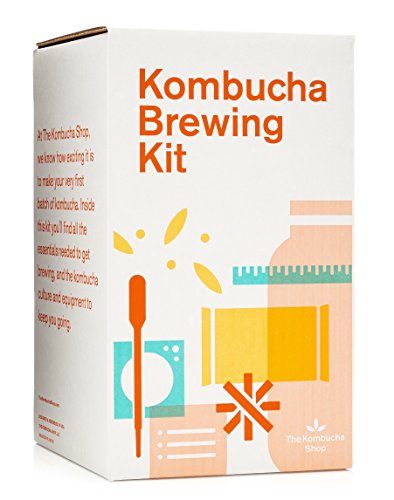
1Best complete kit
The Kombucha Shop Organic Kombucha Starter Kit, 1 Gallon
A 1 gallon brewing kit sold with the essentials for a first batch, matching the gallon recipe above.
-
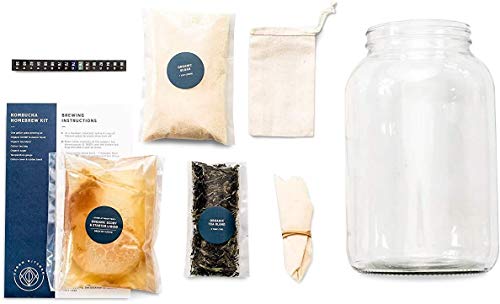
2Kit with a glass jar
Urban Kitchen Kombucha Starter Kit
Lists an organic SCOBY, starter liquid and a 1 gallon glass jar in the title, so the jar and the culture come together.
-
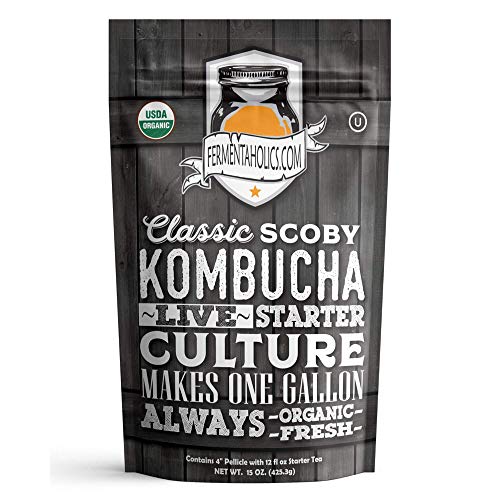
3SCOBY only
Fermentaholics Organic Kombucha SCOBY with Twelve Ounces of Starter Tea
For someone who already has a jar: a live culture sold with 12 ounces of starter tea.
-
4Pressure bottles
SodaStream 1L Carbonating Bottles, 2 pack
Reusable plastic bottles built to hold carbonation, which let you feel the pressure during a second fermentation.

Wine is for adults of legal drinking age. Enjoy it responsibly.