Buying guide
Best Cider Press for Home Use: Five Apple Presses Compared
As an Amazon Associate we earn from qualifying purchases. How we choose products.
On this page
The best cider press for most home cider makers is a 4.75 gallon wooden basket press with a screw, such as the EJWOX below: big enough for a bushel day, simple to clean, and in the mid-range tier. If you only press a gallon or two at a time, a 1.6 gallon basket press does the job for much less. If you press several bushels every fall, a hydraulic press saves your arms.
Whatever you buy, the press is only half of the job. Apples have to be ground into pulp before they give up their juice, and that step decides your yield more than the press does. Below we compare five cider presses, explain how to match the basket to your batch, and cover the grinder and bags you will need. We did not test these presses; we compared the manufacturer listings with published extension guidance, and we say which is which. If you are pressing grapes rather than apples, our guide to the best wine press is the better starting point.
Editor's Choice
EJWOX 4.75 Gallon Fruit and Wine Press, Beech Wood Basket
A classic screw basket press with a solid beech basket, a heavy stand with a pour spout and a breakaway basket for fast pulp removal. It is the right size for a bushel of apples in a few loads.
-
Best for small batches
VEVOR 1.6 Gallon Fruit Wine Press
A compact beech basket press with pressing blocks and two filter bags, sized for one gallon at a time.
-
Best stainless steel basket
EJWOX Fruit Wine Press 3.69 Gal, Stainless Steel
A stainless basket and a large Acme screw with a T-handle, for people who want easy sanitizing.
-
Best press and crusher in one
EJWOX Fruit Wine Press and Crusher
A 304 stainless crusher on the same frame as the press, so you grind and press with one machine.
-
Best hydraulic cider press
Mosakar 7.93 Gallon Hydraulic Fruit Press, 3 Ton
Three tons of pressure and 304 stainless parts wherever the juice touches, for big harvests.
Cider Presses Compared
Details below are what each listing states. Where a listing does not give a figure, we say so. Price tiers are market tiers, not the price of the day; the button shows the current price.
| Press | EJWOX 4.75 Gal Wood Editor's Choice | VEVOR 1.6 Gal | EJWOX 3.69 Gal Steel | EJWOX Press and Crusher | Mosakar Hydraulic |
|---|---|---|---|---|---|
| Product |  |  | 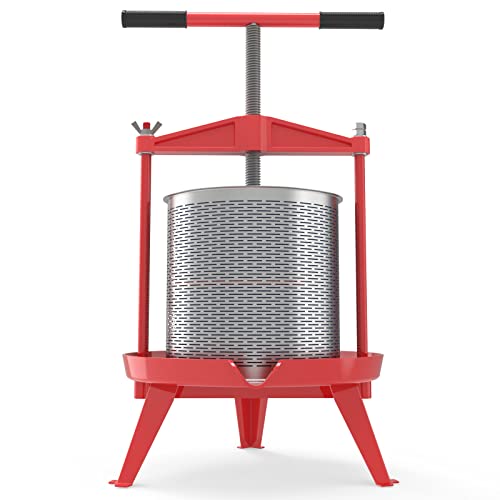 | 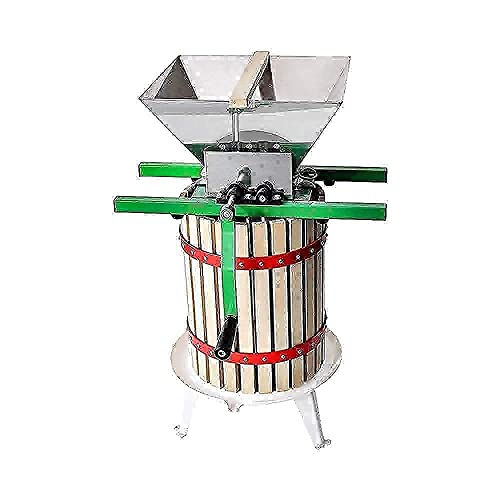 |  |
| Basket | 4.75 gal, beech wood | 1.6 gal (6 L), beech wood | 3.69 gal (14 L), stainless | Not stated, stainless | 7.93 gal (30 L), stainless |
| Mechanism | Screw, metal handle | Screw, long handle | Acme screw, T-handle | Screw, metal handle | Hydraulic, 3 tons |
| Crusher included | No | No | No | Yes | No |
| Bags included | Not stated | 2 filter bags | Not stated | Not stated | Not stated |
| Weight | 26 lb | 15.9 lb | Not stated | Not stated | 66 lb |
| Best for | A bushel day | 1 gallon batches | Easy sanitizing | One machine for both jobs | Several bushels a season |
| Price tier | $$ | $ | $$ | $$ | $$$ |
| Buy | Check price on Amazon | Check price on Amazon | Check price on Amazon | Check price on Amazon | Check price on Amazon |
Editor's Choice
EJWOX 4.75 Gal Wood
- Best for
- A bushel day
Show specificationsHide specifications
- Basket
- 4.75 gal, beech wood
- Mechanism
- Screw, metal handle
- Crusher included
- No
- Bags included
- Not stated
- Weight
- 26 lb
- Best for
- A bushel day
- Price tier
- $$
VEVOR 1.6 Gal
- Best for
- 1 gallon batches
Show specificationsHide specifications
- Basket
- 1.6 gal (6 L), beech wood
- Mechanism
- Screw, long handle
- Crusher included
- No
- Bags included
- 2 filter bags
- Weight
- 15.9 lb
- Best for
- 1 gallon batches
- Price tier
- $
EJWOX 3.69 Gal Steel
- Best for
- Easy sanitizing
Show specificationsHide specifications
- Basket
- 3.69 gal (14 L), stainless
- Mechanism
- Acme screw, T-handle
- Crusher included
- No
- Bags included
- Not stated
- Weight
- Not stated
- Best for
- Easy sanitizing
- Price tier
- $$
EJWOX Press and Crusher
- Best for
- One machine for both jobs
Show specificationsHide specifications
- Basket
- Not stated, stainless
- Mechanism
- Screw, metal handle
- Crusher included
- Yes
- Bags included
- Not stated
- Weight
- Not stated
- Best for
- One machine for both jobs
- Price tier
- $$
Mosakar Hydraulic
- Best for
- Several bushels a season
Show specificationsHide specifications
- Basket
- 7.93 gal (30 L), stainless
- Mechanism
- Hydraulic, 3 tons
- Crusher included
- No
- Bags included
- Not stated
- Weight
- 66 lb
- Best for
- Several bushels a season
- Price tier
- $$$
Cider Press Reviews
Each review sticks to what the listing states and what the published guidance says about pressing apples. They run from our first pick to the most specialized.
EJWOX 4.75 Gallon Fruit and Wine Press (Editor's Choice)
This is the traditional cider press shape: a slatted wooden basket on a cast stand, a pressing plate and a screw you turn with a metal handle. The listing describes a solid red beech basket with a breakaway design, so you can open it and drop the pressed pomace out between loads instead of digging it out. The stand has a built-in pour spout and screw holes in each foot, which the listing suggests for mounting it to a board or bench.
The 4.75 gallon basket is the reason we put it first. At Missouri Extension's figure of about three gallons of juice per 42 lb bushel, a bushel of ground apples goes through this press in a few loads. That makes it the right size for a backyard tree or a few bushels bought from an orchard. The listing gives the press as 27.6 inches tall and 26 lb, so it fits on a sturdy table.
The listing does not mention bags. Buy a pair of fine mesh bags with it; they keep pulp out of the juice and make emptying the basket faster.
Best for: a bushel or two of apples in an afternoon. Missing: a crusher, and bags on the listing.
VEVOR 1.6 Gallon Fruit Wine Press (Best for Small Batches)
If your plan is a gallon or two of cider at a time, this is the press to start with. The listing describes a 6 liter (1.6 gallon) beechwood basket on a triangular base, one thick pressing block plus eight supporting blocks, and two food grade filter bags in the box. The blocks matter: as the pulp compresses, you stack blocks under the screw so you can keep pressing without running out of thread.
The listing is clear that hard fruits must be crushed before pressing, which is true of every press here. A food processor in batches is enough for a gallon's worth of apples, as Oregon State University Extension suggests for small batches.
Expect several loads for a bushel. That is fine for a first season, and it is the cheapest way to find out whether you enjoy pressing before you buy something bigger.
Best for: 1 gallon batches and first timers. Missing: the capacity for a bushel day.
EJWOX Fruit Wine Press 3.69 Gal, Stainless Steel (Best Stainless Steel Basket)
A stainless basket is the easy choice if cleaning bothers you. Wood needs to be scrubbed, dried and stored well or it can grow mold between seasons; stainless steel can be sanitized like the rest of your gear. The listing describes a food grade stainless pressing basket of 14 liters (3.7 gallons), a powder coated frame, and a heavy T-handle turning a large diameter Acme screw that it says creates high pressure with little effort.
The basket detaches from the plate for cleanup, according to the listing. It is a little smaller than our first pick, so a bushel takes an extra load, but the T-handle is easier on the wrists than a single bar.
Best for: people who want to sanitize the basket and put it away clean. Missing: a stated weight, and bags on the listing.
EJWOX Fruit Wine Press and Crusher (Best Press and Crusher in One)
This one solves the grinding problem. The listing describes a crusher and a press on one frame, made of 304 grade stainless steel with an iron frame and table mount, and lists apples, pears and grapes among the fruit it handles. It describes the crushed apple pulp as averaging about a quarter inch, which is the coarse texture you want for pressing.
The trade-off is that the listing does not state the basket capacity, so check the photos and questions on the listing before you plan a big pressing day around it. If you already own a press, our grape crusher guide covers crushers you can add, including ones that handle apples.
Best for: anyone without a grinder who wants one machine for the whole job. Missing: a stated basket size.
Mosakar 7.93 Gallon Hydraulic Fruit Press (Best Hydraulic Cider Press)
A hydraulic press uses a bottle jack instead of a screw. The listing gives 3 tons of pressure, a 30 liter (7.93 gallon) basket, and AISI 304 stainless steel for every part that touches the juice: the drain pan, the basket and the pressing plate. The frame is powder coated. At 66 lb and 30 inches tall, per the listing, it is a piece of equipment you set up once for the season, not something you lift onto the counter.
The extra pressure squeezes more juice out of each load with far less effort than turning a screw, and the larger basket means fewer loads per bushel. It only pays for itself if you press several bushels every fall. For a single tree, a screw press is enough.
Best for: several bushels a season, or pressing with friends. Missing: a crusher, and a price that suits occasional use.
How to Choose a Cider Press
Match the Basket to Your Apples
Start from how many apples you have. Missouri Extension puts a bushel at about 42 lb and about three gallons of juice, which works out to roughly 14 lb per gallon. The basket rating on a listing is the volume of pulp it holds per load, not the juice you get out of it. A small 1.6 gallon press suits one gallon batches; a 4 to 5 gallon basket suits a bushel day; a hydraulic press with a 7 to 10 gallon basket suits several bushels.
Wood or Stainless Steel
Wood baskets are the traditional look and work well. They need scrubbing, a thorough dry and dry storage, or they can grow mold between seasons. Stainless baskets clean and sanitize like the rest of your gear and do not hold smells, which matters if you also press grapes or berries. Either way, the juice should run onto stainless or a food safe tray, not bare metal.
Screw, Ratchet or Hydraulic
All the screw presses here press by turning a threaded shaft against the pressing plate. A T-handle spreads the effort over two hands. Ratchet presses, common on grape presses, let you pump a lever instead of turning a full circle. Hydraulic presses use a bottle jack and give the most pressure for the least effort. More pressure means drier pomace from each load, which adds up over a bushel.
You Need a Grinder Too
Oregon State University Extension says grinding is necessary to release the juice from apples. For small batches it suggests quartering unpeeled apples and running them through a kitchen food grinder or food processor. For larger batches, a cider mill with a crusher or grinder is faster. A grape crusher with rollers will not do the same job on hard apples unless it is built for them, so check the listing.
Bags and Racks
Press inside a mesh bag. It holds the pulp together, keeps bits out of the juice and turns emptying the basket into lifting out a bag. Oregon State also suggests straining the juice through a clean cloth as it drips into the pan. Bigger traditional presses use stacked racks and cloths instead of a basket, a rack and cloth setup that presses the pulp in thin layers.
Renting or Borrowing
Oregon State notes that cider mills with crushers can be rented or borrowed. If you only press once a year, ask your local homebrew shop or orchard before buying. Many clubs share a press.
Add these to any cider press
Bags are the one accessory no press here does without.
-
1Press bags
Bellamei Brew Bag, 2 Pack, 22 x 26 in
Two reusable 250 micron nylon bags with drawstrings; the listing names cider and wine press straining among the uses.

How to Use a Cider Press
- Wash and sort the apples, cutting out rot and damage. For sweet cider, use apples picked from the tree.
- Grind them into coarse pulp, and let it stand 30 minutes to an hour; Oregon State says that gives more juice.
- Line the basket with a mesh bag and fill it with pulp, leaving room to fold the bag over.
- Press slowly and evenly. Turn the screw until the flow slows, wait a few minutes for the pulp to drain, and turn again. Add blocks as the plate drops.
- Empty and repeat. Lift out the bag, tip the pomace onto the compost, and load the next batch.
- Clean the press the same day. Apple sugar left on wood or steel attracts wasps and mold.
Then decide what the juice is for. Our step by step guide on how to make cider from apples covers blending, pasteurizing sweet cider and how long it keeps, and our hard cider recipe covers fermenting it.
Cider Press or Wine Press?
They are the same machine with different priorities. Every press on this page is sold for fruit and wine as well as apples. A grape press works well for apples if you grind the apples first and choose a basket big enough for your harvest. The differences are in the extras: apple pressing needs a grinder, more pressure and bigger bags, while grape pressing often happens after fermentation, with red wine skins. If you press both, a stainless basket is the better all-rounder. See our guide to the best wine press for grape-focused picks.
Wine and cider are for adults of legal drinking age. Enjoy them responsibly.