Buying guide
Best Wine Yeasts
As an Amazon Associate we earn from qualifying purchases. How we choose products.
On this page
The best wine yeast is the one bred for the wine you are making. For an all-round strain that finishes almost any must, Lalvin EC-1118 is the default: its maker rates it to 18% alcohol and 50 to 86°F. For reds, Lalvin RC212 is the Pinot Noir specialist and Red Star Premier Rouge suits Cabernet Sauvignon, Merlot and Zinfandel; for whites, Lalvin ICV D47 builds body in Chardonnay; and for fruit wines, Red Star Côte des Blancs and Lalvin 71B keep the fruit aromas.
Every number on this page comes from the yeast makers’ own data sheets: Lallemand for the Lalvin strains and Lesaffre’s Fermentis division for Red Star. Wild yeast can ferment wine too, but a cultured strain tells you in advance how strong, how fast and how clean the fermentation will be. If you are new to winemaking, start with our guide on how to make homemade wine.
Editor's Choice
Lalvin EC-1118 Wine Yeast (10 pack)
The safest all-round wine yeast: up to 18% alcohol, 50 to 86°F, low nutrient needs and a fast, neutral fermentation. It is also the strain most winemakers reach for to restart a stuck batch.
-
Best for red wine
Red Star Premier Rouge (10 pack)
Selected for full-bodied reds: Cabernet Sauvignon, Merlot, Cabernet Franc and Zinfandel.
-
Best for fruit wine
Red Star Côte des Blancs (10 pack)
Fine, fruity aromas; its maker recommends it for non-grape fruit wines, especially apple.
Best Wine Yeasts Compared
Nine strains cover almost every home wine. Alcohol tolerance and temperature range are the two numbers to check first: a strain stops near its tolerance, and outside its range it either stalls or produces off flavors. The first four tolerate 16 to 18% alcohol and suit a wide range of wines; the other five were each selected for a particular style.
All-Round and High-Alcohol Strains
| Wine Yeast | Lalvin EC-1118 Editor's Choice | Lalvin K1-V1116 | Red Star Premier Blanc | Red Star Premier Cuvée |
|---|---|---|---|---|
| Product |  |  | 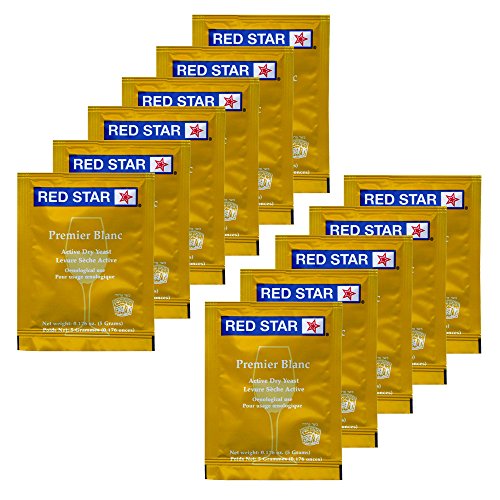 |  |
| Alcohol tolerance | 18% | 18% | Up to 18% | Up to 16% |
| Temperature | 50 to 86°F (10 to 30°C) | 50 to 95°F (10 to 35°C) | 50 to 95°F (10 to 35°C) | 50 to 95°F (10 to 35°C) |
| Nutrient needs | Low | Moderate | Low | Very low |
| Character | Neutral, fast | Fresh, floral esters | Clean, very fast | Neutral, fast |
| Best for | All-round, restarts | Crisp whites, rosé | High-alcohol wines, restarts | Sparkling, dry whites |
| Price | $ | $ | $ | $ |
| Buy | Check price on Amazon | Check price on Amazon | Check price on Amazon | Check price on Amazon |
Editor's Choice
Lalvin EC-1118
- Best for
- All-round, restarts
Show specificationsHide specifications
- Alcohol tolerance
- 18%
- Temperature
- 50 to 86°F (10 to 30°C)
- Nutrient needs
- Low
- Character
- Neutral, fast
- Best for
- All-round, restarts
- Price
- $
Lalvin K1-V1116
- Best for
- Crisp whites, rosé
Show specificationsHide specifications
- Alcohol tolerance
- 18%
- Temperature
- 50 to 95°F (10 to 35°C)
- Nutrient needs
- Moderate
- Character
- Fresh, floral esters
- Best for
- Crisp whites, rosé
- Price
- $
Red Star Premier Blanc
- Best for
- High-alcohol wines, restarts
Show specificationsHide specifications
- Alcohol tolerance
- Up to 18%
- Temperature
- 50 to 95°F (10 to 35°C)
- Nutrient needs
- Low
- Character
- Clean, very fast
- Best for
- High-alcohol wines, restarts
- Price
- $
Red Star Premier Cuvée
- Best for
- Sparkling, dry whites
Show specificationsHide specifications
- Alcohol tolerance
- Up to 16%
- Temperature
- 50 to 95°F (10 to 35°C)
- Nutrient needs
- Very low
- Character
- Neutral, fast
- Best for
- Sparkling, dry whites
- Price
- $
Strains for a Specific Wine Style
| Wine Yeast | Lalvin RC212 | Red Star Premier Rouge | Lalvin ICV D47 | Lalvin 71B | Red Star Côte des Blancs |
|---|---|---|---|---|---|
| Product |  |  | 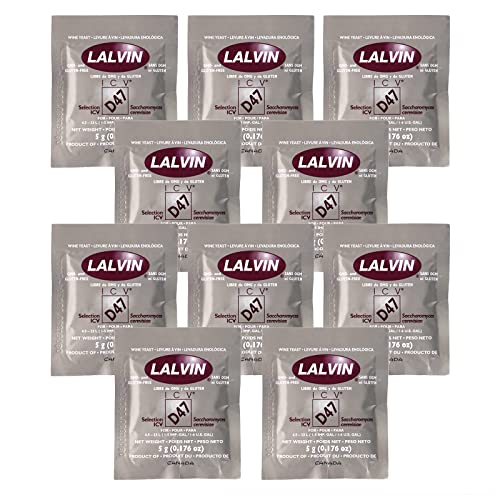 |  |  |
| Alcohol tolerance | 16% | Up to 15% | 15% | 14% | Not stated |
| Temperature | 64 to 86°F (18 to 30°C) | 64 to 86°F (17 to 30°C) | 59 to 82°F (15 to 28°C) | 59 to 86°F (15 to 30°C) | 64 to 86°F (17 to 30°C) |
| Nutrient needs | High | Not stated | Low | Low | Add for Chardonnay |
| Character | Ripe cherry, spice | Varietal fruit, complex | Body, citrus, tropical | Fruity esters, softer acid | Fine, fruity aromas |
| Best for | Pinot Noir | Cabernet, Merlot, Zinfandel | Chardonnay, full whites | Rosé, semi-sweet, fruit | Fruit wines, apple |
| Price | $ | $ | $ | $ | $ |
| Buy | Check price on Amazon | Check price on Amazon | Check price on Amazon | Check price on Amazon | Check price on Amazon |
Lalvin RC212
- Best for
- Pinot Noir
Show specificationsHide specifications
- Alcohol tolerance
- 16%
- Temperature
- 64 to 86°F (18 to 30°C)
- Nutrient needs
- High
- Character
- Ripe cherry, spice
- Best for
- Pinot Noir
- Price
- $
Red Star Premier Rouge
- Best for
- Cabernet, Merlot, Zinfandel
Show specificationsHide specifications
- Alcohol tolerance
- Up to 15%
- Temperature
- 64 to 86°F (17 to 30°C)
- Nutrient needs
- Not stated
- Character
- Varietal fruit, complex
- Best for
- Cabernet, Merlot, Zinfandel
- Price
- $
Lalvin ICV D47
- Best for
- Chardonnay, full whites
Show specificationsHide specifications
- Alcohol tolerance
- 15%
- Temperature
- 59 to 82°F (15 to 28°C)
- Nutrient needs
- Low
- Character
- Body, citrus, tropical
- Best for
- Chardonnay, full whites
- Price
- $
Lalvin 71B
- Best for
- Rosé, semi-sweet, fruit
Show specificationsHide specifications
- Alcohol tolerance
- 14%
- Temperature
- 59 to 86°F (15 to 30°C)
- Nutrient needs
- Low
- Character
- Fruity esters, softer acid
- Best for
- Rosé, semi-sweet, fruit
- Price
- $
Red Star Côte des Blancs
- Best for
- Fruit wines, apple
Show specificationsHide specifications
- Alcohol tolerance
- Not stated
- Temperature
- 64 to 86°F (17 to 30°C)
- Nutrient needs
- Add for Chardonnay
- Character
- Fine, fruity aromas
- Best for
- Fruit wines, apple
- Price
- $
Wine Yeast Reviews
Each review sums up what the maker says the strain was selected for and how it behaves, then who it suits. Every yeast here comes in 5 gram sachets, and one sachet is enough for a batch of one to six gallons.
Lalvin EC-1118 (Editor's Choice)
EC-1118 is the original Prise de Mousse strain, selected in France’s best-known sparkling wine region for base wines and second fermentation in the bottle. Lallemand lists an alcohol tolerance of 18%, a range of 10 to 30°C (50 to 86°F), low nutritional needs and a fast fermentation rate, and describes its sensory contribution as neutral. It ferments well at low temperatures and settles into very compact lees, which makes racking cleaner.
That combination is why it is the default for fruit wines, high-gravity musts and restarting a fermentation that stopped early. One trade-off is worth knowing: Lallemand notes that under low nutrient conditions EC-1118 can produce up to 30 ppm of SO2, enough to hold back a malolactic fermentation. It ferments to dryness, so plan to backsweeten if you want a sweeter wine.
Best for: fruit wines, strong wines, restarts and anyone who wants one yeast that rarely fails.
Lalvin K1-V1116
Isolated in 1972 at INRA Montpellier, V1116 (better known as K1) keeps the fresh fruit of white grapes for longer than a neutral yeast. Lallemand says that fermented below 16°C (61°F) with the right nutrients it is one of the more floral ester producers, and that among high ester producers it is the most resistant to difficult conditions such as low temperature. The specs match EC-1118 on strength, 18%, with a wider range of 10 to 35°C (50 to 95°F).
It is a strong competitor in the must and is not compatible with malolactic bacteria, so it suits crisp whites, rosé and fruit wines where you want to keep the acidity bright.
Best for: crisp whites, rosé, aromatic fruit wines and cool fermentations.
Red Star Premier Blanc
Premier Blanc, selected by the Pasteur Institute in Paris, is Red Star’s workhorse. Fermentis describes it as an all-purpose, particularly strong strain with very high alcohol tolerance (up to 18%), very fast kinetics, a wide 10 to 35°C range and low nutrient requirements. Its ability to use fructose, the sugar left over when a fermentation slows, makes it one of the strains Fermentis recommends for sluggish and stuck fermentations.
Despite the name it is not only for whites: Fermentis lists high-alcohol whites and reds and sparkling wines, and the Amazon listing adds cider, fruit wines, mead and port.
Best for: high-alcohol wines, ciders and meads, and rescuing a fermentation that has stopped.
Red Star Premier Cuvée
Lesaffre calls Premier Cuvée one of the fastest, cleanest and most neutral strains in the Red Star range. The Fermentis sheet lists a 10 to 35°C range, tolerance up to 16%, very low nitrogen needs and a killer factor, which means it suppresses wild yeasts in the must. It ferments to dryness and settles well.
The maker recommends it for all wines, red, white and sparkling, with a particular eye on dry whites and traditional-method sparkling, where it brings the bread crust and hazelnut notes of Champagne-style wines. It is also on Fermentis’s list for restarting stuck fermentations.
Best for: dry whites, sparkling wines and a neutral, reliable red or white.
Lalvin RC212 (Bourgovin)
RC212 was selected in Burgundy by the BIVB, the Burgundy wine board, to extract and protect the polyphenols of Pinot Noir. Because few of those color compounds stick to its cell walls, Lallemand says there is limited color loss and the structure holds during aging, with ripe cherry, bright fruit and spicy notes. It tolerates 16% alcohol.
It is a demanding yeast at home: Lallemand lists a minimum of 18°C (64°F) and high nutrient needs, warning that without enough nutrient it can produce sulfide (rotten egg) smells. Keep the fermenter warm and add yeast nutrient.
Best for: Pinot Noir, Grenache and Cabernet Franc.
Red Star Premier Rouge
Premier Rouge, sold for years as Pasteur Red, comes from the Institut Pasteur collection in Paris. Fermentis describes a strong fermenter with medium speed, alcohol resistance up to 15% and a range of 17 to 30°C (64 to 86°F), and says it develops varietal fruit balanced by complex aromas, especially with grapes from the Cabernet family.
The maker names Cabernet Sauvignon, Merlot, Cabernet Franc and Zinfandel, and adds that it gives character to less robust red grapes or those picked before they were fully ripe, which is useful for home growers in cooler regions.
Best for: full-bodied reds, especially Cabernet Sauvignon and Merlot.
Lalvin ICV D47
D47 is a Côtes du Rhône isolate chosen for full-bodied, barrel-fermented Chardonnay. Lallemand describes it as a high polysaccharide producer, which is what gives the wine volume and a silky feel, and says that left on its lees it develops ripe, spicy aromas with tropical and citrus notes. It tolerates 15% alcohol and works between 15 and 28°C (59 and 82°F), the narrowest top end of any strain here, so keep the fermenter out of warm rooms.
Lallemand pairs it with Pinot Gris, Riesling, Roussanne, Sauvignon Blanc and Viognier as well as Chardonnay.
Best for: Chardonnay and fuller-bodied whites.
Lalvin 71B
Isolated by INRAE in Narbonne, 71B is Lallemand’s strain for fresh, fruity young wines, blush and semi-sweet wines with tropical fruit character. Its esters are relatively stable, so the fruit lasts, and it partially metabolizes malic acid, which softens high-acid musts such as many fruit wines. Tolerance is 14% and the range 15 to 30°C (59 to 86°F).
Lallemand rates its competitive factor as sensitive, so give it a clean, sulfited must and a healthy start. It pairs with rosé-style Cabernet Franc, Pinot Gris, Riesling and Viognier.
Best for: rosé, off-dry whites and tart fruit wines.
Red Star Côte des Blancs
Côte des Blancs comes from a Geisenheim Institute selection in Germany and is identical to Geisenheim Epernay, according to Lesaffre’s data sheet. It is a relatively slow fermenter that produces fine, fruity aromas, and Lesaffre notes it can be slowed by lowering the temperature so the wine finishes with some residual sugar. It works best between 17 and 30°C (64 and 86°F) and is sensitive below 13°C (55°F).
The maker recommends it for reds, whites, sparkling cuvées and non-grape fruit wines, especially apple, and says Chardonnay needs a nutrient addition with this strain. The sheet does not give an alcohol tolerance, so for very sweet musts pick a stronger strain.
Best for: apple, peach, berry and other fruit wines with a fruity finish.
Wine Yeast Strains Compared: The Makers’ Specs
The table below gathers the numbers from each data sheet in one place, with a link to the source.
| Strain | Alcohol tolerance | Temperature range | Selected for | Source |
|---|---|---|---|---|
| Lalvin EC-1118 | 18% | 10 to 30°C (50 to 86°F) | Sparkling base and secondary fermentation; a neutral, fast all-rounder for reds, whites, fruit and cider | Lallemand |
| Lalvin K1-V1116 | 18% | 10 to 35°C (50 to 95°F) | Fresh, crisp whites; floral esters below 16°C; icewine, rosé and basic reds | Lallemand |
| Red Star Premier Blanc | Up to 18% | 10 to 35°C (50 to 95°F) | High-alcohol whites and reds, sparkling wine, sluggish and stuck fermentations | Fermentis |
| Red Star Premier Cuvée | Up to 16% | 10 to 35°C (50 to 95°F) | All wines; dry whites and sparkling; restarting stuck fermentations | Fermentis |
| Lalvin RC212 | 16% | 18 to 30°C (64 to 86°F) | Pinot Noir with color and structure; also Grenache and Cabernet Franc | Lallemand |
| Red Star Premier Rouge | Up to 15% | 17 to 30°C (64 to 86°F) | Full-bodied reds: Cabernet Sauvignon, Merlot, Cabernet Franc, Zinfandel | Fermentis |
| Lalvin ICV D47 | 15% | 15 to 28°C (59 to 82°F) | Full-bodied Chardonnay and other whites; pairs with Pinot Gris, Riesling, Sauvignon Blanc and Viognier | Lallemand |
| Lalvin 71B | 14% | 15 to 30°C (59 to 86°F) | Fruity young wines, blush and semi-sweet; softens high-acid musts | Lallemand |
| Red Star Côte des Blancs | Not stated | 17 to 30°C (64 to 86°F) | Fruity whites, reds, sparkling and non-grape fruit wines, especially apple | Lesaffre |
Two practical rules follow from the table. A strain stops when the alcohol reaches its tolerance, so a low-tolerance yeast such as 71B in a very sugary must can leave the wine sweet and unstable. And a fermentation outside the temperature range either stalls (too cold) or stresses the yeast and produces off flavors (too hot), so match the strain to where the fermenter will actually sit.
Which Yeast for Which Grape or Fruit?
The makers pair their strains with specific grapes. This chart follows those pairings; where a maker does not name a grape, the strain is matched by style.
| Wine | Strain to start with | Why |
|---|---|---|
| Pinot Noir | Lalvin RC212 | Selected in Burgundy specifically for Pinot Noir color and structure |
| Cabernet Sauvignon, Merlot, Zinfandel | Red Star Premier Rouge | The maker names these reds and the Cabernet family |
| Cabernet Franc, Grenache | Lalvin RC212 or Premier Rouge | Named in Lallemand’s pairing list; Premier Rouge also lists Cabernet Franc |
| Chardonnay | Lalvin ICV D47 | Isolated for full-bodied, barrel-fermented Chardonnay |
| Riesling, Pinot Gris, Viognier | Lalvin 71B or ICV D47 | Both list these grapes; 71B for fruit-forward, D47 for fuller body |
| Sauvignon Blanc | Lalvin ICV D47 or K1-V1116 | D47 for citrus and mouthfeel; K1-V1116 for a crisp, fresh style |
| Rosé | Lalvin 71B | Lallemand pairs it with rosé-style Cabernet Franc |
| Sparkling wine | Lalvin EC-1118 or Premier Cuvée | Both were selected for sparkling base and second fermentation |
| Apple, peach, raspberry | Red Star Côte des Blancs | Recommended for non-grape fruit wines, especially apple |
| Strawberry, blueberry, cherry and other fruit | Côte des Blancs or 71B, or EC-1118 for a dry, strong wine | Fruity aromas from the first two; EC-1118 when you want a sure finish |
| Mead and cider | Red Star Premier Blanc or Lalvin 71B | The Premier Blanc listing names mead and cider; 71B keeps honey and fruit aromas |
| Restarting a stuck fermentation | Lalvin EC-1118 or Premier Blanc | High tolerance; Premier Blanc also uses the fructose left behind |
Best Yeast by Wine Style
Best Yeast for Red Wine
For most reds, start with Red Star Premier Rouge, which Fermentis selected for structured, full-bodied wines with good extraction of color and tannin. Lalvin RC212 is the better choice for Pinot Noir and other lighter reds where color stability matters most. If you are making a red from a kit, use the yeast in the box; it is matched to the juice.
Best Yeast for Pinot Noir
Lalvin RC212 is the strain built for it: Lallemand says it was selected from fermentations in Burgundy by the BIVB to extract and protect Pinot Noir’s polyphenols, the compounds behind color and structure. Two details from the maker’s sheet matter at home. It needs warmth, with a minimum of 18°C (64°F), so a cold garage will slow it. And its nutritional needs are listed as high, so add yeast nutrient rather than relying on the grapes alone.
Best Yeast for Cabernet Sauvignon
Red Star Premier Rouge names Cabernet Sauvignon first among its grapes and is the one strain here selected specifically for the Cabernet family. EC-1118 is a dependable alternative if the grapes are very ripe and you need a strain that will finish a high-sugar must.
Best Yeast for White Wine
Pick by style. For a full, rounded Chardonnay or Viognier, Lalvin ICV D47. For a crisp, fresh Sauvignon Blanc or Riesling, Lalvin K1-V1116, fermented cool. For a dry, neutral white that lets the grape speak, Premier Cuvée. For an off-dry, fruity white, 71B.
Best Yeast for Rosé
Lalvin 71B is the usual choice: Lallemand selected it for fresh, fruity blush wines and pairs it with rosé-style Cabernet Franc. K1-V1116 fermented cool is the alternative for a drier, more floral rosé.
Best Yeast for Fruit Wine
Fruit wines are often high in acid and low in nutrients, which favors robust strains. Red Star Côte des Blancs keeps fruit aromas and is recommended by its maker for apple and other non-grape fruit. Lalvin 71B softens tart fruit by consuming some malic acid. EC-1118 is the safety net when the fruit is thin or the must is very sweet. Our fruit wine recipes name a yeast for each fruit, from strawberry to blackberry and apple.
Best Yeast for Mead
Honey is low in the nutrients yeast needs, so mead makers lean on tolerant strains and add nutrient in stages. Lalvin 71B is a common choice for a fruity, semi-sweet mead and EC-1118 or Premier Blanc for a dry, strong one. Our guide on how to make mead covers the method.
Best Yeast for High Alcohol
Three strains here are rated to 18%: EC-1118, K1-V1116 and Premier Blanc. A yeast only gets there if the must holds enough sugar and the fermentation stays warm and fed; see how to make wine stronger for the sugar math and the limits.
Best Yeast for Sweet Wine
A low-tolerance yeast such as 71B will sometimes stop with sugar left, but relying on it is risky: the wine can restart in the bottle. The dependable way to a sweet wine is to ferment dry with any strain, stabilize with sulfite and sorbate, and then sweeten to taste, as explained in how to backsweeten wine.
How to Read a Wine Yeast Spec Sheet
Yeast makers publish the same handful of numbers for every strain. Here is what each one means for a home batch.
Alcohol Tolerance
The alcohol level at which the strain slows and stops. It caps how dry a high-sugar must can get, and it is why a stuck fermentation is often restarted with an 18% strain.
Temperature Range
The range in which the yeast ferments reliably. Every strain here is happy at 68 to 77°F, the range Winexpert gives for its wine kits, but RC212 and Côte des Blancs want at least 64°F, while K1-V1116 and EC-1118 cope with a cool basement.
Nutrient Needs
How much nitrogen the yeast wants. High-need strains such as RC212 can give off sulfur smells if they run short, so add yeast nutrient; low-need strains such as EC-1118 and Premier Cuvée are forgiving with thin fruit musts.
Competitive or Killer Factor
Whether the strain suppresses other yeasts. Lallemand rates EC-1118 and K1-V1116 as active competitors and 71B as sensitive, and Fermentis describes Premier Cuvée as a killer strain. A competitive strain is a good choice for fruit that may carry wild yeasts.
Malolactic Compatibility
Whether malolactic bacteria can work alongside the strain to soften acidity. Lallemand marks D47 and 71B as strongly recommended for it, and K1-V1116 as inhibiting. Most home fruit wines skip malolactic fermentation, but it matters for reds and Chardonnay.
How to Use Wine Yeast
How Much Yeast per Gallon of Wine?
One 5 g sachet. The EC-1118 and K1-V1116 listings rate a sachet for 4.5 to 23 liters, so a single packet covers a one-gallon jug or a six-gallon batch. Commercial wineries dose by weight, 20 to 30 g per hectoliter according to the Fermentis sheets, which works out to well under a sachet per gallon; at home the whole packet simply gives a faster, more confident start.
Rehydrating Dry Wine Yeast
Fermentis describes the method for its Red Star strains: sprinkle the yeast over about 10 times its weight of water at 30 to 35°C (86 to 95°F), leave it for 20 minutes, stir gently, then add an equal volume of must to bring the temperature down before pitching. The difference between the yeast starter and the must should not exceed 10°C. For a home batch, a sachet in about 50 ml of warm water, cooled with a little juice, follows the same steps.
Storing Wine Yeast
Unopened sachets keep well at room temperature; Fermentis gives up to 4 years for Premier Rouge, and refrigeration extends shelf life. Once a packet is open, use it within 4 weeks and keep it sealed in the fridge.
Wine Yeast vs Bread Yeast
Both are usually strains of the same species, Saccharomyces cerevisiae, but they are selected for different jobs. Bread yeast is chosen for the carbon dioxide that makes dough rise, as Red Star’s own explainer describes. Wine strains are chosen for alcohol tolerance, a clean flavor and predictable behavior in acidic, sulfited juice, and their makers publish those specs. Bread yeast will ferment juice, but it tends to stop earlier and leave bready, cloudy results. If you want to try a fermentation without added yeast at all, see how to make wine without yeast.
Yeast plus the two things that help it
Whichever strain you choose, a nutrient and a hydrometer make the difference between a fermentation that finishes and one that stalls.
-
1All-round yeast
Lalvin EC-1118 Wine Yeast (10 pack)
18% tolerance and 50 to 86°F, per the maker; the safe default for fruit wines and restarts.
-
2Pinot Noir and light reds
Lalvin RC-212 Wine Yeast (10 pack)
Selected for Pinot Noir; needs at least 64°F and a nutrient addition.
-
3Yeast nutrient
Dose it by the label of the product you buy; the Fermax listing gives 1 teaspoon per gallon before fermentation. Strains rated high for nutrient needs, such as RC212, are the ones that need it most.
-
4Hydrometer
Brewer’s Elite Triple Scale Hydrometer and Test Jar
Tells you whether the yeast has finished or stopped short.


Wine Yeast FAQ
It depends on the grape. Lallemand selected RC212 for Pinot Noir and pairs it with Grenache and Cabernet Franc, while Fermentis lists Red Star Premier Rouge for Cabernet Sauvignon, Merlot, Cabernet Franc and Zinfandel. For an unknown red or a blend, either is a sound choice, and EC-1118 works when you mainly want a reliable, dry finish.
Among common wine strains, Lalvin EC-1118, Lalvin K1-V1116 and Red Star Premier Blanc have the highest published tolerance, up to 18% alcohol. A yeast only reaches that if the must holds enough sugar, a starting gravity of about 1.135 by the standard ABV formula, and if it is kept warm and fed. Most table wines are made at 11 to 14% on purpose.
Red Star Côte des Blancs is recommended by its maker for non-grape fruit wines and keeps fruity aromas. Lalvin 71B suits tart fruit, since it consumes some malic acid, and wines meant to stay soft and fruity. Lalvin EC-1118 is the dependable alternative when the fruit is low in nutrients or you want a dry, strong wine.
A wine yeast rather than bread yeast. Lesaffre’s data sheet singles out Red Star Côte des Blancs for non-grape fruit wines, especially apple, and it keeps the fruit aroma. For a drier, stronger apple wine or a cider that must finish fully, Lalvin EC-1118 or Red Star Premier Blanc are the safer choices.
Usually the same species but not the same strain. Bread and wine yeasts are both typically Saccharomyces cerevisiae, yet wine strains are selected for alcohol tolerance, clean flavor and reliable fermentation in acidic juice, and their makers publish those specs. Bread yeast can make alcohol, but the wine tends to be weaker, cloudier and bready.
Not before opening. Fermentis says unopened Red Star sachets keep up to 4 years at room temperature, and cool storage helps them last. After opening, the packet should be sealed tightly, kept in the fridge and used within 4 weeks, because air and moisture weaken the dried yeast quickly.
One 5 g sachet is enough for anything from one to six gallons: the listing rates a sachet for 4.5 to 23 liters. For a single gallon you can use the whole packet, which gives a fast, confident start. Rehydrate it in lukewarm water as the packet describes before adding it to the must.