Step-by-step guide
How to Make Hard Cider
As an Amazon Associate we earn from qualifying purchases. How we choose products.
On this page
Hard cider is apple juice that yeast has turned into alcohol. It is the simplest fermented drink you can make at home: there is no fruit to crush if you start from bottled juice, no boiling, and a first gallon fits on a kitchen counter. This guide shows how to make hard cider at home from store-bought or fresh-pressed juice, with a 1-gallon recipe, the equipment you need and the mistakes that spoil most first batches.
The method is drawn from university sources: Penn State Extension's overview of home cider making, the traditional procedure published by Cornell's Department of Fruit and Vegetable Science, and a 2023 WSU Extension article on pressing apples for cider.
What you need to make hard cider
Two routes: an all-in-one cider kit where you add the juice, or a handful of separate pieces. Either way, these are the items we would start with.
-
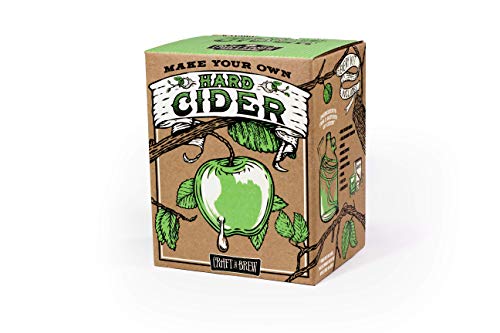
1All-in-one kit
Craft A Brew Hard Cider Kit, 1 Gallon
A 1-gallon starter kit sold with the equipment and supplies for a dry sparkling cider plus a cider guide; you bring the juice.
-
2Fermenter
FastRack 1 Gallon Glass Jug with Airlock and #6.5 Bung
If you build your own setup: a clear 1-gallon glass jug with a 38 mm cap, a drilled #6.5 bung and a twin bubble airlock.
-
3Yeast
Lalvin EC-1118 Wine Yeast (10 Pack)
The listing names fruit cider fermentations among its uses; one 5 g sachet is rated for 4.5 to 23 liters at 50 to 86°F.
-
4Yeast nutrient
North Mountain Supply Yeast Nutrient, 3.5 oz
One teaspoon per gallon per the label, and the label lists cider alongside wine, beer and mead.
-
5Campden tablets
Campden Tablets (Potassium Metabisulfite), 1 lb
For fresh-pressed juice: the label says one tablet per gallon, crushed, added 24 hours before the yeast.
-
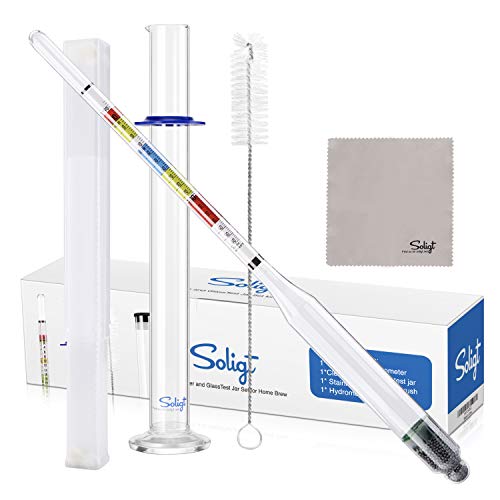
6Hydrometer
SOLIGT Triple Scale Hydrometer and Glass Test Jar
Measures the starting and finishing gravity so you know the strength and when fermentation has really stopped.


What You Need to Make Hard Cider
Penn State Extension's list of basic gear for homebrewing beer or hard cider is short: a fermenter, an airlock, a hydrometer, tubing, sanitizer and bottling supplies (a brew kettle is only needed for beer). For a first gallon of cider that means:
- A fermenter. Cornell's procedure notes that glass or plastic one-gallon or five-gallon jugs are fine for home cider. Our comparison of carboys and buckets helps if you are deciding between the two.
- An airlock and stopper. They let carbon dioxide out and keep air in. Cornell's page explains why that matters: if air reaches the fermenting juice, the alcohol can turn to vinegar.
- A hydrometer. Not strictly required, but it is the only way to know the strength and when fermentation is over. See how to use a hydrometer.
- Tubing or an auto siphon for moving cider off the sediment.
- Sanitizer and, for fresh juice, Campden tablets.
- Bottles and caps or swing tops, especially if you want sparkling cider.
Choosing the Juice
This is the decision that shapes your cider. Penn State says home cider makers can use fresh-pressed cider, homemade or from an orchard, or store-bought juice that is pasteurized and preservative-free. Read the label carefully: the yeast cannot work in juice that contains preservatives such as potassium sorbate or sodium benzoate. Plain pasteurized juice and fresh, unpreserved orchard cider both work.
If you press your own apples, plan on a lot of fruit. The WSU Extension article puts it at thirty to forty apples for a single gallon of juice. Its interviewees recommend blending varieties for a balance of sweetness, acidity and tannin, and Cornell's procedure suggests a blend of three or more varieties. Our guide to the best wine and fruit presses covers the equipment for pressing at home.
Wild Yeast or Cider Yeast?
Fresh, unpasteurized juice already carries wild yeast, and Cornell's traditional procedure lets it ferment on its own. Penn State's approach is more controlled: if you use fresh-pressed cider, first apply heat or sulfites to remove wild yeast that may spoil the flavor, then add a cultured yeast. We recommend the controlled route for a first batch. A wine yeast such as EC-1118 ferments cleanly and predictably, and pasteurized store-bought juice can be pitched straight away. For more on strains, see our guide to the best wine yeasts.
Recipe card
Simple hard cider, 1 gallon
- Makes
- 1 gallon, about ten 12 oz bottles
- Time to drink
- 4 to 8 weeks
- Difficulty
- Beginner
Ingredients
- 1 gallon apple juice or fresh-pressed cider, with no preservatives
- 1 tsp yeast nutrient
- 1 Campden tablet, crushed (fresh-pressed juice only)
- 1 packet wine or cider yeast (EC-1118 or similar)
- Optional: sugar for a stronger cider (Cornell's traditional procedure adds 1 lb per gallon for a dry cider)
Method
- Sanitize the jug, funnel, airlock and hydrometer.
- Pour off a cup of juice to leave headspace for foam, then take a hydrometer reading and write it down.
- Fresh-pressed juice: stir in the crushed Campden tablet, cover and wait 24 hours. Pasteurized juice can skip this step.
- Add the yeast nutrient and the yeast, fit the stopper and airlock, and keep the jug somewhere cool and steady, around 60 to 70°F.
- Let it ferment. Penn State gives about two weeks; it can take longer in a cool room.
- When bubbling has stopped and the gravity stays the same for several days, siphon the cider off the sediment into a clean jug and let it clear.
- Bottle it still, or carbonate it in pressure-rated bottles (see the warning below).
Based on Penn State Extension's home cider overview and Cornell's traditional hard cider procedure. The yeast and nutrient doses follow the product labels.
How to Make Hard Cider, Step by Step
1. Sanitize Everything
Everything that touches the juice should be cleaned and sanitized: jug, funnel, stopper, airlock, hydrometer and tubing. Cider is a low-alcohol drink, and in its first days it is easy for stray microbes to get a foothold.
2. Prepare the Juice
Pour the juice into the jug, leaving a few inches of headspace for the foam that forms at the start of fermentation. Take a hydrometer reading and write it down; you need it later to work out the strength with our ABV calculator. With fresh-pressed juice, add a crushed Campden tablet now and wait 24 hours before the yeast; the tablet label gives one tablet per gallon.
3. Decide on Strength
Apple juice on its own ferments to a light cider. If you want something stronger, add sugar before the yeast. Cornell's traditional procedure adds 1 pound of sugar per gallon for a dry hard cider, or 1½ pounds for a sweet one, dissolved by warming a little of the juice; it also notes that honey can replace sugar pound for pound. That makes a much stronger drink than a typical cider, so add sugar in smaller steps if you want a lighter result, and check the gravity with your hydrometer as you go. Our sugar calculator shows how far a given amount of sugar moves the reading.
4. Add the Yeast and Ferment
Stir in the yeast nutrient, sprinkle the yeast on top, and fit the airlock. Cornell's page suggests keeping cider at 60 to 70°F and notes that lower temperatures take longer. Penn State says fermentation continues for approximately two weeks, depending on the sugar content and room temperature. You will see steady bubbling in the airlock for the first days, slowing as the sugar runs out.
5. Rack Off the Sediment
When the airlock is quiet and two hydrometer readings a few days apart are the same, fermentation is done. Siphon the cider into a clean jug, leaving the layer of spent yeast behind. Cornell's procedure gives a useful rule: keep the end of the siphon about 4 inches above the bottom of a large container, because that is where the sediment rests, and avoid moving the container before racking so the sediment stays put. Our guide on how long fermentation takes explains what to do if it seems stuck.
6. Clear, Age and Bottle
Fresh cider can be drunk as soon as it is clear, but it smooths out with a few weeks or months of aging. Cornell's traditional method stores the racked cider at 40 to 60°F and ages it for months or longer. When it is clear and still, bottle it; our bottling guide covers the equipment.
Can You Make Hard Cider from Store-Bought Juice?
Yes, and it is the easiest way to start. Penn State lists pasteurized, preservative-free store-bought juice as one of the two standard starting points. Pasteurization has already removed wild yeast, so you can skip the Campden tablet and add your yeast the same day. The juice section of most grocery stores has suitable 100% apple juice; the only thing to avoid is a label that lists potassium sorbate, sodium benzoate or another preservative.
Fresh-Pressed Cider from an Orchard
Fresh orchard cider usually has more apple character than shelf-stable juice. Ask whether any preservative has been added, because that would stop fermentation. If it is untreated, follow the Campden step or pasteurize it gently before adding yeast, as Penn State advises for fresh-pressed juice.
Windfall Apples
If you press your own, the WSU article quotes a WSU cider researcher who considers fermentation a kill step that destroys patulin and pathogens, so windfall apples can be used for hard cider though not for sweet cider. The same article stresses cutting away damaged, rotten or animal-bitten parts and washing the fruit well, because poor fruit gives poor cider.
Hard Cider vs Apple Wine
Cider and apple wine start from the same fruit but are built differently. Cider is mostly or entirely apple juice, fermented as it is or with a little sugar. Apple wine dilutes the fruit with water and adds sugar, acid and tannin to reach the strength and balance of a table wine. If a fuller, stronger drink is what you want, try our apple wine recipe. Our main guide on how to make homemade wine covers the wider method.
Common Cider Making Mistakes
- Juice with preservatives. The most common reason a first cider never starts. Read the label.
- Skipping sanitation. Cider is low in alcohol early on and easy to infect.
- Letting air in. Without an airlock, cider can turn to vinegar, as Cornell's page warns.
- Bottling too soon. Unfinished cider keeps fermenting in the bottle and builds pressure.
- Adding too much sugar. Extra sugar makes a much stronger drink than most people expect from cider; add it in steps and measure.
- Disturbing the sediment. Move the jug before racking and the cider clouds up again.
Is It Legal to Make Hard Cider at Home?
In the United States, yes, within limits. The Alcohol and Tobacco Tax and Trade Bureau regulates cider and perry as wines, and the federal rule for home winemaking, 27 CFR 24.75, lets any adult produce wine for personal or family use and not for sale, without paying tax, up to 100 gallons a year in a one-adult household or 200 gallons where two or more adults live. State and local rules can add restrictions, and making or drinking cider is only for those of legal drinking age.