Step-by-step guide
How to Rack Wine Off the Sediment (and When to Do It)
As an Amazon Associate we earn from qualifying purchases. How we choose products.
On this page
Racking wine means siphoning the clear wine off the layer of sediment, called the lees, into a clean container. Set the full vessel higher than the empty one, start a siphon with an auto-siphon or racking cane, keep the intake above the sediment and the outlet below the surface of the wine you are filling, and stop before the sediment starts to move. Most home wines are racked first when primary fermentation slows, then every one to two months until no new sediment forms.
That schedule comes straight from the extension guides. North Dakota State University Extension’s Getting Started With Home Winemaking moves the wine into a carboy when the gravity drops to about 1.020 to 1.030, and Virginia Cooperative Extension’s Wine Making for the Home Gardener racks again at one to two month intervals until the wine is clear.
Why Rack Wine at All
The sediment that settles during and after fermentation is mostly dead yeast and fruit solids. Clemson Cooperative Extension’s Basics of Home Winemaking calls the lees very bitter and says they make for a cloudy, unpleasant tasting wine if left behind too long. Wine Spectator’s explainer on racking adds that commercial winemakers rack to clarify the wine, to prevent unwanted fermentations and to soften its profile, and that because racking also aerates the wine, they decide carefully when and how often to do it.
When to Rack Wine
| Racking | When | Why |
|---|---|---|
| First | Primary fermentation slows, gravity about 1.020 to 1.030 (NDSU); 5 to 14 days in for many wines (Clemson) | Gets the wine off the heavy fruit pulp and gross lees into a carboy under an airlock |
| Second | About a month later, when fermentation is finished | Removes the fine yeast sediment; good moment to stabilize or fine |
| Later rackings | Every one to two months while sediment keeps forming (Virginia Extension) | Each one leaves the wine clearer |
| Final | Before bottling, into a bottling bucket or clean carboy | Leaves the last fine sediment behind so it does not end up in bottles |
The University of Georgia’s Winemaking at Home waits about a month between rackings so fermentation can run to completion, and notes that some wines keep fermenting slowly for months and may need three or four rackings before they clear. Our guide to how long wine takes to ferment covers the timing.
How many times should you rack?
Until the wine is clear and no new sediment forms. Virginia Extension notes that each racking loses a little wine with the sediment, so racking more often than you need to has a cost. For most fruit and grape wines that means three to four rackings over several months; kit wines on a short schedule usually get two plus the bottling transfer.
How to Rack Wine, Step by Step
1. Clean and sanitize everything
The receiving carboy, the siphon, the tubing and the airlock all touch the wine. Sanitize them right before you start.
2. Raise the full container
Siphons run on height. Put the full carboy on a table or counter and the empty one on the floor, ideally a day ahead so the sediment that you disturbed by moving it can settle again. The UGA guide finds the best flow when the upper container sits about 18 inches above the lower one.
3. Start the siphon
With an auto-siphon, put the racking tube in the wine, the hose in the empty carboy, and pump the inner tube once or twice to start the flow. A racking cane with a tip, or a plain hose, works too. UGA uses 3/8-inch tubing about five to six feet long; most home auto-siphons use 5/16-inch tubing.
4. Keep the intake above the lees and the outlet under the wine
Virginia Extension’s rule: keep the top end of the tubing above the level of the sediment, and once the flow has started keep the lower end below the surface of the wine in the receiving container to keep oxygen out. Lower the intake slowly as the level drops.
5. Stop before the sediment moves
Tilt the carboy slightly toward the end and watch the tube. When sediment starts to flow, pinch or clamp the hose. Accept that a little wine is left behind; Virginia Extension notes that some wine is lost at every racking.
6. Sulfite, top up and seal
Virginia Extension adds one crushed Campden tablet per gallon at every other racking. NDSU fills the carboy to about an inch or two below the stopper to keep air off the wine. Top up with a similar wine or, for small gaps, cooled boiled water, then refit the airlock. Our Campden tablet guide covers the dose.
How to Rack Wine Without a Siphon
You can pour wine from one container to another, but pouring stirs up the lees and splashes air into the wine, so it only makes sense for the first transfer out of a bucket. Virginia Extension describes simply pouring the liquid and sediment into the secondary fermenter at that stage. A fermenting bucket with a spigot is the other easy option: the spigot sits a little above the bottom, so it draws the wine off above most of the sediment. For every later racking, a siphon is worth the small cost.
Sediment in Homemade Wine and in Bottles
Sediment in the carboy is normal; it is why you rack. Sediment that shows up in the bottle months later is usually one of three things:
- Fine yeast or fruit solids from a wine bottled before it was fully clear. Rack once more and give it longer next time; see how to clear wine.
- Tartrate crystals in grape wines that were not chilled before bottling. They look like small glassy grains and are harmless.
- Color and tannin sediment in reds that age for years.
None of these makes the wine unsafe. The UGA guide simply decants the clear wine into a clean bottle before serving if sediment forms during aging. Wine Spectator’s advice on old bottles is to keep bottles in the same position when you move them, and to let a disturbed bottle rest for a few days so the sediment settles again before you open it.
| Racking tool | Fermtech Regular 5/16" Auto-Siphon with 8 ft Tubing Editor's Choice | Fermtech Auto-Siphon Mini with Tubing and Clamp | Fermtech Wine Thief, 19 inch | Fermtech Food Grade Vinyl Tubing, 10 ft |
|---|---|---|---|---|
| Product |  | 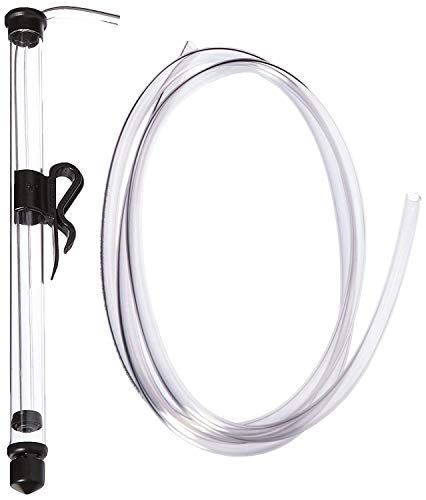 |  |  |
| Best for | Racking 3 to 6 gallon carboys and buckets | One-gallon jugs and bottling | Drawing samples for the hydrometer and tasting | Replacing old siphon hose |
| Size | 24 inch cane, 5/16 inch tubing, 8 ft (maker) | Mini cane, 6 ft tubing and clamp (maker) | 19 inch clear acrylic (maker) | 5/16 inch ID, 10 ft (maker) |
| Leaves sediment behind | ✅ Designed to minimize sediment pickup (maker) | ✅ Yes, with care | Not applicable | Not applicable |
| Price tier | $ | $ | $ | $ |
| Buy | Check price | Check price | Check price | Check price |
Editor's Choice
Fermtech Regular 5/16" Auto-Siphon with 8 ft Tubing
- Best for
- Racking 3 to 6 gallon carboys and buckets
- Size
- 24 inch cane, 5/16 inch tubing, 8 ft (maker)
- Leaves sediment behind
- ✅ Designed to minimize sediment pickup (maker)
- Price tier
- $
Fermtech Auto-Siphon Mini with Tubing and Clamp
- Best for
- One-gallon jugs and bottling
- Size
- Mini cane, 6 ft tubing and clamp (maker)
- Leaves sediment behind
- ✅ Yes, with care
- Price tier
- $
Fermtech Wine Thief, 19 inch
- Best for
- Drawing samples for the hydrometer and tasting
- Size
- 19 inch clear acrylic (maker)
- Leaves sediment behind
- Not applicable
- Price tier
- $
Fermtech Food Grade Vinyl Tubing, 10 ft
- Best for
- Replacing old siphon hose
- Size
- 5/16 inch ID, 10 ft (maker)
- Leaves sediment behind
- Not applicable
- Price tier
- $
Common Racking Mistakes
- Moving the carboy right before racking. Lift it into position a day ahead so the lees settle again.
- Letting the outlet splash after the first racking. Keep the hose under the surface of the receiving wine.
- Chasing the last cup. A little wine left on the lees is better than cloudy wine in the carboy.
- Leaving a big air gap. Top up to the neck; air in the headspace is a common cause of oxidized, browning wine.
- Forgetting to sanitize the siphon. It touches every drop you transfer.
What you need to rack wine
One auto-siphon sized to your carboy does most of the work; a wine thief saves you from dipping into the wine for samples.
-
1Auto-siphon for carboys
Fermtech Regular 5/16" Auto-Siphon, 24 inch, with 8 ft tubing
Pump once to start the flow; the maker says it is designed to minimize pickup of sediment and comes apart for cleaning.
-
2Auto-siphon for jugs
Fermtech Auto-Siphon Mini with 6 ft tubing and clamp
A shorter cane that fits one-gallon jugs, with a clamp to stop the flow at the end.
-
3Wine thief
Fermtech Wine Thief, 19 inch acrylic
A long, clear sampler that reaches the middle of a carboy, for drawing samples for the hydrometer and tasting.
-
4Spare tubing
Fermtech Food Grade Vinyl Tubing, 5/16 inch, 10 ft
Food safe 5/16 inch tubing to replace a stained or stiff siphon hose.