Step-by-step guide
How to Make Wine at Home
As an Amazon Associate we earn from qualifying purchases. How we choose products.
On this page
- Wine Making for Beginners: Your First Batch
- Choose Your Starting Point
- What You Need to Make Wine at Home
- Red or White: The One Difference That Matters
- How to Make Red Wine from Grapes, Step by Step
- How to Make White Wine at Home
- Red and White Wine: The Steps Side by Side
- How Much Wine Do You Get from Grapes?
- How Long Does It Take to Make Wine?
- Common Mistakes When Making Wine at Home
- Is It Legal to Make Wine at Home?
- Winemaking Terms Used in This Guide
- Keep a Log of Every Batch
- How to Make Wine at Home: FAQ
To make wine at home you crush ripe grapes (or open a bottle of juice or a kit), add wine yeast, let it ferment, siphon the new wine off its sediment until it is clear, then bottle it and give it time. Homemade wine needs no special talent, but it does need three things most failed batches lack: clean equipment, a hydrometer to measure sugar, and patience, because the trip from crush to first glass takes months, not days.
This guide covers how to make homemade wine the classic way, from fresh grapes, for both red and white. Every number in it (sugar, acidity, temperatures, timings) comes from university extension guides written for home winemakers, which are named and linked where they are used. If you are starting from juice, a kit, other fruit or honey, the table below sends you to the right guide; the fermentation itself works the same way.
Wine Making for Beginners: Your First Batch
If you have never made wine before, the best first batch is not the one in the long guide below. Fresh grapes mean a crusher, a press, a harvest window and a dozen decisions about sugar and acid. Wine making for beginners goes better when you pick one of three easier doors in, learn the rhythm of fermenting, racking and bottling on a small scale, and come back to grapes later.
Three Ways to Start
-
 Start with grape juiceOur pick for a first batch: store-bought juice, one gallon, very little gear.
-
 Start with a kitPre-measured ingredients and a printed schedule, so there is less to get wrong.
-
 Start with fruitBerries, apples or stone fruit for a country wine, once you have one batch behind you.
Our Advice: One Gallon of Juice First
Make your first batch one gallon of grape juice. It is the cheapest way to find out whether you enjoy the hobby, because a gallon of juice costs a fraction of a crate of grapes and a failed gallon costs you very little. It needs the least equipment: a one-gallon jug, an airlock, a hydrometer and a sanitizer, with no crusher and no press. And it removes the hardest variable, since juice arrives already crushed and pressed, so you spend your attention on the habits that matter in every batch: sanitizing, measuring with a hydrometer, keeping air away from the wine and waiting. Our guide to making wine from grape juice has the one-gallon recipe.
A kit is the right choice if you would rather follow a printed schedule than make decisions; our kit comparison shows what each box includes. Fruit wine is a good second batch, and the recipe collection lists every fruit we cover. Whichever door you pick, the fermentation is the same one described in the rest of this guide, so nothing you learn is wasted.
Keep a written record from the first batch. A page with the date, the starting and finishing gravity and what you added is enough, and our free wine making log and batch checklist is built for exactly that.
Choose Your Starting Point
Most people who want to make wine at home do not own a vineyard, and that is fine: the yeast does not care where the sugar came from. What changes is how much preparation the fruit needs before fermentation starts.
| Start with | What it involves | Best for | Effort | Guide |
|---|---|---|---|---|
| Fresh wine grapes | Crushing, pressing, adjusting sugar and acid | Classic reds and whites at harvest time | Most involved | The 13 steps below |
| Grape juice or concentrate | Checking the label, adding sugar and yeast | A first batch at any time of year | Easiest | Wine from grape juice |
| Wine ingredient kit | Following the kit’s schedule | Predictable results with little measuring | Easy | Best wine making kits |
| Other fruit | Adding water, sugar, acid and tannin | Country wines from berries, apples or stone fruit | Moderate | Wine from fruit |
| Honey | Diluting honey and feeding the yeast | Mead | Moderate | How to make mead |
| No added yeast | Relying on wild yeast | Experiments | Unpredictable | Wine without yeast |
What You Need to Make Wine at Home
The University of Georgia Extension bulletin Winemaking at Home (Circular 717, reviewed 2013) notes that most home winemakers produce one to five gallons at a time, and the list below is sized for that. Everything that touches the wine must be food-grade: UGA warns against aluminum and copper containers altogether.
The Minimum for a Beginner
For a first one-gallon batch of juice wine you do not need the full list below. Five things cover it:
- A fermenter: a one-gallon glass jug, or a food-grade bucket with a lid for larger batches.
- An airlock and bung: lets carbon dioxide out and keeps air and fruit flies away from the wine.
- A siphon: moves the wine off its sediment without stirring it up.
- A hydrometer and test jar: tells you how much sugar you start with and when fermentation has finished.
- A sanitizer: everything that touches the wine gets sanitized first. Our guide to how to use Star San shows the no-rinse method.
Add bottles and corks when the wine is ready to bottle. The grape-specific tools in the table (crusher, press, second carboy) can wait until you move up to fresh grapes.
Equipment
| Item | What it does | For a 5-gallon batch |
|---|---|---|
| Primary fermenter | Open, food-grade bucket where the crushed grapes ferment on their skins | A 6.5 to 8 gallon bucket with a lid; it must hold more than the batch so the foam has room |
| Crusher | Breaks the skins to free the juice | A hand-cranked crusher, or a potato masher or rolling pin for small lots (UGA) |
| Press or straining bag | Separates the wine from skins and seeds | A small basket press, or a nylon bag squeezed by hand |
| Carboy (secondary fermenter) | Narrow-necked vessel where the wine finishes fermenting and clears | One 5-gallon glass carboy plus a 1-gallon jug for the extra; a second carboy for racking |
| Airlock and bung | Lets carbon dioxide out and keeps air and fruit flies out | One per carboy |
| Hydrometer and test jar | Measures sugar before fermentation and tells you when it has finished | One triple-scale hydrometer |
| Siphon | Moves wine off its sediment without stirring it up | An auto-siphon, or 5 to 6 feet of 3/8-inch tubing (UGA) |
| Thermometer | Keeps fermentation in its temperature range | A stick-on strip on each vessel |
| Bottles, corks, corker | Packaging and aging | About 25 bottles of 750 ml, #9 corks and a hand or floor corker |
| Cleaner and sanitizer | Keeps spoilage organisms out | A no-rinse sanitizer or a sulfite solution |
Ingredients
Essential: sound, ripe wine grapes; a wine yeast; and Campden tablets or potassium metabisulfite to protect the must and the finished wine.
Optional, depending on the grapes:
- Sugar, only if the grapes were picked under-ripe. Ripe wine grapes usually need none.
- Tartaric acid, to correct grapes from a hot season that are low in acid.
- Yeast nutrient, which North Dakota State University Extension says keeps stressed yeast from producing a rotten-egg (hydrogen sulfide) smell.
- Tannin, for grapes with thin skins or for wines that taste flat.
- Golden raisins, an old trick for body; UGA also lists a small handful of minced raisins per gallon as a substitute for yeast nutrient.
You will add your own touches as you gain practice, and that is part of what makes every homemade wine different. Our full list of home winemaking equipment and supplies goes item by item.
The equipment, in one place
Starting from nothing? These cover a five to six gallon batch from fresh grapes. The starter kit handles fermenting, transferring, bottling and cleaning; the rest fills the grape-specific gaps.
-
1Starter equipment kit
Master Vintner Wine Making Starter Kit (6 gallons)
The maker describes it as tools for fermenting, transferring, bottling and cleaning in one box, compatible with its recipe kits or your own juice.
-
2Grape crusher
SQUEEZE master Manual Grape and Berry Crusher (7 liter)
A hand-cranked stainless hopper made for grapes and soft fruit; much faster than crushing by hand once you have more than a few pounds.
-
3Basket press
EJWOX 4.75 Gallon Fruit and Wine Press
A beech basket press on a stand with a pour spout, the size that suits one to six gallon batches. More options in our wine press guide.
-
4Second glass carboy
FastRack Italian 6 Gallon Glass Carboy
Lets you rack from one vessel to another and keep one batch aging while the next one ferments. Takes a #7 stopper, sold separately.
-
5Hydrometer
Brewer’s Elite Triple Scale Hydrometer and Test Jar
Reads gravity, Brix and potential alcohol, so you can check the grapes before you start and confirm fermentation has finished before you bottle.
-
6Campden tablets
Craft A Brew Campden Tablets (50 count)
For the sulfite steps. The maker’s directions are 1 tablet per gallon, crushed into a powder, added 24 hours before the yeast.
-
7Red wine yeast
Lalvin RC-212 Wine Yeast (10 pack)
A Burgundy strain chosen for reds; the listing gives 64 to 86°F, alcohol up to 16% and one 5 g sachet for 4.5 to 23 liters.
-
8White wine yeast
Lalvin EC-1118 Wine Yeast (10 pack)
A neutral, fast strain that Lallemand rates from 10 to 30°C (50 to 86°F) and to 18% alcohol; a safe choice for whites.


Red or White: The One Difference That Matters
Red and white wine are made with the same steps in a different order. For red wine, the juice ferments together with the skins and seeds, which is where the color and tannin come from, and the grapes are pressed afterwards. For white wine, the grapes are pressed straight after crushing and only the juice ferments. That is why you can make a white wine from red grapes, as long as the skins come out quickly, and why white grapes fermented on their skins give the amber, tannic style called orange wine.
| Red wine | White wine | |
|---|---|---|
| When you press | After 3 to 10 days on the skins | Right after crushing |
| Fermentation temperature | About 70°F; warmer is fine for reds | Cooler, 50 to 60°F, to keep fruity aromas |
| Daily work | Punching down the cap of skins at least twice a day | None beyond checking gravity |
| Grape pH at harvest | 3.3 to 3.5 | 3.1 to 3.3 |
| Bulk aging before bottling | 9 to 12 months | At least 6 months |
Sources: temperatures and aging times from Virginia Cooperative Extension’s Wine Making for the Home Gardener (HORT-213), skin contact from UGA and Virginia Tech, punching down from UGA, harvest pH from Ohio State University Extension’s Determining Grape Maturity and Fruit Sampling (HYG-1436). The steps below follow a red wine; the white wine changes are in the section after them.
How to Make Red Wine from Grapes, Step by Step
These 13 steps take you from a crate of grapes to a corked bottle. Keep a notebook as you go: the date, the gravity and what you added at each step. It is the only way to repeat a good batch or fix a disappointing one.
1. Pick or Buy Ripe Wine Grapes
The grapes decide the wine. Wine grape varieties such as Cabernet Sauvignon, Merlot, Syrah (Shiraz) or Pinot Noir have the sugar, acidity and thick skins that make a balanced red; table grapes are bred for eating and usually make a thinner wine. If you grow your own, Penn State Extension’s guide to assessing grape maturity puts desirable sugar at 18 to 24 °Brix, depending on variety and style, and suggests tasting berries and checking the seeds, which turn from green to brown as they mature. Ohio State adds that titratable acidity generally falls between 0.6 and 0.8 grams per 100 ml at harvest. Our guide on when to harvest grapes for wine explains how to sample.
Pick by hand to keep the berries whole, then sort: remove leaves, unripe bunches and anything rotten or moldy. UGA is blunt about it: over-ripe or bruised fruit has begun to decay even when you cannot see it, and it gives the wine a disagreeable flavor. If you are buying grapes, use the yield table further down to work out how many pounds you need.
2. Clean and Sanitize Everything
Every failed batch has a weak link, and it is usually hygiene. NDSU’s Getting Started With Home Winemaking (FN1638) says to wash everything that touches the juice, rinse it thoroughly with hot water and then sanitize it. Use a no-rinse sanitizer or a sulfite solution; Virginia Tech’s HORT-213 gives four Campden tablets per quart of water or 1/4 teaspoon of potassium metabisulfite powder per quart, and advises against chlorine bleach, which can leave an unpleasant taste.
3. Crush and Destem
Crushing breaks the skins so the yeast can reach the juice. A hand-cranked crusher is the quickest way; for a few pounds a potato masher, a rolling pin or clean feet work too. Take out as many stems as you can, by hand or with a destemmer, because stems give a harsh, green taste to the wine. Try not to crack the seeds, which are bitter.
What you have now, juice, pulp, skins and seeds together, is called the must. Move it into the primary fermenter and leave about a third of the space empty: the foam and the cap of skins that rise during fermentation need room.
4. Add Sulfite
Sulfite protects the must from spoilage bacteria and wild yeast, and slows browning. NDSU recommends adding potassium metabisulfite at 50 parts per million of sulfur dioxide, or one Campden tablet per gallon of must, crushed and dissolved in a little juice. Then wait before adding the yeast so the free sulfite can fade: UGA waits four hours, while NDSU and the Campden tablet maker wait 24 hours. Our sulfite calculator converts any dose into grams of powder or tablets, and the Campden tablet guide explains when to use each.
Handle the powder with care: potassium metabisulfite releases sulfur dioxide, which irritates the eyes and lungs, so do not lean over the bucket while you stir it in.
5. Measure the Sugar and Acid
Strain a sample into the test jar and float the hydrometer. A reading around 1.090 is the usual target: Virginia Tech says it gives about 12% alcohol, and UGA’s rule of thumb is that fermented sugar yields about half its amount as alcohol, so must at 22% sugar makes a wine of about 11%. Ripe wine grapes often land there on their own, and then you add nothing. If the reading is low, NDSU’s figure is that 11 grams of sugar per liter of must raise the gravity by 0.004 (one degree Brix); add it a little at a time, dissolved in some of the juice, and measure again. Our sugar calculator does the arithmetic, and the hydrometer guide covers temperature correction.
Acidity is the other half of balance. If you can, test the pH: Ohio State gives 3.3 to 3.5 for red grapes at harvest and 3.1 to 3.3 for white. Grapes from a hot region or a hot year tend to run high in pH and low in acid. The safe way to correct them is to work on a sample first: add a measured amount of tartaric acid to one gallon (about 4 liters) of juice, test again, and once the sample tastes and measures right, multiply that amount for the whole batch. Adjust before fermentation; correcting the finished wine is harder.
6. Add the Yeast and Nutrient
Use a true wine yeast. Clemson Cooperative Extension’s Basics of Home Winemaking warns that bread, beer and cider yeasts cannot tolerate the alcohol in wine and die before fermentation is complete, leaving it sweet and weak. A red strain such as Lalvin RC-212 (64 to 86°F, up to 16% alcohol, per Lallemand) suits most red grapes; a single 5 g sachet is rated for 4.5 to 23 liters, so one covers a five-gallon batch. Rehydrate it as the packet says, stir it in, and add yeast nutrient at the dose on its label. Our wine yeast guide matches strains to grape varieties.
Wild Yeast, Cultured Yeast or Both
You can also skip the packet and let the yeast that lives on the grapes and in the winery do the work. Wild fermentation gives a wine character you cannot get any other way, but it is unpredictable: you do not know which strains are present, and a weak one can stall halfway and leave a stuck, sweet wine. It is more likely to succeed in the countryside and in regions with a long history of winemaking than in a city apartment.
Wild yeast works best where it is plentiful and strong enough to finish the job, which is why it suits vineyard country better than a city kitchen. If you try it, watch the gravity closely and be ready to rescue a slow ferment with nutrient or a packet of cultured yeast; our stuck fermentation guide shows how.
Cultured yeast is the reliable route: you know the strain, its temperature range and how much alcohol it tolerates. Many winemakers hedge by splitting the must into two vessels, one left to wild yeast and one inoculated with a cultured strain. If the wild half ferments well, you blend the two for a wine with more character; if it fails, you still have a sound wine from the other. More on that route in our guide to making wine without added yeast.
7. Ferment on the Skins and Punch Down the Cap
Cover the bucket with its loose lid or a double layer of cloth to keep out fruit flies, which carry the bacteria that turn wine into vinegar, and keep it somewhere warm and steady. UGA ferments red must at 60 to 70°F and says fermentation should begin within 24 hours; NDSU allows 65 to 80°F and notes that warmer, faster fermentation is what reds want.
Within a day or two the skins float up and form a thick cap. Push it back down into the juice and stir it through at least twice a day, as UGA recommends; this is where the color and tannin come out, and it keeps the cap from drying out and spoiling. Any clean, food-safe tool works, and a wooden stick with a flat board fixed to the end is easy to make yourself.
Leave the wine on the skins for 3 to 7 days (UGA) or up to 10 (Virginia Tech). A shorter time gives a lighter, fruitier red; the full time, until fermentation starts to slow, gives a darker, richer and more tannic one. NDSU’s signal to move on is a gravity of about 1.020 to 1.030.
8. Press the Grapes
Scoop or pour off the free-run wine first, then load the remaining skins into the press or a straining bag and squeeze them slowly. UGA advises not to press so hard that pulp is forced through the cloth. Funnel everything into the carboy, but only up to the shoulders for now: the wine is still fermenting and needs some room. Our wine press guide compares basket presses by size.
9. Let Fermentation Finish Under an Airlock
Fit the bung and an airlock filled with sanitizer solution; Clemson points out that plain water can grow mold and vodka evaporates too quickly. Keep the carboy in a dark place at a steady temperature. Fermentation continues more quietly for several weeks: UGA expects about a month, and four to eight weeks is common. The yeast settles to the bottom as a creamy layer called the lees.
Do not trust the airlock to tell you when it is over. Take hydrometer readings a few days apart: fermentation is finished when the gravity stays the same across three days, as Clemson puts it. Clemson’s typical final gravity is 0.999 to 1.005, and NDSU notes that a fully dry wine can read as low as 0.990. If the gravity stops well above that, see our guide to how long wine takes to ferment before you assume it is done.
10. Rack the Wine Off Its Sediment
Racking means siphoning the clear wine into a clean carboy and leaving the lees behind, because Clemson notes that the lees are bitter and make a cloudy, unpleasant wine. UGA gets the best flow with the full carboy about 18 inches above the empty one. On this first racking it lets the wine splash slightly, since the last of the yeast uses that oxygen to finish; from then on, keep the end of the hose under the surface.
Top the new carboy up to within an inch or two of the bung with a similar wine, or with water, which Virginia Tech says is unlikely to dilute the wine by more than about 1%. Air in the headspace is the fastest route to oxidized, browning wine. Rack again every one to two months while sediment keeps forming; UGA says some wines need three or four rackings before they are clear. Add one crushed Campden tablet at every other racking, as NDSU and Virginia Tech advise. The full method is in our guide on how to rack wine.
11. Clear and Stabilize
A sound wine of good strength usually clears by itself with time and racking. If it does not, a fining agent such as bentonite or gelatin will help, and UGA adds that chilling grape wine to 30 to 40°F drops potassium bitartrate crystals, the harmless glassy grains that otherwise turn up in the bottle. Our guides to clearing wine and degassing wine cover the options.
If you plan to sweeten the wine, stabilize it first. Potassium sorbate stops the surviving yeast from multiplying; Northern Brewer’s directions are half a teaspoon per gallon, used together with sulfite. Clemson warns that wine that has not been stabilized can start fermenting again in storage and shatter the bottles. A dry wine that has finished fermenting does not need sorbate. See how to backsweeten wine for the method.
12. Bottle and Cork
Bottle only when the wine is clear, has stopped dropping sediment and reads the same on the hydrometer week after week. UGA adds sulfite just before bottling (one Campden tablet or 1/8 teaspoon of potassium metabisulfite for every three gallons) and siphons without splashing to avoid oxidation. Use new corks, never old ones: NDSU says No. 9 corks fit most U.S. bottles, while some imported bottles need No. 8. Make sure the corks match your bottle necks before you buy a bag of a hundred. Our guide to wine bottles for homemade wine covers sizes and neck finishes, and the wine making kits compare which boxes include a corker.
Stand the corked bottles upright for a few days so the corks expand and seal (NDSU), then store them on their sides so the corks stay moist. Label each bottle with the wine and the date. Step-by-step help is in our guide to bottling and corking wine.
13. Age It, Then Enjoy It
Wine can technically be drunk at bottling, but it improves with time. NDSU explains that wine goes through bottle shock for three weeks or more after bottling and recommends at least two months of aging, with a year being better; UGA also suggests about a year for the best clarity and flavor. Store the bottles somewhere dark and steady, ideally 50 to 60°F (Virginia Tech). Reds gain the most from time, as their tannins soften. Our guide to how long homemade wine lasts covers storage in detail.
When you finally open a bottle, give a red a little time in the glass to breathe, and hold the glass by the stem so your hand does not warm the wine. Then share it: there is nothing quite like pouring your own wine for friends and family.
How to Make White Wine at Home
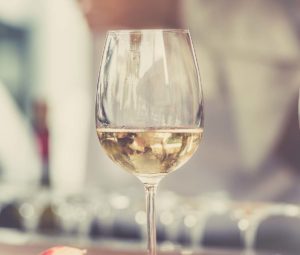 White wine follows the same steps with two changes: the grapes are pressed before fermentation, and the juice ferments cooler.
- Crush and press straight away. UGA’s instruction for white wine is to separate the juice from the skins and pulp immediately and transfer it to the secondary fermenter. Sulfite the juice as in step 4.
- Ferment the juice only. Measure and adjust sugar and acid, add a white wine yeast and nutrient, and fit an airlock. There is no cap to punch down.
- Keep it cool. Virginia Tech ferments whites at 50 to 60°F, and NDSU notes that cooler fermentation keeps more of the delicate, fruity aromas. Check that your yeast is rated for the temperature.
- Rack, clear and stabilize exactly as for red, then bottle.
- Age for less time. Virginia Tech suggests at least six months in bulk for whites, against nine to twelve for reds.
Thin-skinned white grapes contain little tannin. UGA counts white wines among those lacking it, while Virginia Tech cautions that added tannin can easily overwhelm the fruit flavor in a white, so add it sparingly if at all.
Red and White Wine: The Steps Side by Side
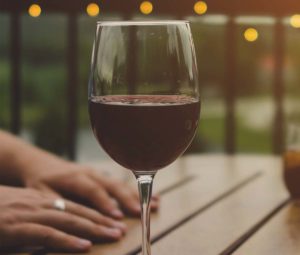 If you only remember one thing from this guide, make it this order of operations:
| Stage | Red wine | White wine |
|---|---|---|
| 1 | Harvest or buy the grapes | Harvest or buy the grapes |
| 2 | Destem and crush | Destem and crush |
| 3 | Ferment with skins and seeds | Press: remove skins and seeds |
| 4 | Press: remove skins and seeds | Ferment the juice |
| 5 | Rack, clear, bottle and age | Rack, clear, bottle and age |
The swap between pressing and fermenting is the whole difference. Red grapes such as Pinot Noir share their DNA with white varieties such as Pinot Blanc and Pinot Gris, and the juice of most red grapes is clear; the color is in the skins.
How Much Wine Do You Get from Grapes?
Grapes give up their juice unevenly, and how hard you press changes the yield, but there is a reliable planning number. Cornell University’s enology extension (Chris Gerling, “Grapes 101: Conversion Factors”, 2011) uses 150 gallons of wine per ton of grapes, with a normal range of 120 to 180 gallons. That works out to about 13 pounds of grapes per gallon of wine, or roughly 2.6 pounds per 750 ml bottle.
| Grapes | Wine (approx.) | Full 750 ml bottles |
|---|---|---|
| 10 lb (4.5 kg) | 0.75 gallon (2.8 L) | 3 |
| 15 lb (6.8 kg) | 1.1 gallons (4.3 L) | 5 |
| 40 lb (18 kg) | 3 gallons (11.4 L) | 15 |
| 67 lb (30 kg) | 5 gallons (19 L) | 25 |
| 80 lb (36 kg) | 6 gallons (22.7 L) | 30 |
Figures use the 150 gallons per ton planning number. Expect less if you press lightly or lose wine to the lees when racking, and buy a little extra fruit so you have something to top up the carboy with.
For your own batch size, or for fruit other than grapes, use the calculator below.
Grape and fruit calculator
Cornell gives 150 gallons per ton as the planning number and 120 to 180 as the normal range. With a hand press, our advice is to plan on Low.
Fruit amounts are the ones in our own recipes for 1 gallon, scaled to your batch. Ripeness and sweetness move them.
3.0 galof finished wine
11.4 Lthe same in liters
15 bottlesof 750 ml, rounded down
66.7 lbof grapes to buy
30.2 kgthe same in kilograms
2.6 lbof grapes per 750 ml bottle at this yield
4 lbof fruit
1.8 kgthe same in kilograms
The same tool has its own page, the grape and fruit calculator, which you can bookmark for the next harvest.
How Long Does It Take to Make Wine?
Longer than most beginners expect. The active part takes a few weeks; the waiting takes months.
| Stage | Typical time | Source |
|---|---|---|
| Sulfite rest before the yeast | 4 to 24 hours | UGA, NDSU |
| Fermentation on the skins (reds) | 3 to 10 days | UGA, Virginia Tech |
| Finishing fermentation in the carboy | About a month, often 4 to 8 weeks | UGA |
| Racking and clearing | Every 1 to 2 months until clear, often 3 or 4 rackings | Virginia Tech, UGA |
| Bulk aging before bottling | Whites at least 6 months, reds 9 to 12 months | Virginia Tech |
| Aging in the bottle | At least 2 months, a year is better | NDSU |
Add those up and a white wine from grapes is typically ready six to nine months after the crush, a red closer to a year, and both keep improving after that. Kits and juice wines are faster; see how long wine takes to ferment for each type.
Common Mistakes When Making Wine at Home
- Using bread yeast. It gives up before the sugar is gone; Clemson’s advice is to use wine yeast only.
- Skipping sanitation. Spoilage bacteria and wild yeast ride in on unwashed tools, and vinegar flies find uncovered buckets quickly.
- Fermenting in the wrong container. Aluminum and copper are out (UGA), and plastic is for the first week or two, not for months of aging.
- Guessing instead of measuring. Without a hydrometer you do not know the alcohol you are heading for or when fermentation has really ended.
- Leaving air in the carboy. Top up after every racking; oxygen is the main cause of flat, brown wine.
- Bottling too early. Wine that is still fermenting builds pressure that can push corks or burst bottles.
- Sweetening without stabilizing. Added sugar plus live yeast equals a second fermentation in the bottle.
- Improvising “pruno.” Fruit, sugar and bread yeast fermented in a bag is not a shortcut to wine. Read what it really is in our guide to pruno, or prison wine, and follow a real recipe instead.
If something does go wrong, our wine faults guide helps you identify it by smell and look.
Is It Legal to Make Wine at Home?
In the United States, yes, for personal use. The federal rule, 27 CFR 24.75, lets any adult make up to 100 gallons a year in a one-adult household, or 200 gallons where two or more adults live, without paying tax. The wine cannot be sold, and state or local rules can be stricter. Our homemade wine guide covers the legal and safety questions in more detail.
Winemaking Terms Used in This Guide
| Term | Meaning |
|---|---|
| Brix (°Bx) | Sugar content of juice: 1 °Brix is 1 gram of sugar per 100 grams of juice (Penn State). Ripe wine grapes run about 18 to 24. |
| Specific gravity (SG) | Density compared with water (1.000). Sugar raises it, alcohol lowers it; a hydrometer reads it. Convert with our Brix to SG calculator. |
| Must | Crushed grapes or juice prepared for fermentation, with or without the skins. |
| Cap | The layer of skins that floats on fermenting red wine and has to be punched down. |
| Free-run | Wine that drains from the skins before pressing; usually the softest. |
| Lees | The sediment of dead yeast and fruit solids that settles during and after fermentation. |
| Racking | Siphoning wine off its lees into a clean vessel. |
| Carboy | A narrow-necked glass or plastic vessel used for the second stage of fermentation and for aging. |
| Airlock | A one-way valve that lets carbon dioxide out and keeps air out. |
| Campden tablet | A tablet of potassium or sodium metabisulfite that releases sulfur dioxide to protect the wine. |
| pH | A measure of acidity; NDSU puts most wine between 3.3 and 3.7, which helps keep most microorganisms out. |
| Malolactic fermentation | A second, bacterial fermentation that turns sharp malic acid into softer lactic acid; common in reds. |
Keep a Log of Every Batch
The one habit that separates the winemakers who improve from the ones who repeat their mistakes is a written record. Our free wine making log and batch checklist is a two-page printable PDF with the steps in order and a table for your gravity readings. Enter your email below and we will send it to you.
How to Make Wine at Home: FAQ
Harvest, crush, ferment, clarify, and bottle and age. For red wine the grapes ferment on their skins and are pressed afterwards; for white wine they are pressed before fermentation. Clarifying covers racking the wine off its sediment, and sometimes fining or chilling it, until it is clear and stable enough to bottle.
Yes, any grapes will ferment, but table grapes are bred for eating, so they tend to have less sugar and acid and thinner skins than wine grapes. Expect a lighter, simpler wine that may need sugar added to reach about 1.090 on the hydrometer. Concord and other American grapes make a wine that tastes recognizably of grape juice.
Often none. Ripe wine grapes at 22 to 24 °Brix already hold enough sugar for a wine of 11 to 12% alcohol. Measure the juice first: if it reads low, NDSU’s rule is 11 grams of sugar per liter of must for each 0.004 rise in gravity. Cornell’s yield figure works out to roughly 0.6 liters of wine per kilogram of grapes.
The steps are simple; the discipline is in the details. Most failed batches come from poor sanitation, too much air in the carboy or bottling before fermentation has finished. If you keep everything clean, measure with a hydrometer and give the wine time, a first batch from juice or a kit is well within reach, and grapes are the natural next step.
For red wine from grapes, the vigorous ferment on the skins lasts about 3 to 10 days, and the wine then keeps fermenting slowly in the carboy for roughly a month. Temperature, yeast strain and sugar level all move those numbers, so rely on hydrometer readings that stay the same for three days, not on the calendar.
You can taste a sample, and winemakers do, using a wine thief to follow progress. It is not finished wine, though: it is cloudy, yeasty, often still sweet and full of carbon dioxide, and its alcohol is still climbing. Wait until fermentation has stopped and the wine has cleared before you judge it.
Plan on about 13 pounds, roughly 6 kilograms, of wine grapes per gallon of finished wine. That comes from the 150 gallons per ton planning figure used by Cornell University’s enology extension. Buy a few pounds more than the arithmetic says, since light pressing and sediment losses cut the yield.
About three quarters of a gallon, which is close to four standard bottles. Ten pounds suits a one-gallon trial batch only if you add juice or accept a slightly short jug; for a full gallon in the carboy, start with around 15 pounds of grapes.
Not in the United States, as long as it is for personal use. Federal rule 27 CFR 24.75 lets an adult make up to 100 gallons a year, or 200 gallons if two or more adults live in the household, without paying tax. You cannot sell the wine, and state or local rules can be stricter, so check yours before you start.
Start with a one-gallon batch of wine from store-bought grape juice, or with a beginner wine kit. Both skip the crushing and pressing, need little gear and teach you sanitizing, measuring and racking. Move on to fruit wines, and then fresh grapes, once your first batch has gone from fermenter to bottle.