Step-by-step guide
How to Make Wine from Grape Juice
As an Amazon Associate we earn from qualifying purchases. How we choose products.

On this page
- What You Need
- Choosing the Grape Juice
- Grape Juice Wine Recipe (1 Gallon)
- How to Make Wine from Grape Juice, Step by Step
- How Much Sugar to Add to Grape Juice
- Scaling Up: 5 Gallons of Wine from Grape Juice
- White Grape Concentrate Wine: A 1-Gallon Recipe
- Concentrate vs Fresh vs Bottled Juice
- The Quick 5-Liter Bottle Method
- Wine from Other Fruit Juices
- Troubleshooting Grape Juice Wine
- Is It Legal to Make Wine from Juice?
- Grape Juice Wine FAQ
To make wine from grape juice, pour a gallon of 100% grape juice with no sorbate or benzoate preservatives into a sanitized glass jug, raise the sugar to a hydrometer reading of about 1.085 to 1.090, add yeast nutrient and a packet of wine yeast, and fit an airlock. The juice ferments in two to three weeks; once you have siphoned it off the sediment and it has cleared, you can bottle it, often within two to three months of starting.
Making wine from juice skips the harvest, the crushing and the pressing, so it is the quickest, cheapest way to a first bottle and a good way to learn the skills you will need for making wine from fresh grapes. Below you will find the recipe, how to choose the juice, how much sugar to add, a frozen concentrate version and the five-gallon quantities.
What You Need
Ingredients for 1 Gallon
- 1 gallon (two 64 oz bottles) of 100% grape juice, red or white
- About 3/4 lb (340 g) of white sugar, adjusted with a hydrometer
- 1 teaspoon of yeast nutrient
- 1 packet (5 g) of wine yeast
- 1 Campden tablet for bottling day (optional, for wine you plan to keep)
Equipment
- A 1-gallon glass jug with a bung and airlock
- A hydrometer and test jar
- A funnel, a saucepan and a long spoon
- A small auto-siphon or siphon tube, and a second jug for racking
- Five 750 ml bottles with corks or screw caps
- A no-rinse sanitizer
Our full list of home winemaking supplies explains each item, and a one-gallon starter kit bundles most of them.
Everything for a one-gallon juice batch
If you are starting from scratch, these cover the recipes on this page apart from the juice and sugar.
-
1Jug and airlock
North Mountain Supply 1 Gallon Glass Fermenting Jug with Airlock
A one-gallon glass jug with handle and airlock, the standard vessel for small batches.
-
2Wine yeast
Lalvin EC-1118 Wine Yeast (10 pack)
Rated to 18% alcohol and 50 to 86°F per the listing; one sachet covers a one-gallon batch with plenty to spare.
-
3Yeast nutrient
Juice lacks the nutrients of whole fruit; the listing calls for 1 teaspoon per gallon before fermentation starts.
-
4Hydrometer
Brewer’s Elite Triple Scale Hydrometer and Test Jar
Sets the sugar at the start and tells you when the wine has finished.
-
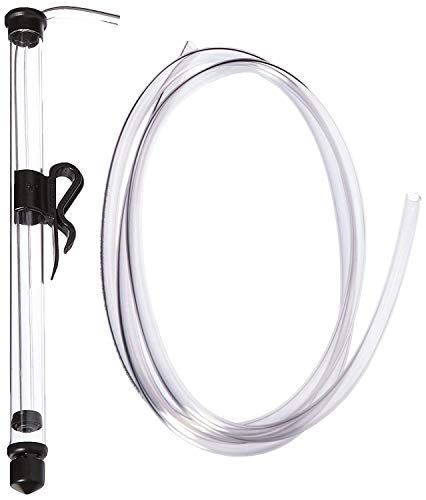
5Small siphon
Fermtech Auto-Siphon Mini with Tubing and Clamp
A short cane that fits one-gallon jugs, for racking off the sediment and filling bottles without stirring up the lees.
-
6All-in-one alternative
Master Vintner Fresh Harvest 1 Gallon Kit
If you would rather buy one box, this one-gallon kit includes a fermenter, jug, tubing, airlock and additives, per the listing.



Choosing the Grape Juice
The juice is the one ingredient that can stop the whole project before it starts. North Dakota State University Extension’s Getting Started With Home Winemaking (FN1638) is direct about it: use juice with no preservatives, because the preservatives in commercial juice may inactivate the yeast and inhibit fermentation.
Read the Label First
Two things matter. The carton must say 100% juice, not juice drink or cocktail, which are watered down and often sweetened with corn syrup. And the ingredients must not include potassium sorbate or sodium benzoate, which are there precisely to stop yeast from growing.
Sulfite is a different case. Welch’s 100% White Grape Juice lists potassium metabisulfite as a preservative, but winemakers add the same compound to fresh juice on purpose, and the Campden tablet makers’ directions simply wait 24 hours before adding the yeast. A juice preserved with sulfite still makes wine, as long as you add a strong wine yeast rather than hoping wild yeast will do the job. Welch’s 100% Red Grape Juice lists no preservative at all, only vitamin C and citric acid.
Which Juice Makes the Best Wine?
| Juice | Label check | Sugar | What to expect |
|---|---|---|---|
| Welch’s 100% Red Grape | No preservative listed | 36 g per 8 fl oz | A fruity red with a clear grape-juice character |
| Welch’s 100% White Grape | Potassium metabisulfite (works with wine yeast) | 35 g per 8 fl oz | A light, clean white |
| Frozen 100% grape concentrate | Check every can for sorbate or benzoate | You set it with the amount of water | Lets you make a stronger wine with less added sugar |
| Winemaking concentrate | Made for fermenting | Balanced for wine | Made from wine grape varieties; closer to a kit than to breakfast juice |
| Fresh-pressed grape juice | No label; treat with a Campden tablet | Varies with ripeness | The most character, and the most work |
Sugar figures are from the Welch’s product pages. Purple grape juice made from Concord-type grapes tastes recognizably of grape juice after fermentation; whites are more neutral and many people find them the better first wine.
Grape Juice Wine Recipe (1 Gallon)
 This is the standard method, written for a one-gallon glass jug with an airlock and with the sugar set by measurement instead of guesswork. It works with red or white 100% grape juice.
Recipe card
Store-bought grape juice wine (1 gallon)
- Makes
- About 5 bottles
- Time to drink
- Several weeks to ferment and clear
- Difficulty
- Easy
Ingredients
- 1 gallon (two 64 oz bottles) of 100% grape juice, red or white, without potassium sorbate or sodium benzoate
- About 3/4 lb (340 g) white sugar, adjusted with a hydrometer
- 1 teaspoon yeast nutrient
- 1 packet (5 g) wine yeast, such as Lalvin EC-1118
- 1 Campden tablet for bottling day (optional)
Method
- Sanitize the jug, airlock, funnel, spoon and hydrometer.
- Pour about 2 cups of juice into a saucepan, warm it gently and stir in the sugar until it dissolves. Let it cool.
- Funnel the rest of the juice into the jug, add the sweetened juice and the nutrient, and take a hydrometer reading. Aim for 1.085 to 1.090; add a little sugar or juice to get there.
- Rehydrate the yeast as the packet describes, add it, fit the airlock and keep the jug somewhere steady and out of direct light.
- When bubbling slows and two readings a few days apart are the same, siphon the wine off the sediment into a clean jug, topping up so there is little air space.
- Once the wine is clear, siphon it into bottles, adding one crushed Campden tablet per gallon first if you plan to keep it for a while.
Quantities from the product directions: the Fermax listing calls for 1 teaspoon of nutrient per gallon, and the EC-1118 listing rates one 5 g sachet for 4.5 to 23 liters. Sugar varies by juice, so trust the hydrometer over the scale.
How to Make Wine from Grape Juice, Step by Step
1. Sanitize Everything
Juice from a sealed bottle is clean; the jug, funnel and spoon are what bring in spoilage bacteria. Wash them, rinse well, then use a no-rinse sanitizer on everything that touches the juice.
2. Start with the Juice at Room Temperature
Yeast starts slowly in cold juice. If the bottles have been in the fridge, let them warm up first. Clemson Cooperative Extension’s Basics of Home Winemaking ferments at 65 to 75°F, away from direct sunlight.
3. Measure and Add the Sugar
Float the hydrometer in a sample. Supermarket juice is made for drinking, not for wine, so it reads well below the 1.090 that Virginia Cooperative Extension’s Wine Making for the Home Gardener says gives about 12% alcohol. Dissolve the sugar in a little warm juice rather than pouring it in dry, add it, stir and measure again. The table in the next section gives the amounts.
4. Add Nutrient and Yeast
Juice has none of the fruit solids that feed yeast in a grape must, so add nutrient: NDSU warns that stressed yeast can produce a rotten-egg (hydrogen sulfide) smell. Rehydrate the wine yeast in a little warm water as its packet says, then pour it in. Clemson is clear about bread, beer and cider yeasts: they cannot tolerate the alcohol in wine and die before fermentation is complete, which leaves a sweet, weak wine.
5. Ferment Under an Airlock
Fill the jug to the shoulder, not the neck, so the foam has room, and fit the airlock. Clemson expects fermentation to begin within 12 hours. No airlock? The University of Georgia Extension bulletin Winemaking at Home describes a homemade one: a one-hole stopper with a piece of tubing whose other end sits in a jar of water, so gas can bubble out and air cannot get in. Never seal the jug tight: the carbon dioxide has to escape.
6. Rack Off the Sediment
Fermentation is finished when the bubbling has stopped and two hydrometer readings a few days apart are the same, usually just under 1.000 for a dry wine. Siphon the wine into a clean jug, leave the yeast sediment behind, and top up with a little juice or a similar wine so there is almost no air space. Our guide on how to rack wine shows the technique.
7. Let It Clear, Then Stabilize If You Want It Sweet
Give the wine a few weeks in a cool, dark place until you can read print through the jug. If it stays hazy, see how to clear wine. A dry wine can go straight to the bottle. If you would like it sweeter, add potassium sorbate (Northern Brewer’s directions are half a teaspoon per gallon, with sulfite) before any sugar, as explained in how to backsweeten wine.
8. Bottle and Wait
Siphon the clear wine into sanitized bottles, cork or cap them, and store them somewhere cool and dark. You can drink it at bottling, but NDSU recommends at least two months of aging and says a year is better; juice wines in particular lose their raw, yeasty edge with a few months. Our guide to bottling and corking wine covers the details.
How Much Sugar to Add to Grape Juice
NDSU gives the conversion: 11 grams of sugar per liter of juice raise the specific gravity by 0.004. That is about 10.4 grams per gallon for every point (0.001) of gravity. Here is what it takes to bring one gallon up to 1.090:
| Juice reads | Sugar to add per gallon | Wine strength at 1.090 (approx.) |
|---|---|---|
| 1.050 | 415 g (about 0.9 lb) | 12% |
| 1.055 | 365 g (about 0.8 lb) | 12% |
| 1.060 | 310 g (about 0.7 lb) | 12% |
| 1.065 | 260 g (about 0.6 lb) | 12% |
| 1.070 | 210 g (about 0.5 lb) | 12% |
The Welch’s labels work out to roughly 146 to 150 grams of sugar per liter, which reads around 1.056 to 1.058. Fermented without added sugar, the University of Georgia rule of thumb (sugar yields about half its amount as alcohol) points to a light wine of around 7%, too weak to keep well. Our sugar calculator handles any starting reading and batch size, and the hydrometer guide explains how to read it.
Scaling Up: 5 Gallons of Wine from Grape Juice
| Batch | Juice | Sugar (approx.) | Nutrient | Yeast | Bottles |
|---|---|---|---|---|---|
| 1 gallon | 2 × 64 oz | 3/4 lb (340 g) | 1 tsp | 1 packet | 5 |
| 3 gallons | 6 × 64 oz | 2 1/4 lb (1 kg) | 3 tsp | 1 packet | 15 |
| 5 gallons | 10 × 64 oz | 3 3/4 lb (1.7 kg) | 5 tsp | 1 packet | 25 |
Sugar figures assume juice starting near 1.056 and a target of 1.090; measure your own juice first. A five-gallon batch needs a six-gallon bucket for the first days, so the foam has room, and a five-gallon carboy afterwards. One 5 g packet of EC-1118 is rated for up to 23 liters, a little over six gallons.
White Grape Concentrate Wine: A 1-Gallon Recipe
Frozen 100% white grape juice concentrate is one of the cheapest ways to make a clean, light white wine. The method is the same as for bottled juice; the difference is that you decide how much water goes in, which means you can raise the strength without adding as much sugar.
Recipe card
White grape concentrate wine (1 gallon)
- Makes
- About 5 bottles
- Time to drink
- Several weeks to ferment and clear
- Difficulty
- Easy
Ingredients
- Frozen 100% white grape juice concentrate, enough to make 1 gallon of juice at the strength given on the can
- Water to make up 1 gallon in the jug
- Sugar as needed to reach 1.085 to 1.090
- 1 teaspoon yeast nutrient
- 1 packet (5 g) wine yeast
Method
- Thaw the concentrate and mix it with water in a sanitized bucket, using slightly less water than the can directions if you want a stronger wine without adding sugar.
- Measure with the hydrometer and adjust to 1.085 to 1.090 with sugar dissolved in a little warm water.
- Pour into the jug, add the nutrient, pitch the rehydrated yeast and fit the airlock.
- Rack off the sediment when the readings stop changing, top up, let it clear and bottle.
Check the concentrate label for potassium sorbate or sodium benzoate, which prevent fermentation. Leftover reconstituted juice is useful for topping up after racking.
Concentrate vs Fresh vs Bottled Juice
All three make wine; they differ in flavor, effort and how much you have to adjust.
Bottled 100% Juice
The easiest start: open, measure, add sugar and yeast. Because it is made for drinking, it carries less sugar than ripe wine grapes, which is why the recipe adds some. It is also already clear and pasteurized, so it ferments cleanly.
Frozen or Winemaking Concentrate
Concentrate lets you control the strength: dilute it a little less than the can directions and the gravity rises without added sugar. Winemaking concentrates sold by homebrew shops are made from wine grape varieties and give a wine closer to one made from a kit.
Fresh-Pressed Juice
Juice pressed from wine grapes or bought from a local vineyard gives the most character, and it is the starting point of our full guide to making wine at home. It also carries wild yeast and bacteria, so treat it with one crushed Campden tablet per gallon a day before adding your yeast.
The Quick 5-Liter Bottle Method
The simplest version of all uses nothing but a large water bottle as the fermenter. It makes about a gallon of wine with no jug or airlock, and it is how many people make their very first batch:
- Empty a 5-liter (1.3 gallon) water bottle, sanitize it, and pour in 1 liter of room-temperature 100% grape juice and a packet of wine yeast. Cap it and shake hard for a few minutes to dissolve the yeast and add the oxygen it needs to multiply.
- Loosen the cap a little and leave the bottle in a dark place. When the juice starts to bubble, usually the next day, add 2 more liters of juice.
- Dissolve 500 g (about 1 lb) of sugar in 1 liter of water and add it after four or five days, together with the last liter of juice. The bottle should be filled to just below the neck. Leave the cap loose.
- Let it ferment until the bubbling stops completely, which can take two to three weeks.
- Move the bottle to the fridge for a few days so the yeast settles, then pour or siphon the clear wine off the sediment.
With 4 liters of juice and 500 g of sugar the must starts at roughly 19% sugar, which by the UGA rule gives a wine of about 10%; add a little more sugar if you want it stronger, measuring with a hydrometer. Two warnings make this method safe. First, never tighten the cap while the wine is fermenting: the gas has nowhere to go. Second, chilling slows the yeast but does not kill it, so check with a hydrometer that the wine has fermented dry before you bottle it, or it can start again in the bottle. And if the wine will sit for more than 14 days after that, Clemson recommends moving it to glass, which lets in far less oxygen than plastic.
Wine from Other Fruit Juices
The same method works with most 100% fruit juices, with the same rule about preservatives. What changes is the balance. UGA notes that apple wine is low in acidity and benefits from about one tablespoon of lemon juice per gallon before fermentation; very tart juices go the other way and need water and extra sugar. Apple juice and cider have their own guide, how to make hard cider, and our homemade wine recipes cover cranberry, pineapple, cherry and more. For whole fruit instead of juice, see how to make wine from fruit.
Troubleshooting Grape Juice Wine
| Problem | Likely cause | What to do |
|---|---|---|
| No bubbles after two days | Sorbate or benzoate in the juice, juice too cold, or yeast that was old or rehydrated too hot | Check the label, warm the jug to 65 to 75°F, then add a fresh packet; see stuck fermentation |
| Rotten-egg smell | Hungry, stressed yeast | Add nutrient early next time; rack the wine off the sediment |
| Stops sweet, gravity well above 1.000 | Too cold, too much sugar or a weak yeast | Warm it up and stir gently; restart with a fresh wine yeast |
| Still fizzy at bottling | Dissolved carbon dioxide, or fermentation not finished | Check the gravity; if it is stable, degas the wine |
| Smells of vinegar | Too much air, or vinegar flies got in | Keep jugs topped up and under an airlock; see wine faults |
Is It Legal to Make Wine from Juice?
In the United States, yes, for personal use: federal rule 27 CFR 24.75 lets adults make up to 100 gallons a year, or 200 in a household with two or more adults, as long as the wine is not sold. State and local rules can be stricter. Our homemade wine guide covers the legal and safety questions.
Grape Juice Wine FAQ
Yes. Any 100% grape juice without sorbate or benzoate preservatives can be fermented: add wine yeast and usually some sugar, keep it under an airlock and let the yeast convert the sugar to alcohol and carbon dioxide. Store-bought juice needs the added yeast, because pasteurization leaves no dependable wild culture.
Any juice labeled 100% grape juice, red or white, whose ingredients do not include potassium sorbate or sodium benzoate. Juice preserved with potassium metabisulfite still works with a wine yeast. Avoid juice drinks and cocktails. White juice usually gives a cleaner first wine; purple juice keeps more of its grape-juice flavor.
Usually about three quarters of a pound, roughly 340 grams, per gallon. Most supermarket grape juice starts near 1.056 on a hydrometer, and that much sugar lifts it to about 1.090, enough for a wine of around 12%. Measure first, since brands differ, and dissolve the sugar in warm juice before adding it.
Yes. Welch’s 100% Red Grape lists no preservative, and Welch’s 100% White Grape lists potassium metabisulfite, which a wine yeast handles. Add sugar to reach about 1.090, yeast nutrient and a wine yeast, then ferment under an airlock. Skip Welch’s juice cocktails and any bottle that lists sorbate or benzoate.
Fermentation itself usually runs for two to three weeks, but the wine is not ready when the bubbling stops. It then needs racking off the sediment and time to clear, so most juice wines are bottled after a couple of months. Rely on stable hydrometer readings and a clear wine, not a fixed date.
Thaw 100% frozen concentrate and mix it with water to make a gallon, using a little less water than the can says for a stronger wine. Check the gravity, add sugar to reach about 1.090, then add yeast nutrient and wine yeast and ferment under an airlock, exactly as you would with bottled juice.
Scale the one-gallon recipe by five: ten 64 oz bottles of 100% juice, roughly 3 3/4 lb of sugar to reach 1.090, five teaspoons of nutrient and one packet of wine yeast. Start in a six-gallon bucket so the foam has room, then move the wine into a five-gallon carboy under an airlock.