Homemade wine guide
Home Wine Making Equipment & Supplies
As an Amazon Associate we earn from qualifying purchases. How we choose products.
On this page
- Beginner Checklist: What You Need First
- Fermenters: Buckets, Carboys and Jugs
- Airlocks and Bungs
- Siphons and Tubing
- Measuring Tools
- Straining, Crushing and Pressing
- Bottling and Corking
- Aging: Oak Barrels
- Sanitizers and Cleaning
- Wine Making Supplies: Yeast and Additives
- Kit or Separate Pieces?
- Wine Making Equipment and Supplies FAQ
To make wine at home you need eight pieces of wine making equipment: a primary fermenter (usually a food-grade bucket), a secondary fermenter (a glass carboy or jug), an airlock with a drilled bung, a siphon, a hydrometer, a sanitizer, wine yeast, and bottles with corks and a corker. Everything else on this page, from crushers to oak barrels, makes the job easier or the wine better but can wait until after your first batch.
The checklist below sorts the equipment and supplies by when you need them, with sizes for a one-gallon and a five to six gallon batch. It follows the basic equipment lists published by Clemson, Virginia Tech and University of Georgia Extension, and each item links to a pick that is currently sold. If you would rather buy the essentials in one box, our guide to the best wine making kits compares complete starter kits.
Beginner Checklist: What You Need First
Not everything here is needed for a first batch. Essentials come first; “useful” items save effort or improve fruit wines; the rest can wait until you know you will keep making wine.
| Item | Priority | For 1 gallon | For 5 to 6 gallons | Cost tier |
|---|---|---|---|---|
| Primary fermenter | Essential | 2 gallon bucket | 6.5 to 8 gallon bucket | $ |
| Secondary fermenter | Essential | 1 gallon glass jug | 5 or 6 gallon carboy | $ to $$ |
| Airlock and drilled bung | Essential | 1 or 2 | 2 | $ |
| Siphon and tubing | Essential | Mini auto siphon | Regular auto siphon | $ |
| Hydrometer and test jar | Essential | Same for any size | Same for any size | $ |
| Sanitizer | Essential | Campden tablets or metabisulfite | Metabisulfite powder | $ |
| Wine yeast | Essential | 1 sachet | 1 sachet | $ |
| Bottles | Essential at bottling | About 5 | About 25 to 30 | $ to $$ |
| Corks and corker | Essential at bottling | #8 corks, hand corker | #8 or #9 corks, double lever or floor corker | $ to $$ |
| Straining bag | Useful | Small bag | Large bag | $ |
| Yeast nutrient, pectic enzyme, acid, tannin | Useful | For fruit wines | For fruit wines | $ |
| Wine thief and thermometer strip | Useful | Optional | Recommended | $ |
| Crusher or press | Can wait | Not needed | For fresh grapes or apples | $$ to $$$ |
| Oak barrel | Can wait | 1 gallon barrel | 5 gallon barrel | $$ |
| Shrink capsules | Can wait | Presentation only | Presentation only | $ |
For a one-gallon first batch, the essentials fit on a kitchen counter. For choosing between a glass carboy and a plastic bucket in detail, see carboy vs bucket.
Fermenters: Buckets, Carboys and Jugs
Wine ferments in two stages, and each stage wants a different vessel. Clemson Extension’s fact sheet on home winemaking explains the logic: the primary fermenter needs more volume than the batch, because foam and fruit rise during the first, vigorous days, so a 6 gallon fermenter suits a 5 gallon batch. The secondary fermenter should be as close as possible to the volume of wine, to keep air away, and Clemson recommends glass over plastic if the wine will sit there for more than 14 days.
Material matters too. University of Georgia Extension’s guide to winemaking at home recommends food-grade polyethylene for the primary and warns against aluminum and copper; Clemson’s advice is to ferment only in vessels made for the purpose.
Primary Fermenter: A Food-Grade Bucket
A bucket with a lid drilled for an airlock is the standard primary. Its wide mouth makes it easy to add fruit, stir the must and take readings.

FastRack 6.5 Gallon Fermenting Bucket with Lid
The bucket made for the job: food-grade, BPA-free HDPE, 6.5 gallons, and a lid with a drilled grommet for an airlock, per the listing. FastRack says it is the standard fermenting bucket in most of its kits. The extra space over five gallons is exactly the headroom a primary fermenter needs.
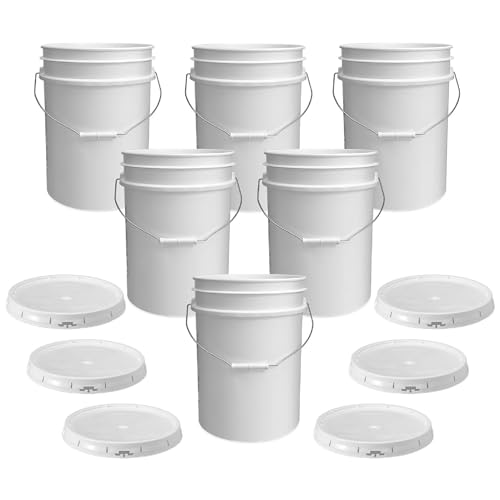
ePackageSupply 5 Gallon Food Grade Buckets (6 Pack)
Six plain five-gallon pails in 90 mil HDPE, BPA-free and described as FDA compliant for direct food contact. The lids are not drilled, so these work best for mixing sanitizer, soaking equipment, storing fruit and holding pressed pulp. They also accept most 12 inch screw-on gamma seal lids.
Secondary Fermenter: A Glass Carboy
After the first week or so the wine moves to a narrow-necked vessel under an airlock to finish fermenting, clear and age. Glass lets very little oxygen through and shows you how clear the wine is.

FastRack Italian 6 Gallon Glass Carboy
A six-gallon carboy in Italian glass with a non-slip base. The listing gives its weight as 15 lb empty and 55 lb full, a reminder to put it where it will stay before you fill it. The neck takes a #7 stopper, which is not included, so order a drilled bung and airlock with it.

Home Brew Ohio 6.5 Gallon Glass Carboy
The larger size: 6.5 gallons of clear glass. The extra half gallon makes it workable as a primary fermenter for a five-gallon batch of juice wine, which a six-gallon carboy is not. The listing does not give the neck size, so check it before ordering a bung.
One-Gallon Jugs for Small Batches
For one-gallon batches, a glass jug plays the role of the carboy. Virginia Tech’s list of equipment for one gallon of wine pairs a jug like this with a primary that holds 2 or more gallons.

North Mountain Supply 1 Gallon Glass Fermenting Jug with Airlock
A one-gallon glass jug with a handle that comes with an airlock, so it is ready to use as a small secondary fermenter out of the box. North Mountain Supply makes it in the USA and sells it for small-batch wine, beer and kombucha.

FastRack 1 Gallon Glass Jug with 38 mm Cap
A plain 128 oz glass jug with a handle and a 38 mm metal seal cap. The cap is for storage; to ferment in it you need a drilled bung that fits the neck and an airlock. Useful as a second or third jug when you rack small batches.
Airlocks and Bungs
An airlock lets carbon dioxide escape during fermentation without letting air or insects back in. It sits in a rubber bung, a stopper with a hole through the center, sized to the neck of your carboy or jug. Clemson recommends filling airlocks with a food-safe sanitizer solution rather than plain water, which can grow mold, or vodka, which evaporates too quickly.

FastRack Twin Bubble Airlock and Carboy Bung (2 Pack)
Two twin bubble airlocks in clear food-grade plastic with two universal-fit carboy bungs. FastRack calls the bubbler style the preferred airlock for secondary fermentation, because you can see the pressure inside the fermenter at a glance. Two is the right number: one for the carboy and a spare for the next batch.
Siphons and Tubing
Racking, moving wine off its sediment into a clean vessel, happens several times per batch, and the siphon is the tool you will use most. Clemson specifies clear, flexible food-grade tubing so you can check it is clean and watch the flow, and recommends racking canes or auto siphons for easier transfers. A pump-style auto siphon starts the flow without sucking on the tube and has a tip that keeps the sediment behind. Our guide on how to rack wine covers the technique, and our auto siphon comparison matches each siphon size to its fermenter.

Fermtech Regular Auto Siphon with 8 ft of Tubing
The full-size auto siphon: a 24 inch, 5/16 inch racking cane with 8 feet of clear tubing. Per the listing it is designed to minimize sediment pick-up and comes apart for cleaning. Its length suits five and six gallon carboys and buckets.
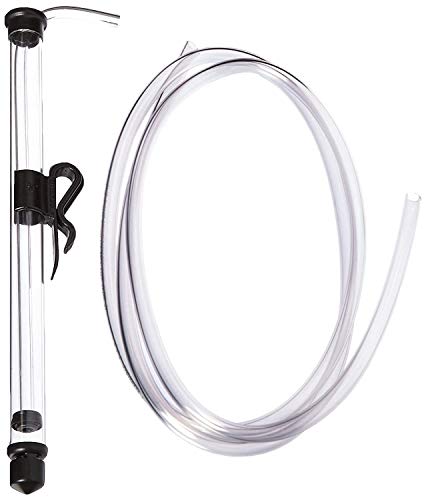
Fermtech Auto-Siphon Mini with 6 ft of Tubing
The one-gallon version: a 14 inch auto siphon that fits openings as small as 1 inch, with 6 feet of tubing and a clamp. The clamp lets you stop the flow between bottles, which makes it a simple bottling tool for small batches.
Measuring Tools
Hydrometer
University of Georgia Extension calls the hydrometer a simple, inexpensive instrument that takes the guesswork out of winemaking: it measures the sugar in the juice before fermentation and tells you when fermentation is complete. A triple scale model reads specific gravity, potential alcohol and Brix. Our guide on how to use a hydrometer explains the readings, and the wine ABV calculator turns two readings into an alcohol percentage.

Brewer’s Elite Triple Scale Hydrometer and Test Jar
A triple scale hydrometer for specific gravity, potential alcohol and Brix, with a 250 ml plastic test jar, a hard case and a cloth. The maker says each one is tested in its laboratory before shipping. It is made for beer, wine and mead, not for spirits.
Wine Thief and Thermometer
A wine thief pulls a sample out of a carboy for a hydrometer reading or a taste without siphoning. A stick-on thermometer strip shows the temperature of the wine itself, which matters because every yeast has a working range.

Fermtech Wine Thief, 19 Inch
A 19 inch transparent acrylic sampler, long enough to reach into a six-gallon carboy. Draw a sample, fill the test jar, and return the wine afterwards if the thief and jar were sanitized.

Adhesive Strip Thermometers (10 Pack)
Ten stick-on strips reading 39 to 97°F (4 to 36°C), accurate to about 1°C per the listing. Stick one on each fermenter below the liquid line and you can check the fermentation temperature without opening anything.
Straining, Crushing and Pressing
Straining Bags and Cheesecloth
For fruit wines, a mesh bag holds the crushed fruit in the primary fermenter so you can lift it out and squeeze it at the end instead of straining the whole batch. Virginia Tech’s one-gallon equipment list includes a nylon straining bag.

Bellamei Brew Bags, 2 Pack (16 x 11 and 18 x 16 Inch)
Two reusable bags in 250 micron polyester mesh with drawstrings and reinforced stitching. Sold for brewing, the listing also names straining fruit, cider and wine. The smaller bag suits a two-gallon primary and the larger one a six-gallon bucket.

Regency Ultra Fine Cotton Cheesecloth, 9 sq ft
Unbleached, grade 90 cotton cheesecloth, a tight weave for straining juice from small amounts of fruit or lining a funnel. The maker recommends single use, so treat it as a consumable rather than a bag you wash and reuse.
Crushers and Presses
You only need a crusher or press if you start from whole grapes or hard fruit in quantity. University of Georgia Extension notes that for small batches a rolling pin or food grinder is enough to crush fruit. Grape crusher-destemmers for home use are hard to find on Amazon today, so the picks below crush without removing stems; destem grapes by hand first. Our grape and fruit crusher comparison covers more models, including roller crushers for big harvests. To squeeze the juice out after crushing, see our guide to the best wine press.

SQUEEZE master Grape and Berry Crusher, 7 Liter
A hand-cranked crusher with a food-grade stainless steel hopper (7 liters usable, 9 maximum) and a gear the maker designed specifically for grapes, berries and other soft fruit. Set it over a bucket and crank: the skins and juice drop straight into the primary.

EJWOX Fruit and Apple Crusher, 7 Liter
For hard fruit: a 7 liter (1.8 gallon) stainless steel hopper on a table-mounted frame that, per the listing, processes 35 to 45 kg of fruit an hour into pieces of about 1/4 inch. It is designed first for apples and pears, the fruit a grape crusher cannot handle.

Bellemain 5 Inch Stainless Steel Funnel with Strainer
A small but constant helper: a stainless steel funnel with a removable strainer and a long stem that sits securely in a bottle or jug neck. Use it for topping up jugs, adding dissolved additives and filling the airlock.
Bottling and Corking
Wine Bottles
A standard wine bottle holds 750 ml, so a gallon fills about five and six gallons about 30. Clemson’s advice on reusing bottles is practical: use bottles that are new or have only ever held wine, check them for chips, and never cork a screw-top bottle, because the thin glass at the neck can break. Our guide on how to bottle and cork wine covers filling and corking step by step, and our guide to wine bottles for homemade wine compares the cases worth buying.

North Mountain Supply 750 ml Bordeaux Wine Bottles (Case of 12)
A case of 12 flat-bottomed Bordeaux bottles with a cork finish, made in the USA. The maker states they take #8 corks with a hand corker and #9 corks with a floor corker, and the flint (clear) glass shows off the color of any red, white or rosé.
Corks: #8 or #9?
Both sizes are 1 3/4 inches long and differ in diameter: a #8 cork is 7/8 inch (about 22 mm) and a #9 is 15/16 inch (about 24 mm). The #8 is easier to drive with a hand corker; the #9 makes a tighter seal and is the size University of Georgia Extension names for standard wine bottles, but it needs a floor corker or a strong double lever corker. Clemson Extension puts it simply: #8 corks suit bottles that will be aged for a short time, and #9 corks can age wine for many years. Used corks cannot be reused.

FastRack #9 Straight Wine Corks (Bag of 100)
A bag of 100 straight #9 corks, 15/16 by 1 3/4 inches, which FastRack describes as natural cork for standard 750 ml bottles. Pair them with a floor corker.
FastRack #8 Straight Corks (Pack of 100)
One hundred #8 agglomerated corks with beveled edges and a printed grape pattern. The listing calls them the right size for hand corkers, which makes them the default for a first batch.
Corkers
Clemson describes the two common types. A double lever corker is a small hand-held tool that is cheap and compact but takes more effort, ideally with a second person holding the bottle. A floor corker is a free-standing press one person can operate easily, and it sets every cork to the same depth.
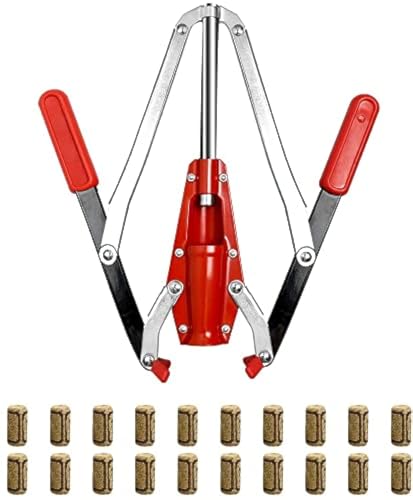
FastRack Double Lever Corker with 20 Corks
A double lever corker made in Portugal that FastRack says takes #7, #8 and #9 corks, sold with 20 #8 corks to get you started. A good first corker for one-gallon and occasional six-gallon batches.

Portuguese Double Lever Corker
The classic Portuguese hand corker with two levers for leverage. The listing says it works best with #8 corks, so pair it with the #8 bag above.

FastRack Italian Floor Wine Corker
An Italian floor corker with an adjustable plunger and a grip handle. It stands on the floor and drives the cork with a long lever, which makes #9 corks easy. If you bottle more than a batch or two a year, this is the upgrade that saves the most effort.
Shrink Capsules
Capsules are purely for looks: a PVC sleeve over the cork and neck that shrinks tight with heat or boiling water and gives homemade bottles a finished, giftable look.

Blulu PVC Heat Shrink Capsules, 4 Colors (200 Pieces)
Two hundred PVC capsules, 50 each in black, red, gold and silver, 30 mm across and 60 mm tall per the listing. They shrink with a heat gun, a hot fan or boiling water and fit bottle necks under 30 mm, which covers standard wine bottles.

Lonely Mountain PVC Shrink Capsules with Tear Tabs (120 Count)
A winemaking-specific option: 120 capsules printed purple and silver with grapes, made in the USA and shrunk by dipping in boiling water. The tear tab opens the capsule without a knife.
Aging: Oak Barrels
Oak barrels add vanilla, spice and toast flavors and let the wine breathe slowly. Small barrels work fast, because more of the wine touches the wood, so taste often and move the wine back to glass once it has enough oak. Cure every new barrel by its instructions before the first fill, and keep it full between uses or it will dry out and leak. Our guide to the best oak barrels for wine compares sizes and when oak spirals do the job instead.

Thousand Oaks 5 Gallon (20 Liter) American Oak Barrel
The size that matches a five-gallon batch. The listing includes a wooden stand, oak bung, spigot, funnels, storing tablets and curing instructions; the barrel is new, charred American oak. The char was chosen with spirits in mind, so for wine taste every week or so.
Thousand Oaks 1 Gallon (5 Liter) Oak Aging Barrel
A one-gallon barrel for one-gallon batches. The maker explains that the high proportion of liquid in contact with the wood is what speeds up aging in small barrels, and lists wine among its uses. At this size, check the wine every few days; a week or two can be plenty.
Sanitizers and Cleaning
Clean first, to remove dirt and residue, then sanitize every piece that touches the wine. Virginia Tech Extension’s guide for home gardeners describes two common sanitizing solutions: crushed Campden tablets (a form of potassium metabisulfite) or potassium metabisulfite powder dissolved in water, and notes that the products its author uses call for four Campden tablets or 1/4 teaspoon of powder per quart. It also names no-rinse alternatives such as Star San and an active oxygen sanitizer, and advises against chlorine bleach, which can leave an off taste. Our Campden tablets guide covers dosing the wine itself.

Campden Tablets (Potassium Metabisulfite), 1 lb
A one-pound bag of Brewcraft Campden tablets. The listing gives the usual dose for the must: one tablet per gallon, crushed well, 24 hours before you add the yeast. Dissolved in water at a higher dose they also make a sanitizing solution for corks, bottles and tools.

Sodium Metabisulfite, Food Grade, 5 lb
The powder in bulk: five pounds of food grade sodium metabisulfite, listed at 98.6% purity. Powder is the economical choice for mixing sanitizing solutions; for dosing the wine itself, potassium metabisulfite or Campden tablets are the usual choice, because they do not add sodium.
Wine Making Supplies: Yeast and Additives
Equipment is bought once; supplies are used up with every batch. A wine from a kit or from store-bought juice needs only yeast, plus whatever the kit includes. Fruit wines usually need a few additives to balance what the fruit lacks. Our guide to wine making additives explains each one in depth, and the recipes list the exact amounts per fruit.
The Fruit or Juice
Every batch starts with something to ferment: wine grapes, other fruit, or juice. Buy grapes from a grower who picks them ripe, or start with juice, which is the easiest route for a first batch; see how to make wine from grape juice and how to make wine from fruit.
Wine Yeast
A cultured wine yeast gives a predictable, clean fermentation. If you only keep one strain on hand, make it Lalvin EC-1118; our guide to the best wine yeasts matches strains to grapes and fruit.

Lalvin EC-1118 Wine Yeast (10 Pack)
Ten 5 g sachets of the most versatile wine yeast: up to 18% alcohol and 50 to 86°F per Lallemand, fast and neutral. One sachet covers a batch of one to six gallons. It ferments to dryness, so backsweeten after stabilizing if you like a sweeter wine.
Yeast Nutrient
Wine grapes often carry enough nitrogen for the yeast; many other fruits, and honey, carry less. A nutrient keeps the fermentation moving and helps avoid sulfur smells.

Fermax Yeast Nutrient, 1 lb
A one-pound bag of Fermax. The listing gives the dose as 1 teaspoon per gallon before fermentation begins, and says it improves attenuation and the speed of fermentation.
Pectic Enzyme
Fruit pectin makes wine hazy and fruit harder to press. Pectic enzyme breaks it down, giving more juice and a clearer wine.

Home Brew Ohio Pectic Enzyme Powder, 1 lb
A one-pound bag of pectic enzyme powder. The listing says it makes crushing and pressing more efficient, reduces pectin haze and can help extract tannin from red grape skins, and warns not to add it together with bentonite, which cancels its effect.
Tartaric Acid
Acid keeps wine fresh and protects it from spoilage. Penn State Extension’s grape maturity guide gives typical harvest targets of pH 3.1 to 3.3 for white grapes and 3.3 to 3.5 for reds, and notes that a pH above 3.70 can hurt the wine’s microbial and physical stability. If a pH meter or acid test shows the must is too flat, tartaric acid, the main acid in grapes, brings it back into range.

Home Brew Ohio Tartaric Acid, 2 oz
A small 2 oz jar of tartaric acid, enough for occasional adjustments to grape and fruit musts. Add it in small steps and measure again; it is easy to add acid and hard to take it out.
Wine Tannin
Tannin gives wine its structure and slight dryness on the palate. Grape skins provide it in red wine; white wines and most fruit wines benefit from a little added tannin.

Wine Tannin, 1 lb
A one-pound package of powdered wine tannin. The listing suggests 1/4 to 1/2 teaspoon per gallon to add astringency to a dull wine; start at the low end.
Potassium Sorbate
Sorbate stops yeast from multiplying, which is what lets you sweeten a finished wine without it starting to ferment again in the bottle. It is always used together with sulfite. Our guide on how to backsweeten wine explains the order.

North Mountain Supply Potassium Sorbate, 2 oz
A 2 oz jar of food grade potassium sorbate, sold as a wine stabilizer. A small jar lasts many batches, since only a fraction of a teaspoon goes into each gallon.
Sugar, Raisins and Bananas
Plain white sugar raises the potential alcohol of a thin fruit must or sweetens a finished wine; darker sugars add flavor of their own. Our sugar calculator works out how much to add for a target gravity. Golden raisins and bananas are old country-wine tricks for adding body to light fruit wines; the banana wine recipe shows how bananas are used.

Jumbo Golden Seedless Raisins (3 x 15 oz)
Three 15 oz canisters of jumbo golden raisins with no added sugar. Chopped and added to the primary, a handful per gallon adds body and a little sweetness to thin fruit wines.
Kit or Separate Pieces?
A starter kit is the quickest way to get the essentials, because someone has already matched the bung to the carboy and the siphon to the fermenter. Buying separately makes sense when you already own some of the gear, want to choose each piece yourself, or are starting with one gallon and only need a jug, an airlock, a mini siphon and a hydrometer. Either way, the checklist at the top of this page is what a complete setup looks like. Compare complete sets in our guide to the best wine making kits, and when the equipment is ready, follow how to make homemade wine for the first batch.
Wine Making Equipment and Supplies FAQ
The basic equipment is a primary fermenter such as a food-grade bucket, a secondary fermenter such as a glass carboy or jug, an airlock with a drilled bung, a siphon with tubing, a hydrometer, and bottles, corks and a corker. A straining bag helps with fruit wines; crushers, presses and barrels can come later.
Beyond the fruit or juice, you need a wine yeast and a sanitizer such as Campden tablets or metabisulfite for every batch. Fruit wines usually also call for yeast nutrient, pectic enzyme, acid blend or tartaric acid and a little tannin, and potassium sorbate if you plan to sweeten the finished wine.
Not if you keep things clean and follow a recipe. The active work for a batch is a few hours spread over weeks; most of the time the wine simply ferments and clears on its own. The common failures come from poor sanitizing, skipping hydrometer readings and bottling before fermentation has truly finished.
For one-gallon batches you need a 2 gallon bucket with lid, a 1 gallon glass jug with an airlock and bung, a mini auto siphon, a hydrometer and test jar, a straining bag for fruit, about five bottles with #8 corks, and a hand corker. Everything fits on a kitchen counter.
A primary fermenter of at least 6 to 6.5 gallons, so foam and fruit have room to rise; Clemson Extension suggests a 6 gallon fermenter for a 5 gallon batch. For the secondary stage, use a vessel as close to 5 gallons as possible, such as a 5 gallon carboy, to keep air away from the wine.
Only a food-grade one made for the purpose, usually HDPE marked as food safe, and ideally one that has never held anything else. Clemson warns that fermentation can leach hazardous materials from vessels not intended for winemaking, and University of Georgia Extension advises against aluminum and copper containers altogether.