Buying guide
Best Wine Making Kits
As an Amazon Associate we earn from qualifying purchases. How we choose products.

On this page
A wine making kit puts the fermenters, airlocks, siphon and bottling tools for a first batch in one box, so the main tools are in one place on day one. There are two good ways in, and they suit different people: a one-gallon fruit wine kit makes about five bottles from fruit you supply and is the low-commitment first experience, while a six-gallon equipment kit paired with a wine ingredient kit makes about 30 bottles and is the better fit if you expect to make wine regularly. Neither route includes bottles, so each one below lists what is included, what you buy separately and what is optional.
This guide compares eight equipment kits, from complete six-gallon starter sets to one-gallon kits for fruit wine, and three ingredient kits to put in them. The contents listed for each kit come from the manufacturer or the retailer that makes it, and the picks favor kits that cover the whole process from mixing to corking. If you have never made wine before, our step-by-step guide on how to make homemade wine pairs with any kit below.
Choose Your First Batch Size
Pick the route that matches how you will use the kit. The contents below come from the maker listings and our reviews further down.
First experience
Master Vintner Fresh Harvest 1 Gallon Fruit Wine Kit
1 gallon, about 5 bottles
A low-commitment first batch from fruit you already have, on a kitchen counter.
- Included
- 2 gallon fermenter with lid, 1 gallon glass jug with airlock, straining bag, racking cane with tubing, hydrometer, sanitizer, Campden tablets, pectic enzyme, acid blend, grape tannin, yeast nutrient, stabilizer and Red Star Côte des Blancs yeast, with supplies for 15 one-gallon batches.
- Buy separately
- The fruit, wine bottles, a corker and corks.
- Optional
- A mini auto siphon, which makes racking a one-gallon jug easier than a plain tube.
Regular winemaking
Master Vintner Wine Making Starter Kit (6 gallons)
6 gallons, about 30 bottles
The size most grape ingredient kits are sold in, and the most wine for the effort.
- Included
- Equipment only: 7.9 gallon fermenter, 6 gallon glass carboy with harness, two drilled bungs and airlocks, auto siphon, racking cane with tubing, bottle filler, triple scale hydrometer with test jar and thief, two stick-on thermometers, Wine Whip degasser, hand corker, #8 corks, carboy and bottle brushes and no-rinse cleaner.
- Buy separately
- The wine itself (a six-gallon ingredient kit or your own juice) and about 30 bottles. The box has no ingredients and no bottles.
- Optional
- A second ingredient kit to compare, such as the Fontana French Cabernet Sauvignon reviewed below.
Editor's Choice: six gallons
Master Vintner Wine Making Starter Kit (6 gallons)
The most complete six-gallon equipment kit here, and our pick if you plan to make wine regularly: a 7.9 gallon fermenter, a 6 gallon glass carboy, an auto siphon, a triple scale hydrometer, a degassing whip and a hand corker with corks. It takes any six-gallon ingredient kit or your own juice.
-
Best one-gallon kit
Master Vintner Fresh Harvest 1 Gallon Fruit Wine Kit
For wine from your own fruit: fermenter, jug, hydrometer, yeast and additives for 15 one-gallon batches.
-
Best value six-gallon kit
Winemakers Depot Premium Equipment Kit
Glass carboy, 8 gallon bucket, twin lever corker, hydrometer and 30 corks in one box.
Best Wine Making Kits Compared
The first three kits are for larger batches and the last five make one gallon at a time. “Not listed” means the maker does not say either way, so check the product page before you count on it.
Six-Gallon and Three-Gallon Kits
| Wine Kit | Master Vintner Starter Kit Editor's Choice | Winemakers Depot Premium Kit | Winemakers Depot 3 Gallon Kit |
|---|---|---|---|
| Product |  | 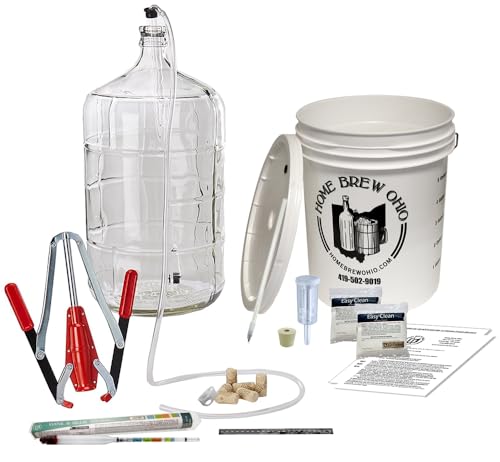 | 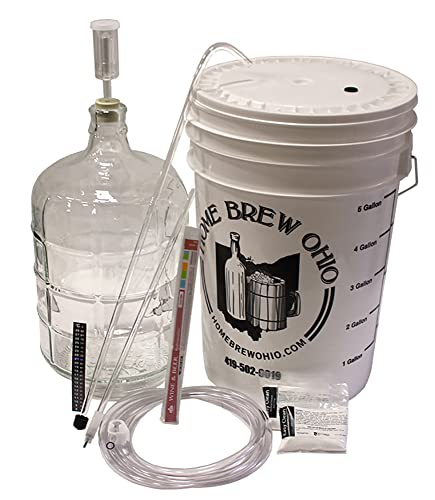 |
| Batch size | 6 gal (about 30 bottles) | 6 gal (about 30 bottles) | 3 gal (about 15 bottles) |
| Fermenters | 7.9 gal bucket, 6 gal glass carboy | 8 gal bucket, 6 gal glass carboy | 6.5 gal bucket, 3 gal glass carboy |
| Hydrometer | ✅ Triple scale, test jar, thief | ✅ Yes | Not listed |
| Siphon | ✅ Auto siphon, bottle filler | ✅ Auto siphon, bottle filler | Not listed |
| Corker and corks | ✅ Hand corker, #8 corks | ✅ Twin lever corker, 30 corks | Not listed |
| Ingredients | ❌ Equipment only | Sanitizer only | ❌ Equipment only |
| Best for | Complete six-gallon equipment | Six-gallon batches on a budget | Mid-size fruit wine batches |
| Price | $$$ | $$ | $$ |
| Buy | Check price on Amazon | Check price on Amazon | Check price on Amazon |
Editor's Choice
Master Vintner Starter Kit
- Best for
- Complete six-gallon equipment
Show specificationsHide specifications
- Batch size
- 6 gal (about 30 bottles)
- Fermenters
- 7.9 gal bucket, 6 gal glass carboy
- Hydrometer
- ✅ Triple scale, test jar, thief
- Siphon
- ✅ Auto siphon, bottle filler
- Corker and corks
- ✅ Hand corker, #8 corks
- Ingredients
- ❌ Equipment only
- Best for
- Complete six-gallon equipment
- Price
- $$$
Winemakers Depot Premium Kit
- Best for
- Six-gallon batches on a budget
Show specificationsHide specifications
- Batch size
- 6 gal (about 30 bottles)
- Fermenters
- 8 gal bucket, 6 gal glass carboy
- Hydrometer
- ✅ Yes
- Siphon
- ✅ Auto siphon, bottle filler
- Corker and corks
- ✅ Twin lever corker, 30 corks
- Ingredients
- Sanitizer only
- Best for
- Six-gallon batches on a budget
- Price
- $$
Winemakers Depot 3 Gallon Kit
- Best for
- Mid-size fruit wine batches
Show specificationsHide specifications
- Batch size
- 3 gal (about 15 bottles)
- Fermenters
- 6.5 gal bucket, 3 gal glass carboy
- Hydrometer
- Not listed
- Siphon
- Not listed
- Corker and corks
- Not listed
- Ingredients
- ❌ Equipment only
- Best for
- Mid-size fruit wine batches
- Price
- $$
One-Gallon Kits
| Wine Kit | Master Vintner Fresh Harvest | Craft A Brew Fruit Wine Kit | Master Vintner Small Batch Cabernet | Home Brew Ohio Upgraded Fruit Kit | Home Brew Ohio 1 Gallon Fruit Kit |
|---|---|---|---|---|---|
| Product |  |  |  |  |  |
| Batch size | 1 gal (about 5 bottles) | 1 gal (about 5 bottles) | 1 gal (about 5 bottles) | 1 gal (about 5 bottles) | 1 gal (about 5 bottles) |
| Fermenters | 2 gal bucket, 1 gal glass jug | 2 gal bucket, 1 gal glass carboy | Glass Little Big Mouth Bubbler, 1 gal glass jug | Not listed | Not listed |
| Hydrometer | ✅ Yes | ❌ No | ✅ With test jar and thief | Not listed | Not listed |
| Siphon | ✅ Racking cane, tubing | ✅ Racking cane, tubing | ✅ Mini auto siphon, bottle filler | ✅ Mini auto siphon | Not listed |
| Corker and corks | ❌ No | ❌ No | ✅ Corker and corks | Not listed | Not listed |
| Ingredients | ✅ Yeast and additives, 15 batches | ✅ Yeasts and additives, up to 20 batches | ✅ Grape concentrate, one batch | Recipe book; bring fruit | Bring fruit |
| Best for | Fruit wine from your own harvest | Experimenting with many fruits | Trying grape wine in a kitchen | Small fruit batches | Lowest-cost first try |
| Price | $ | $ | $$ | $ | $ |
| Buy | Check price on Amazon | Check price on Amazon | Check price on Amazon | Check price on Amazon | Check price on Amazon |
Master Vintner Fresh Harvest
- Best for
- Fruit wine from your own harvest
Show specificationsHide specifications
- Batch size
- 1 gal (about 5 bottles)
- Fermenters
- 2 gal bucket, 1 gal glass jug
- Hydrometer
- ✅ Yes
- Siphon
- ✅ Racking cane, tubing
- Corker and corks
- ❌ No
- Ingredients
- ✅ Yeast and additives, 15 batches
- Best for
- Fruit wine from your own harvest
- Price
- $
Craft A Brew Fruit Wine Kit
- Best for
- Experimenting with many fruits
Show specificationsHide specifications
- Batch size
- 1 gal (about 5 bottles)
- Fermenters
- 2 gal bucket, 1 gal glass carboy
- Hydrometer
- ❌ No
- Siphon
- ✅ Racking cane, tubing
- Corker and corks
- ❌ No
- Ingredients
- ✅ Yeasts and additives, up to 20 batches
- Best for
- Experimenting with many fruits
- Price
- $
Master Vintner Small Batch Cabernet
- Best for
- Trying grape wine in a kitchen
Show specificationsHide specifications
- Batch size
- 1 gal (about 5 bottles)
- Fermenters
- Glass Little Big Mouth Bubbler, 1 gal glass jug
- Hydrometer
- ✅ With test jar and thief
- Siphon
- ✅ Mini auto siphon, bottle filler
- Corker and corks
- ✅ Corker and corks
- Ingredients
- ✅ Grape concentrate, one batch
- Best for
- Trying grape wine in a kitchen
- Price
- $$
Home Brew Ohio Upgraded Fruit Kit
- Best for
- Small fruit batches
Show specificationsHide specifications
- Batch size
- 1 gal (about 5 bottles)
- Fermenters
- Not listed
- Hydrometer
- Not listed
- Siphon
- ✅ Mini auto siphon
- Corker and corks
- Not listed
- Ingredients
- Recipe book; bring fruit
- Best for
- Small fruit batches
- Price
- $
Home Brew Ohio 1 Gallon Fruit Kit
- Best for
- Lowest-cost first try
Show specificationsHide specifications
- Batch size
- 1 gal (about 5 bottles)
- Fermenters
- Not listed
- Hydrometer
- Not listed
- Siphon
- Not listed
- Corker and corks
- Not listed
- Ingredients
- Bring fruit
- Best for
- Lowest-cost first try
- Price
- $
Six-Gallon and Three-Gallon Wine Making Kits
These are the kits to buy if you want to make wine from a standard ingredient kit, which almost always comes in a six-gallon size. Each review lists what the maker includes and what you will still need to buy.
Master Vintner Wine Making Starter Kit (Editor's Choice)
Northern Brewer redesigned its Master Vintner starter kit around the two-stage method most ingredient kits use. Its product page lists a 7.9 gallon fermenter with lid for the first, foamy days, a 6 gallon glass carboy with a carrying harness for clearing, two drilled bungs and two airlocks, an auto siphon, a racking cane with tubing, and a bottle filler. For measuring there is a triple scale hydrometer with a test jar and a three-piece thief, and two FermagraF stick-on thermometers so you can see the fermentation temperature at a glance.
Two items set it apart from cheaper kits. The Wine Whip is a degassing tool that fits a drill, which saves the ten minutes of hard stirring most kit instructions ask for before clearing, and the bottling end is covered with a hand corker, #8 corks, a carboy brush, a bottle brush and a no-rinse cleaner. It is designed to work with Master Vintner’s own recipe kits but takes any six-gallon ingredient kit or your own juice.
Best for: a first setup you will not outgrow. Missing: the wine itself (an ingredient kit or juice) and about 30 bottles.
Winemakers Depot Premium Wine Making Equipment Kit (Best Value)
This is the classic six-gallon starter set without the extras. The listing names a 6 gallon glass carboy and an 8 gallon fermenting bucket, a twin lever corker, a hydrometer, a fermometer (a stick-on thermometer), 5 feet of transfer hose, a bottle filler, an airlock and stopper, 30 synthetic corks and four sanitizer packets, and the kit title adds an auto siphon.
Compared with the Master Vintner kit you give up the degassing whip, the brushes and the test jar and thief, so plan on stirring by hand to degas and on adding a test jar if the hydrometer does not come with one. In exchange it costs a price tier less, and everything needed to ferment, transfer and cork a six-gallon kit is in the box.
Best for: six-gallon kit wines on a tighter budget. Missing: a test jar (check), brushes, bottles and the ingredient kit.
Winemakers Depot 3 Gallon Glass Wine Making Equipment Kit
A middle size between one gallon and six. The listing pairs a 3 gallon glass carboy with a 6.5 gallon fermenter whose lid accepts the included airlock, so you can run the first, vigorous fermentation in the bucket and then move the wine to glass for clearing and aging.
Three gallons fills roughly 15 standard bottles, a sensible size for fruit and country wines when you do not want 30 bottles of an experiment. Most ingredient kits are sold for six gallons, so this kit suits your own fruit or juice better than a boxed recipe. The listing does not spell out every tool in the box, so plan on a hydrometer, a siphon and a corker if they are not included.
Best for: mid-size fruit wine batches. Missing: a full tool list; check for hydrometer, siphon and corker.
One-Gallon Wine Making Kits
A one-gallon kit makes about five bottles, fits on a kitchen counter and costs less to fill, which makes it a low-commitment way to learn the process, whether or not you move up to six-gallon gear later. Four of the five kits below are built for wine from fruit you supply; one comes with grape concentrate.
Master Vintner Fresh Harvest 1 Gallon Fruit Wine Making Kit (Best One-Gallon Kit)
The most complete fruit wine kit in this guide. Northern Brewer lists a 2 gallon plastic fermenter with lid for the fruit, a 1 gallon glass jug with a screw cap and an airlock for the second stage, a straining bag, a racking cane with tubing and a hydrometer. The additives are all there too: sanitizer, Campden tablets, pectic enzyme, acid blend, grape tannin, yeast nutrient and stabilizer, plus Red Star Côte des Blancs, a yeast its maker recommends for fruit wines.
The supplies stretch to 15 one-gallon batches, according to the listing, and a recipe handbook covers a handful of fruits. What it leaves out is the bottling end: no corker, corks or bottles.
Best for: anyone with fruit trees, berry bushes or a freezer full of fruit. Missing: fruit, corker, corks and bottles.
Craft A Brew Fruit Wine Making Kit
Craft A Brew builds its fruit wine kit for experimenting. The company’s product page lists a 2 gallon fermentation bucket with lid, a 1 gallon glass carboy for the second stage, a mesh fruit straining bag, an airlock and stopper, a racking cane with filter tip and transfer tubing with a clamp. On the ingredient side you get two strains of wine yeast (two packets each of Lalvin K1-V1116 and 71B), acid blend, pectic enzyme, yeast nutrient, wine tannin, Campden tablets, potassium sorbate, sanitizer and a guide with 11 fruit wine recipes.
The listing says the kit makes up to 20 one-gallon batches from fresh fruit, frozen fruit or juice. The two yeasts are a nice touch: K1-V1116 for a crisp, dry wine and 71B for a softer, fruit-forward one. There is no hydrometer, which matters if you want to know when fermentation has finished.
Best for: trying many different fruits. Missing: a hydrometer, bottles and corks.
Master Vintner Small Batch Wine Making Starter Kit (Cabernet Sauvignon)
The only one-gallon kit here that includes the wine as well as the gear: a Cabernet Sauvignon grape concentrate recipe kit for about five bottles. Northern Brewer lists a glass Little Big Mouth Bubbler as the primary fermenter, a 1 gallon glass jug for the second stage, each with an airlock and a FermagraF thermometer strip, a hydrometer with test jar and thief, a mini auto siphon, a bottle filler, a corker and corks, an 18 inch paddle and both a cleanser and a sanitizer.
That makes it a true one-box start for grape wine: open it, follow the instructions, and fill about five bottles at the end. Northern Brewer says each batch finishes in about four weeks, and one-gallon recipe refills come in other styles once the first batch is done.
Best for: a first grape wine without fruit to process. Missing: five bottles.
Home Brew Ohio Upgraded 1 Gallon Wine from Fruit Kit
Built for small batches from your own fruit, this one-gallon kit comes with instructions, a recipe book and a mini auto siphon, according to the listing. The auto siphon is the upgrade that matters: racking a one-gallon jug with a plain tube is fiddly, and a pump-style siphon makes it a one-handed job that leaves the sediment behind.
The listing suggests adding a test jar for your hydrometer, sold separately, so check which measuring tools are in the box before you order and add a hydrometer if there is none.
Best for: small fruit batches with easy racking. Missing: fruit; check for hydrometer and test jar.
Home Brew Ohio 1 Gallon Wine from Fruit Kit
The plain version of the kit above: a one-gallon equipment kit for making wine from fruit. The listing is short on detail, so compare its contents with the upgraded version before you order; the auto siphon is the main thing to look for.
It is the lowest-commitment way to try a single batch of fruit wine before buying bigger gear. Add a hydrometer and test jar if they are not in the box, because without them you are guessing at sugar and alcohol.
Best for: the cheapest possible first try. Missing: an itemized contents list; plan on a hydrometer and siphon.
Wine Ingredient Kits: What Goes in the Fermenter
Every kit above, except the Master Vintner Small Batch, is an equipment kit: the buckets, glass, airlocks and tools. To make a batch you also need something to ferment. With fresh grapes or fruit you build the must yourself, but most beginners start with a wine ingredient kit, which packs the juice or concentrate, yeast and additives for one batch, already balanced for sugar and acid.
Equipment Kit or Ingredient Kit?
You buy an equipment kit once and use it for years. You buy an ingredient kit for every batch. The two have to match in size: a six-gallon ingredient kit needs six-gallon gear, and a one-gallon recipe kit fits a one-gallon jug. Winexpert’s instructions for its kits, for example, call for a primary fermenter of up to 8 US gallons and a carboy that holds 6 US gallons.
How Many Bottles Does a Wine Kit Make?
A six-gallon kit is about 22.7 liters, which fills about 30 standard 750 ml bottles before losses. Winexpert tells you to have 28 to 30 bottles ready, and the Wild Grapes listing below says “up to” 30, because some wine always stays behind with the sediment when you rack. A one-gallon kit makes about five bottles.
What the Weeks on the Box Mean
Ingredient kits are sold by how long they take: 4, 5, 6 or 8 weeks. That is the time from mixing to bottling if you follow the instructions. Longer kits usually hold more juice and less concentrate, which is why Winexpert lists a starting gravity of 1.070 to 1.097 for its 4 week kits and 1.080 to 1.100 for the 5 to 8 week ones. The wine keeps improving in the bottle for months after that.

Wild Grapes DIY Wine Making Kit, Cabernet Sauvignon
A red wine ingredient kit, not equipment. The listing says each kit makes up to 6 US gallons (23 liters), about 30 bottles, and includes the wine base, a yeast pack, fining agents and 30 labels, so you need six-gallon gear such as the Editor’s Choice above.
Wild Grapes describes it as a California-style red and says the wine can be ready in about four weeks. Treat that as the earliest point to bottle and taste, not a deadline: reds keep developing in the bottle.

Winexpert Classic California Pinot Grigio
For a white wine, Winexpert’s Classic range is one of the long-running kit lines sold through homebrew shops. This California Pinot Grigio is a six-gallon ingredient kit that makes 30 bottles, according to the listing, and it is sold through the Home Brew Ohio storefront.
As with any ingredient kit, the equipment is separate. Follow the timeline printed in the kit instructions rather than a generic schedule; each kit is formulated to its own steps.

Fontana French Cabernet Sauvignon Wine Making Kit
Fontana lists its ingredients clearly: wine base, yeast, bentonite, sulphite, sorbate, chitosan and kieselsol, with equipment, bottles and labels not included. The listing puts this French Cabernet Sauvignon at 30 bottles with an alcohol level between 11% and 13%.
It is a good fit if you already own six-gallon gear and want a second red to compare with the Wild Grapes kit.
How to Choose a Wine Making Kit
Every kit in this guide will ferment wine. The differences are in batch size and in how much of the rest of the process the box covers.
Pick the Batch Size First
Decide how much wine you want per batch before anything else, because the fermenters set the size of every batch you make with the kit. Six gallons (about 30 bottles) is the size of almost every grape ingredient kit and the most wine for the effort. Three gallons suits fruit wines from a backyard harvest. One gallon (about five bottles) is the cheapest way to learn, and lets you try several fruits in the space of one big batch.
Two Fermenters Beat One
The first days of fermentation are foamy, so the primary vessel needs headroom: Clemson Extension’s home winemaking fact sheet suggests a 6 gallon fermenter for a 5 gallon batch. The second vessel should be sized to the wine, with as little air as possible, and Clemson recommends glass over plastic if the wine will sit there for more than 14 days. That is why the better kits pair a wide bucket with a glass carboy. Our carboy vs bucket guide compares the two in detail.
The Three Tools That Matter Most
- Hydrometer. The only reliable way to know the starting sugar and when fermentation has finished. Kit instructions give target readings at every stage, and our guide on how to use a hydrometer explains how to read one.
- Auto siphon. Racking the wine off its sediment and filling bottles are the steps that go wrong most often with a plain tube. A pump-style siphon makes both easy.
- Corker. A hand or double lever corker drives #8 corks into standard bottles; a floor corker is the upgrade for #9 corks and bigger runs. See how to bottle and cork wine.
What No Kit Includes
Almost no equipment kit includes bottles, and none includes the wine itself unless it says “recipe kit” or “ingredient kit”. Budget for 30 bottles for a six-gallon batch, five for a gallon, and for an ingredient kit or fruit every time you start a batch.
What you will still need
Bottles for every kit, and the two tools some one-gallon kits leave out.
-
1Bottles
North Mountain Supply 750 ml Bordeaux Bottles (case of 12)
Flat-bottomed cork-finish bottles that take #8 corks with a hand corker or #9 with a floor corker, per the maker.
-
2Hydrometer
Brewer’s Elite Triple Scale Hydrometer and Test Jar
Reads specific gravity, potential alcohol and Brix; the missing piece in kits without one.
-
3Small-batch siphon
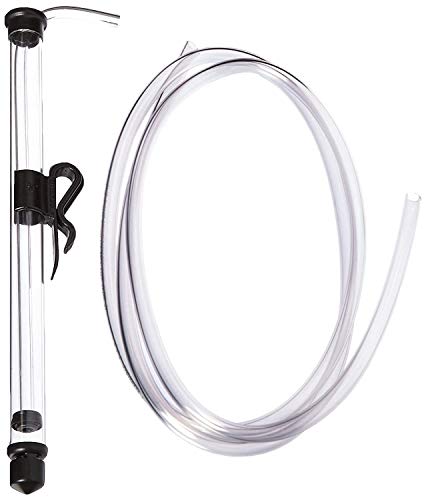
Fermtech Auto-Siphon Mini with 6 ft of Tubing
A 14 inch auto siphon that fits openings as small as 1 inch, sized for one-gallon jugs.


How to Make Wine from a Kit
Every ingredient kit comes with its own instructions, and those come first. The outline below follows Winexpert’s instructions for its 4 to 8 week kits (revised in 2018), which are typical of six-gallon kits.
- Clean and sanitize everything. Clean first, then sanitize every piece that will touch the wine. In WineMaker magazine’s kit troubleshooting guide, Gail Tufford suggests 3 tablespoons of sulfite powder in a gallon of cool water as a sanitizing solution. Our Campden tablets guide covers sulfite in detail.
- Day 1, mix and pitch. Stir bentonite into warm water in the primary, add the juice base, top up to the 6 gallon mark with cool water and take a hydrometer reading. Sprinkle the yeast on top and cover with a loose lid or an airlock. Keep the area at 68 to 77°F (20 to 25°C) for the whole process.
- Day 14, stabilize and degas. When the gravity is below 0.996, rack the wine into the carboy, add the sulfite and sorbate packet, and degas by stirring hard for about 10 minutes or with a drill whip for 2 to 4 minutes. Our guide on how to degas wine explains why this step matters.
- Day 15, clear. Add the fining agents (kieselsol and chitosan in Winexpert kits), fit the airlock and leave the carboy somewhere warm and undisturbed.
- Bottle. When the wine is clear, rack it off the sediment once more and bottle it. See how to rack wine and how to bottle and cork wine.
One-gallon fruit kits follow the same stages with your own fruit in place of the juice base; our guide to making wine from fruit walks through them.
Buying a Wine Making Kit on Amazon
Most of the kits in this guide are sold on Amazon by the homebrew companies themselves: the Master Vintner kits through Northern Brewer and several others through Home Brew Ohio. A few checks before you order save a second shipment later.
Read the Contents List, Not the Title
Kit titles are generous. The contents list is what tells you whether a hydrometer, a corker, corks or a siphon are included, and it is worth comparing with the table above.
Inspect the Glass on Arrival
Six-gallon glass carboys are heavy and are the part most likely to arrive damaged. Open and inspect the carboy as soon as the box arrives, and keep the packaging until you have checked it.
Match Sizes Before You Add to Cart
If you are buying an ingredient kit in the same order, check that its batch size matches the fermenter and carboy. A six-gallon kit will not fit a one-gallon jug, and a one-gallon recipe will leave too much air in a six-gallon carboy.
How We Chose These Kits
Every kit in this guide is currently sold and comes from an established homebrew brand. Contents and yields come from the manufacturer’s own product page where there is one (Northern Brewer for Master Vintner, Craft A Brew for its fruit wine kit) and from the listing otherwise. Among kits of the same type and size, we favored the ones that cover the whole process and the ones buyers choose most often.
Wine Making Kit FAQ
It depends on your first batch size. For a low-commitment first experience, the Master Vintner Fresh Harvest one-gallon kit teaches the process with your own fruit and costs much less. If you expect to make wine regularly in six-gallon batches, start with the Master Vintner Wine Making Starter Kit, which bundles every tool for fermenting, transferring, degassing, bottling and cleaning.
A standard six-gallon kit makes about 30 bottles: six US gallons is roughly 22.7 liters, and a regular wine bottle holds 750 ml. Expect one or two fewer in practice, because each racking leaves a little wine behind with the sediment. A one-gallon kit makes about five bottles.
For a first batch, usually yes. An equipment kit gathers the fermenter, airlock, siphon, hydrometer and bottling tools in one purchase, so nothing essential is missing on day one, and the same gear serves every later batch. If you already own some of it, buying only the missing pieces can cost less.
Wine from an ingredient kit or from store-bought juice is the easiest start. The juice is already balanced for sugar and acid, so you skip crushing, pressing and adjusting and mostly follow the instructions, keep everything sanitized and wait. Fresh grapes and fruit wines ask for more measuring and judgment.
It can be, once the equipment is paid for. The gear is a one-time cost; after that a batch needs only juice or fruit, yeast and a few additives. Whether a bottle ends up cheaper than store-bought depends on the ingredient kit or fruit you choose, and the first batch always carries the cost of the equipment.
A six-gallon equipment kit usually holds a 6.5 to 8 gallon fermenting bucket with lid, a 6 gallon carboy, a bung and airlock, a siphon with tubing, a hydrometer and a corker, plus sanitizer. It does not include the wine: you add a six-gallon ingredient kit or juice, and about 30 bottles.
Yes. Any equipment kit works for fruit wine, and fruit wine kits such as the Master Vintner Fresh Harvest or Craft A Brew add the straining bag, pectic enzyme, acid blend, tannin and yeast that fruit needs. You supply the fruit, typically 3 to 5 pounds per gallon depending on the recipe.