How to Use Star San: Dilution per Gallon and Contact Time
On this page
The short answer: mix 1 ounce of Star San with 5 gallons of water. That is 0.2 ounce (about 6 ml) per gallon. Let the solution touch every surface for at least 1 to 2 minutes, drain it, and do not rinse. Both the ratio and the contact time come from the Five Star Chemicals Star San page, which also says to use the mixed solution right away and not to keep it if it has sat longer than an hour.
This guide turns that one ratio into amounts for the jobs a home winemaker actually does: a 1 gallon jug, a 2 gallon bucket, a 5 gallon carboy and a spray bottle. If you are new to the hobby, our guide to making wine at home shows where sanitizing fits in the schedule.
What Star San Is
Five Star describes Star San as a high foaming, acid based, no rinse sanitizer. Three words in that line matter to a winemaker.
Acid based and no rinse
Five Star says it can be used without rinsing at the recommended dilution, and the label instruction is to drain but not rinse. That is why people like it for carboys and siphon hoses, which are hard to rinse and dry.
Cleaning is not sanitizing
A sanitizer works on a surface that is already clean. Dried must, fruit pulp or a film on the glass shields microbes from it. Wash first with hot water and a cleaner made for brewing and winemaking, scrub off anything visible, rinse that cleaner away as its own label directs, then sanitize.
Self foaming
Five Star calls the foam self foaming, which helps the solution reach cracks and crevices. Foam on its own is not a reason to rinse, but the point of the product is contact, so make sure the liquid, not just bubbles, has wet every surface.
How Much Star San per Gallon
The ratio is 1 ounce per 5 gallons of water. One fluid ounce is 29.57 ml, so a single gallon takes 0.2 ounce, or about 5.9 ml. We calculated every row below from that ratio. Measure with a clean syringe or a small marked cup, since a teaspoon is a rough guide at best.
| Water | Star San (fl oz) | Star San (ml) |
|---|---|---|
| 1 gallon | 0.2 | 5.9 |
| 2 gallons | 0.4 | 11.8 |
| 5 gallons | 1 | 29.6 |
| 32 oz spray bottle | 0.05 | 1.5 |
How much Star San for a 32 oz bottle
This question has two readings. If you mean filling a 32 ounce spray bottle with solution, you need only 0.05 ounce, about 1.5 ml, a third of a teaspoon. If you mean the 32 ounce bottle of concentrate, at 1 ounce per 5 gallons it makes 160 gallons of solution.
How much Star San for 1 gallon
About 6 ml, as the table shows. A one gallon jug is also the size most first wine batches use, so mix a gallon of solution, pour a little into the jug to sanitize it, and keep the rest for the lid, airlock and spoon.
Can you use too much?
Five Star says the no rinse claim holds at the recommended dilution. We found no statement on the page about stronger mixes, so stay with the ratio. More concentrate does not buy more safety and it costs more.
Contact Time
The Five Star page says to allow a contact time of at least 1 to 2 minutes. That is the figure to plan around. Some retailer listings and charts give other times, including longer ones, so check the label on your own bottle, because it is the one that applies to the product in your hands.
What counts as contact
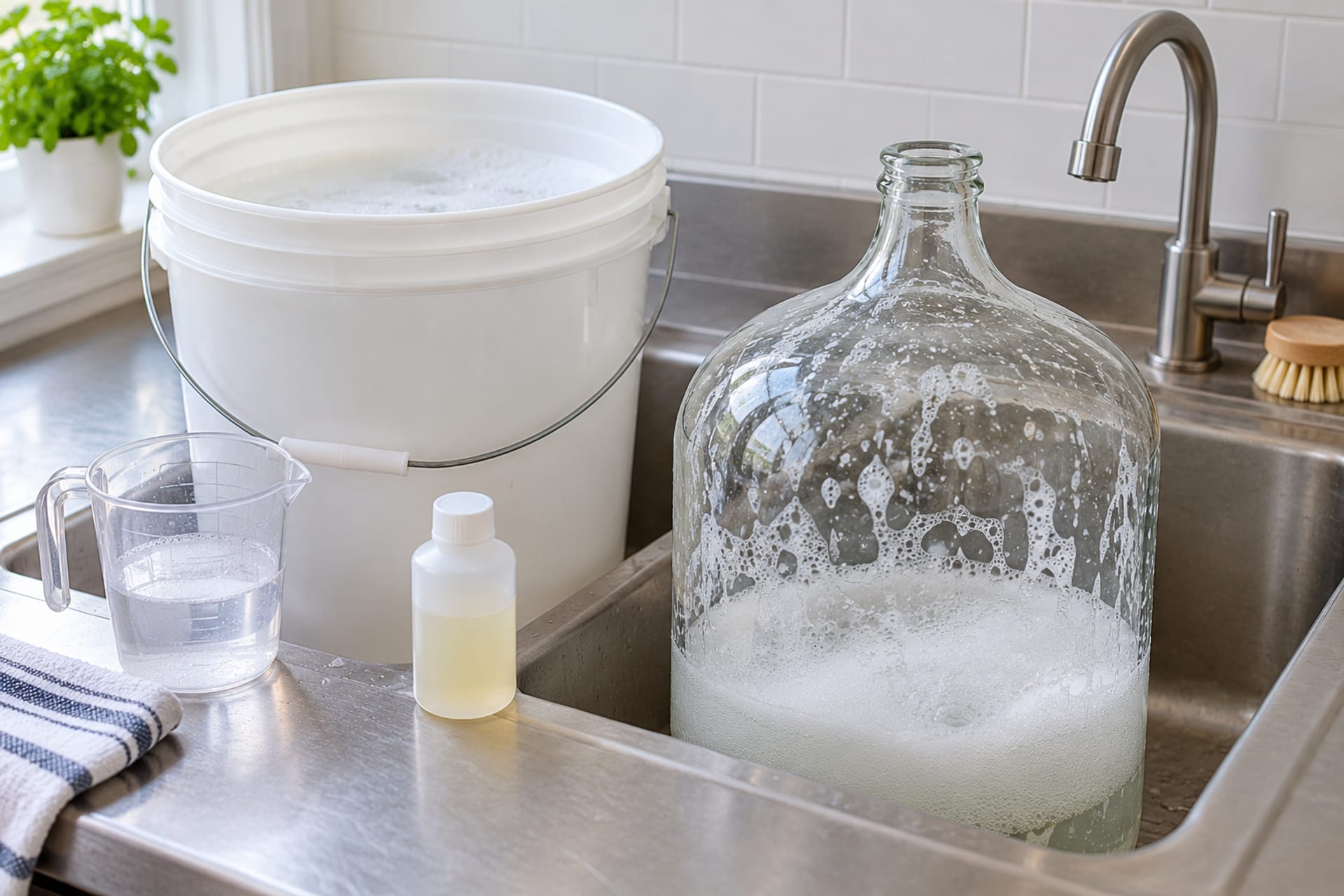
The clock starts when the solution has wetted the whole surface. For a bucket, that means sloshing it around the walls and up under the rim. For a carboy, fill it part way, cover the opening and shake it so the liquid reaches the shoulders and neck.
Draining
Tip it out and let it drip. Five Star's instruction is to drain, not rinse. Then fill the clean, sanitized vessel without delay so it does not pick up dust.
Using Star San on Winemaking Gear
Anything that touches the must, juice or wine after fermentation starts should be clean and then sanitized. Our equipment and supplies guide lists the gear; this is how to treat each piece.
Buckets and carboys
Pour in a few quarts of solution, close the opening, and move it around until every inner surface has been wet. Not sure which vessel to use for what? See carboy vs bucket.
Siphon, hose, spoon and airlock
Submerge the siphon and the hose, filling the hose by drawing solution through it. Soak the long spoon, the hydrometer jar, the thief and the airlock parts in a bucket of solution, then lift them out and use them. Our racking guide shows the siphon in action.
Bottles and corks
Fill each bottle, swirl, wait the contact time and drain it upside down on a rack. Dip the corks or caps in the solution just before use. The full bottling sequence is in how to bottle and cork wine.
Star San vs Campden Tablets vs One Step
Winemakers have more than one sanitizing option. This table lists only what we have read from each source, and the last two columns send you to the pages and labels that carry the detail.
| Sanitizer | What we can say | Where to read more |
|---|---|---|
| Star San | Acid based, high foaming, no rinse at the recommended dilution; 1 oz per 5 gal; contact time at least 1 to 2 minutes (Five Star Chemicals) | The Five Star product page |
| Campden tablets (metabisulfite) | A sulfite product, also used to protect the wine itself | Campden tablets guide |
| One Step | A separate no rinse sanitizer with its own dose and contact time | The label on the package |
Dissolved Campden is a common choice for a quick soak of small items, and it is covered on its own page so we do not repeat it here. The practical point is that you can use one sanitizer for the gear and still add Campden to the wine for its own job. They answer different questions.
Storing the Mixed Solution
Five Star's wording is that Star San must be used immediately, and that it does not recommend using it if it has been in solution longer than an hour. Take that at face value. Mix what you need for the session, and pour out what is left when you finish. The concentrate in its original bottle is a separate matter; for how long it keeps, read the bottle.
One practical tip: mix in a clean bucket with a measured amount of water, add the concentrate, and stir gently. Make wine responsibly, and only if you are of legal drinking age.
Looking for the product itself? Star San is sold by homebrew shops and online, and the current price and size options are on each seller's page, so we leave the price out here. Check the size before you buy, since a small bottle makes a lot of solution at this ratio.