Peach Wine Recipe
As an Amazon Associate we earn from qualifying purchases. How we choose products.
On this page
The short answer: for one gallon of peach wine, slice 3 pounds of ripe, unpeeled peaches into the fermenter without the stones, mash them with ½ cup of chopped raisins and half of the 1¾ pounds of sugar, and pour over a quart of boiling water. Top up to a gallon with cool water, add the juice of a large lemon and a Campden tablet, then pectic enzyme, nutrient and wine yeast over the next day. Ferment on the fruit for 5 days, strain, add the rest of the sugar and finish under an airlock.
Peaches smell wonderful but make a thin wine on their own. The recipe on this page fixes that the classic way, with a second ingredient for body, and the sections below explain each choice so you can swap in white grape concentrate or banana instead. Peach season is short, so if you cannot start right away, freeze the fruit.
Recipe card
Peach and raisin wine, 1 US gallon
- Makes
- About 5 bottles (750 ml)
- Time to drink
- 3 to 6 months
- Difficulty
- Easy
Ingredients
- 3 lb ripe peaches, washed, not peeled
- ½ cup chopped raisins
- 1¾ lb granulated sugar, in two additions
- 1 large lemon (juice)
- ½ tsp pectic enzyme
- 1 quart boiling water, then cool water to 1 gallon
- 1 Campden tablet, crushed
- 1 tsp yeast nutrient
- 1 packet white wine yeast
Method
- Slice the peaches thinly into the primary, discarding the stones, and mash them.
- Add the raisins and half the sugar, pour on the boiling water and stir to dissolve.
- When cool, top up to 1 gallon, add the lemon juice and Campden tablet, and cover for 12 hours.
- Stir in the pectic enzyme, wait 12 hours, then add the nutrient and yeast.
- Ferment 5 days, stirring twice daily. Strain through a nylon bag, squeezing well.
- Stir in the rest of the sugar, pour into a jug without topping up and fit an airlock. Top up when fermentation calms, then rack every three weeks until clear and dry.
From the peach and raisin recipe in Jack Keller’s Requested Recipes Collection (compiled 2020), which he adapted from Dorothy Alatorre’s Home Wines of North America. Check the starting gravity; see the sugar section.
Why Peach Wine Needs a Second Ingredient
Jack Keller, the wine judge and author whose recipes are collected in his Requested Recipes Collection (2020), puts it plainly: peach wine is very good, but peaches have very little body, and a second ingredient is necessary for a healthy body. He gives three ways to supply it, and each changes the wine a little.
Raisins (the recipe card)
Half a cup of chopped raisins is Keller’s body builder in the first recipe, adapted from Dorothy Alatorre. This is the simplest version and the one most people have the ingredients for.
Banana
Keller’s peach and banana wine, adapted from Brian Leverett’s Winemaking Month by Month, simmers 1 pound of sliced ripe banana in a pint of water for 20 minutes and adds the strained liquid. He calls the result a superb golden wine. It uses ½ teaspoon of citric acid in place of the lemon.
White grape concentrate
His own peach and grape wine adds a 12 ounce can of frozen white grape concentrate, with 1½ teaspoons of acid blend, ¼ teaspoon of tannin and champagne yeast, and drip drains the fruit after 10 days. Check the can: NDSU Extension warns that preservatives in commercial juice can inactivate the yeast.
Choosing the Peaches
How many pounds per gallon
All three of Keller’s peach recipes use 3 pounds per gallon. NDSU Extension’s Getting Started With Home Winemaking (FN1638, reviewed August 2026) gives 3 to 5 pounds of fruit per gallon as the usual range for fruit wines, so you can go higher for more flavor.
Ripe, sound and unpeeled
Use peaches that are ripe and fragrant but not overripe or damaged; NDSU says to cut out bruises and avoid diseased or insect-damaged fruit. Keller washes them in cool water and does not peel them.
Leave the stones out, and whole
NDSU notes that the pits of stone fruit contain a cyanide-forming compound that adds a bitter taste, and that you should take care not to break them. Halve the peaches and lift the stones out before slicing.
Frozen or canned peaches
Freezing and thawing softens fruit and helps juice extraction, according to NDSU, so frozen peaches are fine and often easier. Canned peaches are another matter. Keller’s notes on canned fruit wine say the finished wine will not have the aroma of fresh peaches, that heavy syrup changes the sugar you need, and that fruit preserved with potassium sorbate or benzoate will not ferment at all. Read the label.
Sugar, Acid and Yeast
Starting gravity
Keller adds the sugar in two halves: one before fermentation and one when the wine goes into the jug. That is fine, but take a hydrometer reading after the first addition so you know where you are. The Virginia Tech guide Wine Making for the Home Gardener (Virginia Cooperative Extension, 2024) explains that a total starting gravity of about 1.090 gives roughly 12% alcohol. Our sugar calculator and hydrometer guide help you plan it.
Acid
The lemon juice is the acid in this version. Virginia Tech notes that most fruit musts benefit from added acid and that a wine without enough tastes flat, so do not leave it out.
Yeast
Keller calls for a Sauterne-style white wine yeast or a champagne yeast. Two Lalvin strains fit, with figures from Lallemand’s product pages:
- Lalvin ICV-D47: 15% alcohol tolerance, 15 to 28 °C (59 to 82 °F). Lallemand describes it as complementing varietal character in white wines, and its pairing notes for Viognier mention stone fruit.
- Lalvin EC-1118: the champagne strain, 18% tolerance and 10 to 30 °C (50 to 86 °F), neutral and fast. Choose it for the grape concentrate version or a drier, stronger wine.
Compare more strains on our best wine yeasts page.
How to Make Peach Wine, Step by Step
Step 1: Sanitize
Wash and sanitize the bucket, spoon, straining bag and jug before anything touches the fruit.
Step 2: Prepare and mash the peaches
Wash the peaches in cool water, halve them, remove the stones and slice thinly into the primary. Mash them, add the chopped raisins and half the sugar.
Step 3: Boiling water, then cool water
Pour a quart of boiling water over the fruit and stir until the sugar dissolves. Cover with a clean cloth and let it come down to room temperature, then add cool water to make one gallon.
Step 4: Lemon, Campden and pectic enzyme
Add the lemon juice and the crushed Campden tablet, cover and wait 12 hours. Stir in the pectic enzyme and wait another 12 hours. NDSU recommends roughly a day between sulfite and yeast so the wine yeast is not harmed.
Step 5: Yeast and five days on the fruit
Stir in the nutrient and sprinkle the yeast over the must. Ferment for 5 days, stirring twice a day; NDSU suggests 65 to 80 °F for a fermenting must, with cooler temperatures keeping more fruity aroma.
Step 6: Strain and add the rest of the sugar
Strain through a nylon bag and squeeze well. Stir in the remaining sugar, pour into a 1 gallon jug without topping up, and fit an airlock. When the fermentation calms, top up so there is little air left.
Step 7: Rack, clear and bottle
Rack every three weeks until the wine is clear and fermented to dryness, wait two more weeks, rack a final time and bottle. Keller says it can be drunk right away but mellows considerably in six months. See how to bottle and cork wine.
Scaling Up: 5 Gallon Peach Wine
Multiply everything by five; the sugar is still split into two additions.
| Ingredient | 1 gallon | 5 gallons |
|---|---|---|
| Ripe peaches | 3 lb | 15 lb |
| Chopped raisins | ½ cup | 2½ cups |
| Granulated sugar (check gravity) | 1¾ lb | 8¾ lb |
| Lemons (large) | 1 | 5 |
| Pectic enzyme | ½ tsp | 2½ tsp |
| Yeast nutrient | 1 tsp | 5 tsp |
| Campden tablets | 1 | 5 |
| Water | to 1 gallon | to 5 gallons |
| Wine yeast | 1 packet | 1 packet (check the packet’s batch size) |
Fifteen pounds of sliced peaches take up a lot of room, so use a 7 to 8 gallon bucket for the primary. Our carboy vs bucket guide covers the vessels.
What you need for a 1 gallon batch
Gear and additives for the recipe card. You add the peaches, raisins, lemon and sugar.
-
1Fermenting kit
Home Brew Ohio Upgraded 1 Gallon Wine from Fruit Kit
A 1 gallon kit made for fruit wine; the listing says it includes instructions, a recipe book and a mini auto-siphon.
-
2Jug and airlock
FastRack 1 Gallon Glass Jug with Bung and Airlock
A clear 1 gallon glass jug with a drilled #6.5 bung, twin bubble airlock and polyseal cap, per the listing.
-
3Wine yeast
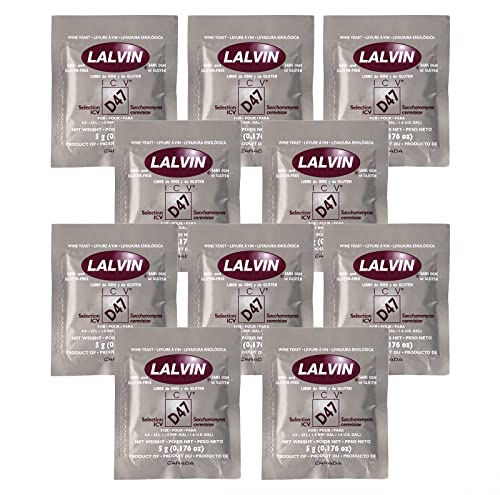
Lalvin ICV-D47 Wine Yeast, 10 Pack
A white wine strain; the listing describes fruity, floral character and a full mouthfeel, which suits a light fruit like peach.
-
4Pectic enzyme
Home Brew Ohio Pectic Enzyme, 1 lb
Peaches carry pectin; the listing says the enzyme breaks it down for easier pressing and a clearer wine.
-
5Yeast nutrient
The listing doses it at 1 teaspoon per gallon before fermentation begins, as in the recipe.
-
6Campden tablets
Craft A Brew Campden Tablets, 50 Count
Sodium metabisulfite tablets; the listing recommends 1 tablet per gallon, crushed between two spoons.




Related Recipes and Guides
If peaches are your first fruit wine, read our guide to making wine from fruit for the method behind every recipe, and how long wine takes to ferment to know what to expect each week. The full recipe collection has more fruit ideas. Make and drink wine responsibly, and only if you are of legal drinking age.