Strawberry Wine Recipe
As an Amazon Associate we earn from qualifying purchases. How we choose products.
On this page
Strawberry wine is the classic early-summer country wine: bright pink, very fruity, and ready to drink sooner than most. This strawberry wine recipe makes 1 gallon and scales to 5 gallons. It is built on two university sources: the strawberry wine recipe in North Dakota State University Extension's home winemaking guide (FN1638, reviewed in August 2026), and Cornell food scientist Robert Kime's Strawberry Wine Production notes, first published in Cornell's Strawberry Production Guide in 1998.
Strawberries are easy to ferment but delicate to keep. Their color and aroma fade faster than in most fruit wines, so this guide spends as much time on finishing and storing the wine as on making it.
What you need for a 1-gallon batch
Strawberries are soft, so you do not need a crusher or a press: a bag, a jug and a few additives do the job.
-
1Fermenter
FastRack 1 Gallon Glass Jug with Airlock and #6.5 Bung
A clear 1-gallon glass jug with a drilled bung and twin bubble airlock, so you can watch the color while the wine clears.
-
2Straining bag
Bellamei Brew Bags, 16 x 11 and 18 x 16 Inch (2 Pack)
Fine 250 micron mesh bags that hold the crushed berries in the fermenter and lift out cleanly when it is time to rack.
-
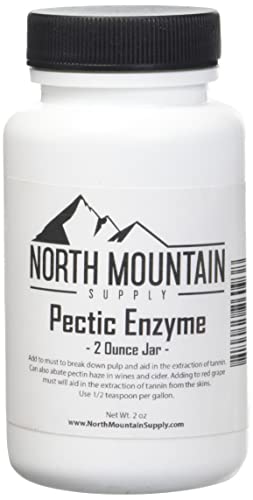
3Pectic enzyme
North Mountain Supply Pectic Enzyme, 2 oz
Strawberries carry plenty of pectin; the maker says the enzyme helps juice extraction and reduces haze in the finished wine.
-
4Yeast nutrient
North Mountain Supply Yeast Nutrient, 3.5 oz
A blend of diammonium phosphate and food-grade urea, dosed at one teaspoon per gallon according to the label.
-
5Wine yeast
Lalvin EC-1118 Wine Yeast (10 Pack)
One of the two strains NDSU names for this recipe; the listing rates it for fruit fermentations from 50 to 86°F.
-
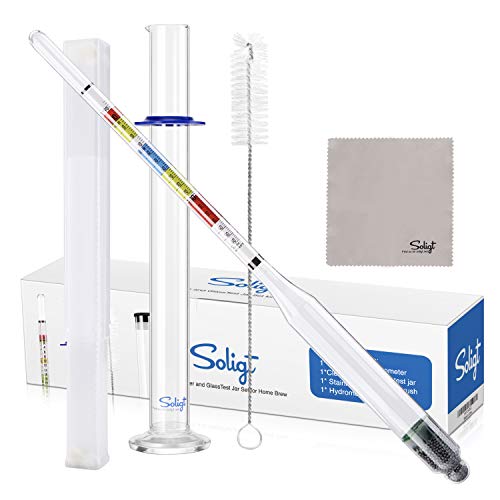
6Hydrometer
SOLIGT Triple Scale Hydrometer and Glass Test Jar
Shows specific gravity, Brix and potential alcohol, which you need to set the sugar and to know when to rack.




How Many Strawberries Per Gallon of Wine?
NDSU's recipe uses 3 to 5 pounds of strawberries per gallon, with water to fill the gallon. Kime's Cornell notes work at a heavier rate: about 30 pounds of strawberries for every 5-gallon batch, which is 6 pounds per gallon, with roughly 1 pound of sugar and 1 pint of water for every 2 pounds of berries. More fruit means more color and flavor but also more acid, which is why the heavier method leans on water and sugar to balance it.
For a first batch, 4 pounds per gallon is a comfortable middle. If your berries are very ripe and sweet, you can go up to 5 pounds without the wine turning sharp.
Choosing and Preparing the Berries
Use ripe, fragrant berries. Kime notes that overripe strawberries are fine for wine as long as they are not moldy, and that berries do not need to be capped before fermentation. You may still want to hull them for a cleaner flavor. He also suggests that a mix of varieties likely makes better wine than a single one, although he adds that varietal differences have not been studied.
Frozen strawberries work well. NDSU points out that freezing and thawing softens fruit and helps juice extraction, so a bag of frozen berries is a good way to make strawberry wine outside the short picking season. Thaw them in the fermenter with the straining bag in place to catch every drop.
Recipe card
Strawberry wine, 1 gallon
- Makes
- 1 gallon, about five 750 ml bottles
- Time to drink
- 2 to 4 months
- Difficulty
- Beginner
Ingredients
- 3 to 5 lb strawberries (4 lb is a good middle)
- Water to make 1 gallon
- About 2¼ lb sugar, adjusted to a specific gravity of 1.085 to 1.095
- 2 tsp acid blend
- ¼ tsp wine tannin
- 1 tsp yeast nutrient
- ½ tsp pectic enzyme
- 1 Campden tablet, crushed
- 1 packet wine yeast (EC-1118 or K1-V1116)
Method
- Rinse the strawberries gently and crush them. Put the crushed fruit in a straining bag inside the primary fermenter.
- Add every ingredient except the yeast, including water to make 1 gallon, and mix well.
- Take a hydrometer reading and add sugar if needed to reach 1.085 to 1.095.
- Cover loosely and wait 24 hours, then add the yeast. Keep the must at 68 to 75°F.
- After three to five days, when the gravity reaches 1.030 to 1.040, lift out the bag and rack into a glass jug with an airlock. Leave plenty of headspace.
- Check again in about three weeks. When readings stay below 1.000, rack off the sediment, top up and fit the airlock.
- Wait at least two weeks; rack again if needed, then bottle when the wine is clear.
Quantities and timings from NDSU Extension, «From the Garden or Orchard to the Table: Getting Started With Home Winemaking» (FN1638). Multiply by five for a 5-gallon batch.
How to Make Strawberry Wine, Step by Step
Clean and sanitize your fermenter, spoon, straining bag, jug and hydrometer before you begin. Strawberry must is low in alcohol for the first days and easy for stray microbes to take over, so this matters more than it looks.
1. Crush, Bag and Dose
Strawberries are soft enough to crush by hand or with a potato masher. Keeping the fruit in a bag makes the first racking much easier, because you can lift the pulp out instead of straining it. The crushed Campden tablet at this stage protects the juice from wild yeast and bacteria while you wait a day; see our page on Campden tablets for the dose behind the one-tablet-per-gallon rule.
2. Set the Sugar and Acid
Strawberries are fruity and acidic. Kime's notes describe adding water and sugar to the berry pulp to bring the acidity down to about 0.8% and raise the sweetness; he also gives a rule of thumb of 2% sugar for each 1% of alcohol you want. With NDSU's 1-gallon recipe, a hydrometer reading of 1.085 to 1.095 sets the wine up for roughly 11 to 13% alcohol if it ferments dry. Our sugar calculator tells you how much to add from your first reading, and how to use a hydrometer explains the scale.
3. Ferment on the Fruit
Add the yeast after 24 hours and keep the fermenter at 68 to 75°F, as NDSU recommends. Kime ferments at about 70°F for three to four days in an open container, stirring occasionally. This is the stage where the wine picks up most of its color and flavor from the berries.
4. Rack Into the Jug
When the gravity reaches 1.030 to 1.040, usually after three to five days, lift out the bag, squeeze it gently and siphon the wine into a glass jug with an airlock. NDSU warns to leave plenty of headspace at this stage, because fermentation is still active enough to push wine out through the airlock.
5. Finish, Clear and Bottle
About three weeks later the gravity should be below 1.000 and steady. Rack off the sediment, top up the jug with water or a neutral white wine, and give it at least two weeks to clear. NDSU suggests clearing agents if it stays hazy. When it is bright, bottle it; our guide on how to bottle and cork wine covers the details, and how long wine takes to ferment helps you judge when it is truly finished.
Sweet or Dry Strawberry Wine?
Fermented completely, this recipe gives a dry wine. Many people prefer strawberry wine with some sweetness, and Kime's notes recommend stopping commercial strawberry wine at about 9 to 10% alcohol, because strawberry wine fermented higher, up to about 17%, tastes harsh and needs a lot of sugar to balance. At home, the reliable way to a sweeter wine is to let it ferment dry, stabilize it, and then sweeten to taste before bottling. Adding sugar to an unstabilized wine risks a second fermentation in the bottle.
Old-Fashioned Strawberry Wine
Older recipes build the wine with kitchen ingredients instead of additives. The University of Georgia Extension winemaking guide (C717) has dry and sweet raspberry or strawberry recipes that use minced raisins as yeast nutrient, strong tea for tannin and lemon juice for acid, with the sugar added as syrup over several days. It is a slower route, but a good one if you want to make strawberry wine with nothing more than fruit, sugar and a packet of yeast.
Strawberry Blends
Strawberry pairs well with rhubarb, which adds acid and a little backbone. A University of Wyoming Extension article on fruit wine, «Turn the Fruits of Your Labor into Wine» (Barnyards and Backyards, Fall 2015), shows the two fruits fermented together in one straining bag. Kime suggests blending finished strawberry wine with honey wine, which you can make with our guide on how to make mead.
Making 5 Gallons of Strawberry Wine
Multiply the 1-gallon recipe by five: 15 to 25 pounds of strawberries, water to 5 gallons, about 11 pounds of sugar adjusted by hydrometer, 10 teaspoons of acid blend, 1¼ teaspoons of tannin, 5 teaspoons of nutrient, 2½ teaspoons of pectic enzyme and five Campden tablets. One 5 g sachet of EC-1118 is rated for up to 23 liters, so a single packet still covers the batch. Use a bucket of 6 gallons or more for the fruit stage and a 5-gallon carboy afterwards; carboy vs bucket explains the choice.
Common Strawberry Wine Mistakes
- Moldy berries. Overripe is fine; moldy is not. One bad berry can taint the batch.
- Too little headspace at the first racking. Foam climbs out through the airlock.
- Leaving the jug half full. Strawberry color and aroma oxidize quickly.
- Cellaring it for years. This is a wine to enjoy within its first year.
- Sweetening without stabilizing. Live yeast plus new sugar means pressure in the bottle.
Making wine at home is legal for adults in the US for personal use under 27 CFR 24.75, within household limits; our main guide on how to make homemade wine covers the rules.