Raspberry Wine Recipe
As an Amazon Associate we earn from qualifying purchases. How we choose products.
On this page
The short answer: for one gallon of raspberry wine, crush 3 to 4 pounds of ripe red raspberries in a nylon straining bag, pour over about 7½ pints of water in which you have dissolved about 2¼ pounds of sugar, and add ½ teaspoon of acid blend, ⅛ teaspoon of grape tannin, a teaspoon of yeast nutrient and a crushed Campden tablet once it cools. Add ½ teaspoon of pectic enzyme after 12 hours and a Champagne-type yeast 12 hours later. Ferment about two weeks, then rack every two months for six months, bottle in dark glass and wait a year.
Raspberries make a lighter, more perfumed wine than blackberries. Jack Keller describes red raspberry wine as fragrant and subtle, and says it should be made dry, so that a hint of tartness carries the flavor. It rewards patience more than any other berry wine on this site.
Recipe card
Red raspberry wine, 1 US gallon
- Makes
- About 5 bottles (750 ml)
- Time to drink
- About 18 months, including a year in the bottle
- Difficulty
- Easy
Ingredients
- 3 to 4 lb ripe red raspberries, fresh or frozen
- About 7½ pints water
- About 2¼ lb granulated sugar, to a specific gravity of about 1.090
- ½ tsp acid blend
- ⅛ tsp grape tannin
- ½ tsp pectic enzyme
- 1 tsp yeast nutrient
- 1 Campden tablet, crushed
- 1 packet Champagne-type wine yeast, such as Lalvin EC-1118
Method
- Bring the water and sugar to a boil, stirring to dissolve. Meanwhile wash the berries, put them in a nylon straining bag in the primary and crush them.
- Pour the hot sugar water over the berries to set the color, then add the acid blend, tannin and nutrient.
- When cooled to about 70 °F, add the crushed Campden tablet and cover. After 12 hours add the pectic enzyme; after another 12 hours add the yeast.
- Stir daily for a week, then lift out the bag and let it drip drain for about an hour without squeezing.
- Ferment another week in the primary, then rack into a dark or wrapped 1 gallon jug, top up and fit an airlock.
- Rack after 2 months and again 2 months later. Two months after that, rack and bottle in dark glass. Drink after a year.
Jack Keller’s Red Raspberry Wine (1), adapted from Terry Garey’s The Joy of Home Winemaking. The gravity target is ours, from Virginia Cooperative Extension’s Wine Making for the Home Gardener; check it before adding the yeast.
Where This Recipe Comes From
The card follows Jack Keller’s Red Raspberry Wine (1), which he adapted from Terry Garey’s The Joy of Home Winemaking: 3 to 4 pounds of raspberries, 2¼ pounds of sugar, ½ teaspoon each of acid blend and pectic enzyme, ⅛ teaspoon of grape tannin, 7½ pints of water, a teaspoon of nutrient, a Campden tablet and Champagne yeast. Keller calls it an excellent dry wine, and insists on the full six months of fermentation and racking plus a year of aging.
His second version, adapted from Anderson and Hull’s The Art of Making Wine, uses 2½ pounds of berries, 2½ pounds of sugar and twice the acid blend, and strains the fruit out when the gravity reaches 1.040. Both make one gallon.
We added one step neither recipe states: check the gravity before adding the yeast. Virginia Cooperative Extension’s Wine Making for the Home Gardener aims fruit musts at about 1.090 for roughly 12% alcohol, and the sugar in raspberries varies from batch to batch.
Why Boiling Water Over the Berries
Keller pours the boiling sugar water over the crushed raspberries to set the color and pull out the flavorful juice. It is different from boiling the fruit itself, which NDSU Extension’s Getting Started With Home Winemaking warns against, because heating fruit can release too much pectin and leave a haze. The pectic enzyme added the next morning, once the must has cooled, deals with the pectin that does come out.
Two timing details matter. The Campden tablet goes in only after the must has cooled to about 70 °F. The yeast goes in a full 24 hours after the sulfite, as in every Virginia Tech fruit wine, so the sulfite has done its job against wild yeast before your yeast arrives.
How Many Raspberries per Gallon
| Recipe | Raspberries per gallon | Sugar |
|---|---|---|
| Keller (1), after Garey (this card) | 3 to 4 lb | 2¼ lb |
| Keller (2), after Anderson and Hull | 2½ lb | 2½ lb |
| Keller, yellow raspberry wine | 4½ to 5 lb | ¾ to 1¼ lb |
| Keller, canned raspberries | two 16 oz cans in light syrup | 1¾ lb |
Black raspberries and golden raspberries work too. Keller’s yellow raspberry wine uses more fruit and much less sugar, with ¼ teaspoon of malic acid and Lalvin 71B yeast. Frozen berries are fine; thaw them in the straining bag in the primary.
The Best Yeast for Raspberry Wine
Keller’s main recipe calls for Champagne yeast. Lalvin EC-1118 is the usual choice: Lallemand lists it at 18% alcohol tolerance and 10 to 30 °C (50 to 86 °F), and it ferments cleanly to dry, which is the style Keller recommends. For his yellow raspberry wine he uses Lalvin 71B instead; Lallemand gives it 14% tolerance and a fruity, ester-driven profile that also softens acidity.
More strains are compared on our best wine yeasts page.
Scaling Up: 5 Gallon Raspberry Wine
| Ingredient | 1 gallon | 5 gallons |
|---|---|---|
| Red raspberries | 3 to 4 lb | 15 to 20 lb |
| Granulated sugar (to about 1.090) | about 2¼ lb | about 11 lb |
| Water | about 7½ pints | to 5 gallons |
| Acid blend | ½ tsp | 2½ tsp |
| Grape tannin | ⅛ tsp | ⅝ tsp |
| Pectic enzyme | ½ tsp | 2½ tsp |
| Yeast nutrient | 1 tsp | 5 tsp |
| Campden tablets | 1 | 5 |
| Wine yeast | 1 packet | 1 packet (check the packet’s batch size) |
Keller suggests that if you make two gallons, you can combine the drained pulp from both and make one gallon of lighter second wine from it, without the Campden tablet or pectic enzyme and with cooled rather than boiling sugar water.
What you need for a 1 gallon batch
Gear and additives for the recipe card. You add the raspberries and sugar.
-
1Fermenter
FastRack 1 Gallon Glass Jug with Airlock and #6.5 Bung
A clear 1-gallon (3.8 liter) glass jug sold with a drilled #6.5 rubber bung and a twin bubble airlock, the standard small-batch fermenter. Wrap it to keep the light off.
-
2Straining bag
Bellamei Brew Bags, 16 x 11 and 18 x 16 Inch (2 Pack)
Two fine polyester mesh bags (250 micron) to hold the crushed raspberries, so you can drip drain them without squeezing.
-
3Wine yeast
Lalvin EC-1118 Wine Yeast (10 Pack)
Ten 5 g sachets of a robust strain the listing rates for fruit and cider fermentations, up to 18% alcohol and 50 to 86°F.
-
4Acid blend
North Mountain Supply Acid Blend, 4 oz
A mix of malic, citric and tartaric acid; the label says one teaspoon per gallon raises acidity by 0.1%.
-
5Wine tannin
North Mountain Supply Wine Tannin, 2 oz
The recipe calls for ⅛ teaspoon per gallon; the maker describes tannin as adding depth to the wine.
-
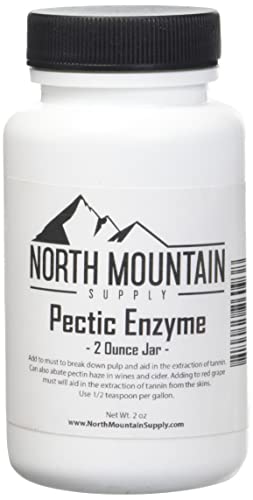
6Pectic enzyme
North Mountain Supply Pectic Enzyme, 2 oz
Breaks down fruit pectin, which the maker says improves juice extraction and reduces pectin haze in the finished wine.
-
7Yeast nutrient
North Mountain Supply Yeast Nutrient, 3.5 oz
Diammonium phosphate and food-grade urea, one teaspoon per gallon according to the label.
-
8Campden tablets
Campden Tablets, Potassium Metabisulfite, 1 lb bulk
Potassium metabisulfite tablets labeled at one tablet per gallon, to be crushed and added to the must 24 hours before the yeast.




Common Mistakes With Raspberry Wine
Squeezing the bag
Keller drip drains the raspberries for an hour and says not to squeeze. Squeezing pushes fine pulp into the wine that makes it harder to clear.
Adding sulfite to hot must
Wait until the must has cooled to about 70 °F before the Campden tablet goes in, as Keller does.
Bright light
Like other red berry wines, raspberry wine fades in light. Keller uses a dark secondary or wraps the jug in brown paper, and bottles in dark glass.
Opening it too early
Keller’s instruction is plain: ferment the full six months and age it another year. A young raspberry wine can taste thin and sharp.
For the method behind every fruit wine see how to make wine from fruit, or try our strawberry wine recipe. Make and drink wine responsibly, and only if you are of legal drinking age.