Homemade wine guide
Wine Thief: What It Is, How to Use It and Which to Buy
As an Amazon Associate we earn from qualifying purchases. How we choose products.
On this page
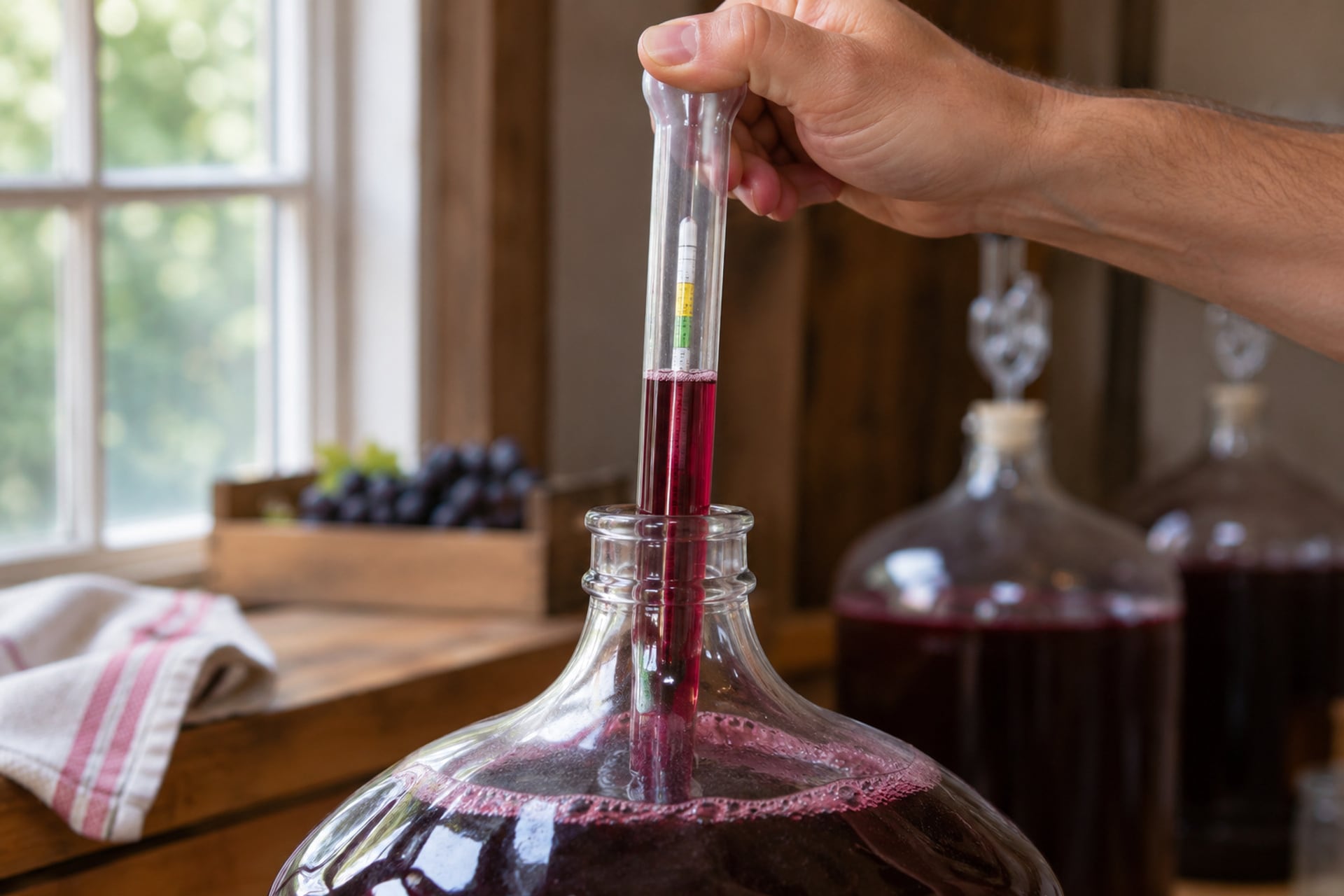
The short answer: a wine thief is a long, narrow tube you dip into a carboy, jug or barrel to pull out a small sample of wine without siphoning. You lower it in, cover the top with your thumb, lift it out full, and release your thumb to let the sample run into a test jar or a glass. Home winemakers use one to take hydrometer readings and to taste a wine as it ages. For most people, the Fermtech 19 inch wine thief is the one to buy, because a hydrometer can float in the tube itself.
The name is older than home winemaking. The Wine History Project of San Luis Obispo County describes the wine thief as a tubular instrument for removing a sample from a cask or barrel so the winemaker can test the quality of the wine, in glass, metal or plastic. Below we cover how to use one at home, the question every forum argues about (whether to pour the sample back), and five wine thieves you can buy. For the rest of the kit, see our wine making equipment checklist.
Editor's Choice
A clear acrylic thief long enough for a 5 or 6 gallon carboy. Northern Brewer says it lets you draw a sample and take a hydrometer reading at the same time, so the tube doubles as the test jar.
-
Best adjustable wine thief
Craft A Brew 3-Piece Wine Thief
Takes apart into three pieces and converts from 18 to 10 inches by removing the middle section.
-
Best budget glass wine thief
Home Brew Ohio Glass Wine Thief, 12 inch
A plain 12 by ¾ inch glass tube for gallon jugs and tasting.
-
Best premium glass wine thief
Brewing America Glass Wine Thief
One piece of hand-blown borosilicate glass, made in the USA, with no joints to leak.
What Is a Wine Thief?
A wine thief, also called a sampler, is a hollow tube open at both ends, with a narrow tip at the bottom. Dip it into wine and it fills. Put your thumb over the top hole and the liquid stays in, held by the air pressure, until you lift your thumb. The Wine History Project describes thieves as usually long enough to reach halfway into a barrel without losing the tool inside, and that is the design rule for home sizes too: long enough to reach below the surface of a full carboy, short enough to handle.
Why it is called a thief
The job of the tool, as both the Wine History Project and the winery CGT put it, is to “steal” wine from the barrel to test at different stages. It is a small theft from the batch, taken for a good reason.
How often wineries use one
CGT describes its own routine: during the initial fermentation the thief is used daily for a period of weeks to keep a close eye on progress, and after fermentation each barrel is sampled only every 6 to 12 months. A home batch follows the same rhythm at a smaller scale, with frequent readings early and the occasional taste once it is aging.
What you use it for at home
- Hydrometer readings before the yeast, during fermentation, and twice at the end to confirm it has finished. Our guide on how to use a hydrometer lists every reading worth taking.
- Tasting before you rack, sweeten or bottle.
- Checking clarity in a clear tube against the light before you decide to fine.
- Small test samples for an acid or sulfite test kit.
How to Use a Wine Thief
1. Clean and sanitize it
Anything that goes into the wine has to be sanitized, and a thief goes in deep. Rinse it, sanitize it with the same solution you use for the rest of your equipment, and let it drain. Three-piece plastic thieves come apart, which makes the inside easier to clean. Our Star San guide has the dilution.
2. Lower it in with the top open
Remove the airlock and stopper and lower the thief slowly into the wine with the top open, so it fills as it goes. Keep the tip above the sediment at the bottom unless you want to look at the lees. Craft A Brew says to assemble its thief to the length that suits the fermenter size before you start.
3. Cover the top and lift
Put your thumb firmly over the top opening and lift the thief straight out. The wine stays in the tube. Work over the carboy mouth so any drip goes back where it came from.
4. Release into a test jar or glass
Hold the tip over a test jar or tasting glass and lift your thumb. The sample runs out. With a Fermtech style thief you can skip the jar: drop the hydrometer into the full tube, read it, and you are done.
5. Refit the airlock
Put the stopper and airlock back as soon as you finish. The less time the carboy is open, the better. Record the reading straight away; our wine making log has a free printable sheet.
Should You Pour the Sample Back?
This is the question that divides retailers and forums, so here are both sides from the people who sell the tools.
The case for returning it
Northern Brewer’s Fermtech description says the thief lets you return the wine to the carboy with less risk of infection, cutting down on losing any of your batch. The logic is that a sanitized thief that never leaves the mouth of the carboy has touched nothing but sanitized surfaces.
The case for keeping it out
Craft A Brew’s own instructions for its adjustable thief end with a plain rule: do not return sampled liquid back into the fermenter. Our hydrometer guide takes the same cautious line and has you record and discard the sample.
What we suggest
If the sample went into a sanitized Fermtech tube with a sanitized hydrometer and went straight back into the carboy, returning it is a reasonable call. If it sat in an open test jar, was tasted, or touched anything else, drink it or discard it. A sample is a few tablespoons, and the batch is worth more.
Wine Thieves Compared
Five wine thieves for home use, from adjustable plastic to hand-blown glass. All five sit in the budget tier.
| Product | Fermtech 19 in Editor's Choice | Craft A Brew 3-Piece | Home Brew Ohio 3-Piece | Home Brew Ohio Glass | Brewing America Glass |
|---|---|---|---|---|---|
| Product |  |  | |  |  |
| Material | Clear acrylic | Plastic | Plastic | Glass | Borosilicate glass, hand-blown |
| Length (listing) | 19 in | 18 in, or 10 in without the middle piece | 19 in | 12 in, ¾ in diameter | Not stated in the title |
| Construction | One tube | 3 pieces, comes apart | 3 pieces, comes apart | One tube | One piece, no joints |
| Hydrometer inside | Yes, per Northern Brewer | No; use a test jar | No; use a test jar | No; use a test jar | No; use a test jar |
| Best for | 5 to 6 gallon carboys | Jugs and carboys | Carboys | Gallon jugs and tasting | Glass only, high proof samples |
| Price tier | $ | $ | $ | $ | $ |
| Buy | Check price on Amazon | Check price on Amazon | Check price on Amazon | Check price on Amazon | Check price on Amazon |
Editor's Choice
Fermtech 19 in
- Best for
- 5 to 6 gallon carboys
Show specificationsHide specifications
- Material
- Clear acrylic
- Length (listing)
- 19 in
- Construction
- One tube
- Hydrometer inside
- Yes, per Northern Brewer
- Best for
- 5 to 6 gallon carboys
- Price tier
- $
Craft A Brew 3-Piece
- Best for
- Jugs and carboys
Show specificationsHide specifications
- Material
- Plastic
- Length (listing)
- 18 in, or 10 in without the middle piece
- Construction
- 3 pieces, comes apart
- Hydrometer inside
- No; use a test jar
- Best for
- Jugs and carboys
- Price tier
- $
Home Brew Ohio 3-Piece
- Best for
- Carboys
Show specificationsHide specifications
- Material
- Plastic
- Length (listing)
- 19 in
- Construction
- 3 pieces, comes apart
- Hydrometer inside
- No; use a test jar
- Best for
- Carboys
- Price tier
- $
Home Brew Ohio Glass
- Best for
- Gallon jugs and tasting
Show specificationsHide specifications
- Material
- Glass
- Length (listing)
- 12 in, ¾ in diameter
- Construction
- One tube
- Hydrometer inside
- No; use a test jar
- Best for
- Gallon jugs and tasting
- Price tier
- $
Brewing America Glass
- Best for
- Glass only, high proof samples
Show specificationsHide specifications
- Material
- Borosilicate glass, hand-blown
- Length (listing)
- Not stated in the title
- Construction
- One piece, no joints
- Hydrometer inside
- No; use a test jar
- Best for
- Glass only, high proof samples
- Price tier
- $
Wine Thief Reviews
Fermtech Wine Thief, 19 inch (Editor's Choice)
This is the thief most home winemakers end up with, and the reason is the hydrometer. Northern Brewer describes the 19 inch Fermtech as letting you draw a sample and take a hydrometer reading at the same time, and calls it faster than using a regular test jar. You fill the tube, drop the hydrometer in, read it, and the sample never leaves the tube. The Amazon listing describes it as clear acrylic and names carboys, barrels and bottling as uses.
The 19 inch length reaches well into a 5 or 6 gallon carboy. In a 1 gallon jug it is longer than you need, though it still works. Acrylic scratches over the years, so wash it with a soft cloth rather than a stiff brush.
Best for: carboy batches and frequent gravity readings. Missing: a shorter setting for gallon jugs.
Craft A Brew 3-Piece Wine Thief (Best Adjustable Wine Thief)
If you make both gallon batches and carboy batches, this is the one thief that suits both. The listing describes an 18 inch plastic thief that comes apart into three pieces for cleaning, and says the middle section can be removed to turn it into a 10 inch thief. Craft A Brew’s own page describes the same 10 or 18 inch configuration and a thumb-operated sampling design for beer, wine, mead and cider.
It is a sampler, not a hydrometer tube, so you need a test jar for readings. Craft A Brew’s instructions also tell you not to return the sample to the fermenter, which is the cautious approach we describe above.
Best for: people with fermenters of more than one size. Missing: room for a hydrometer inside.
Home Brew Ohio 3-Piece Plastic Wine Thief (Best Easy-Clean Wine Thief)
A plain, long plastic thief for carboys. The listing gives it as 19 inches, three-piece plastic, and says it disassembles for easy sanitizing. That last point matters more than it sounds: the inside of a one-piece tube is hard to see and hard to scrub, and a thief that comes apart lets you check every section.
The listing does not say whether the pieces can be used shorter on their own, so treat it as a 19 inch tool for 5 and 6 gallon vessels. Use it with a test jar for hydrometer readings.
Best for: carboy owners who want a thief they can take apart. Missing: a stated shorter length.
Home Brew Ohio Glass Wine Thief, 12 inch (Best Budget Glass Wine Thief)
For gallon batches, a shorter thief is simply easier to handle. The listing describes a glass wine thief, 12 inches long and ¾ inch in diameter, that removes wine for testing and is easy to clean. Glass does not scratch or stain the way some plastics do, and you can see the color and clarity of the sample clearly.
Twelve inches will not reach the wine in a full 5 gallon carboy with much room to spare, so this is a jug and tasting tool. Glass also breaks if you knock it against a carboy neck, so go slowly.
Best for: 1 gallon jugs, small batches and tasting. Missing: the reach for big carboys.
Brewing America Hand-Blown Glass Wine Thief (Best Premium Glass Wine Thief)
The listing says this thief is hand-blown in the USA from one piece of thick borosilicate 3.3 glass, so there are no connections to leak, and that it is designed to waste less liquid when you transfer a sample to a test jar. Brewing America also makes the case for glass over plastic: easier to see through, more hygienic, and the material it recommends for high proof spirits. It comes boxed with a microfiber cloth.
The title describes it as long and narrow but does not give a length, so measure your fermenter against it before you rely on it for a deep carboy. It is the dearest of the five, though still in the budget tier.
Best for: winemakers who prefer glass, and anyone sampling spirits too. Missing: a stated length.
How to Choose a Wine Thief
Length
Match the thief to your biggest vessel. A 12 inch thief suits a 1 gallon jug; a 5 or 6 gallon carboy needs 18 or 19 inches to reach the wine without your fingers going into the neck. An adjustable thief like the Craft A Brew covers both.
Glass or plastic
Plastic thieves are light and survive being dropped, and the three-piece designs come apart for cleaning. Glass is easier to see through and does not scratch, but it breaks. If you sample spirits as well as wine, Brewing America recommends glass for high proof liquids.
Hydrometer fit
If you take a lot of gravity readings, the Fermtech style tube that holds a hydrometer saves a test jar and a pour. Check that your hydrometer fits before you rely on it. Otherwise, pair any thief with a narrow test jar.
The neck of your fermenter
A thief has to pass through the opening with the stopper out. Most carboy and jug necks are wider than a thief, but measure a narrow-necked bottle or demijohn before you buy. If you are still choosing a vessel, read our carboy guide.
Wine Thief vs a Turkey Baster or a Siphon
You can pull a sample without a thief. A kitchen turkey baster works if it is sanitized and kept only for wine, but it is short, so you need several pulls for a hydrometer sample and it rarely reaches far into a carboy. A siphon tube or auto siphon also works, but starting a siphon for a few tablespoons wastes wine and disturbs the sediment. A wine thief does the one job neatly, at a budget price, which is why it ends up in most kits.
If you are about to rack anyway, take your reading from the wine as it moves; our guide to racking wine shows how. For every other reading, the thief is the tool.
Pair your wine thief with a test jar
Unless you buy the Fermtech, you need a narrow jar to float the hydrometer in. Our hydrometer guide covers the hydrometer itself.
-
1Test jar
Brewing America Glass Hydrometer Test Jar and Brush
A narrow borosilicate jar that the listing says needs about 125 ml for a reading, with a cleaning brush. Hydrometer not included.
