Homemade wine guide
Wine Faults in Homemade Wine: What Went Wrong and How to Fix It
As an Amazon Associate we earn from qualifying purchases. How we choose products.

On this page
Most faults in homemade wine come from three things: oxygen, stressed yeast and spoilage microbes. Your nose usually finds them first. A rotten egg smell points to stressed yeast, a vinegar or nail polish smell to bacteria that had access to air, and a sherry or cardboard smell to oxidation. A white skin on the surface is film yeast, again a sign of too much air.
Some faults can be fixed if you catch them early; others can only be prevented next time. The table below gives the quick answer, and each fault is explained further down. The descriptions draw on the Australian Wine Research Institute’s guide to wine faults and on university extension guides for home winemakers.
Wine Fault Chart
| What you notice | Likely cause | Can you fix it? | Prevention |
|---|---|---|---|
| Rotten egg smell | Hydrogen sulfide from stressed yeast, often short of nutrient | Often, if caught during or right after fermentation | Yeast nutrient at the recipe rate; a healthy temperature |
| Burnt match smell | Too much sulfite | Usually fades with time and racking | Measure Campden tablets or powder; do not guess |
| Vinegar or nail polish smell | Acetic acid bacteria and ethyl acetate | No | Airlocks, full containers, sulfite, clean equipment |
| Sherry, bruised apple, cardboard; browning | Oxidation | No | Minimal headspace, sulfite at racking and bottling |
| White skin on the surface | Film yeast | Sometimes, if caught early | Top up carboys; keep the airlock filled |
| Fuzzy mold in the wine | Mold growth on an exposed surface | No; discard | Sanitation and a sealed fermenter |
| Geranium leaf smell | Sorbate broken down by lactic acid bacteria | No | Keep sulfite up whenever you use sorbate |
| Fizz or pushed corks in a still wine | Fermentation restarted in the bottle | Open and refrigerate; re-stabilize | Ferment dry, or use sorbate and sulfite before sweetening |
| Musty, damp cardboard smell | Cork taint (TCA) | No | Good corks from a reliable supplier |
| Haze that will not settle | Pectin or protein | Yes | Pectic enzyme for fruit wines; fining |
Rotten Egg Smell (Hydrogen Sulfide)
The AWRI describes hydrogen sulfide as the rotten egg gas most winemakers know, detectable at as little as 1 to 2 parts per billion. Yeast releases it when it is under stress, for example when it starts to run out of nitrogen. North Dakota State University Extension makes the same link for home winemakers: a lack of yeast nutrient can stress the yeast and give the wine a rotten egg odor.
Fix: act while the wine is still fermenting or has just finished. The AWRI notes that adding oxygen during fermentation has been shown to reduce sulfide formation, and that copper is the industry’s treatment. At home, the usual first step is to rack the wine so it splashes into the receiving vessel. Do not wait: the AWRI warns that once the smell has turned into other sulfur compounds, aerating can convert them into forms that copper can no longer remove.
Prevention: add yeast nutrient at the recipe rate and keep the ferment at the temperature the yeast likes. Our guide to wine making additives covers nutrient doses.
Burnt Match Smell (Too Much Sulfite)
The Virginia Cooperative Extension guide Wine Making for the Home Gardener warns that overdoing metabisulfite leaves a burnt match smell, while underdoing it leaves the wine to oxidize. A light burnt match note right after an addition usually fades as the free sulfite binds. To avoid it, count tablets or weigh powder, and use our sulfite calculator for larger batches.
Vinegar or Nail Polish Smell (Volatile Acidity)
The AWRI explains that volatile acidity is perceived as a vinegar smell and is almost all acetic acid. Ethyl acetate, which smells of nail polish remover, often comes with it. The University of Georgia Extension guide to winemaking at home explains how it happens: if air reaches the fermenting wine, bacteria convert the alcohol to vinegar, which is why the fermenter needs an airlock.
Fix: there is no real fix once the smell is clear. A faint note may be tolerable; a strong one means the wine is on its way to vinegar.
Prevention: keep an airlock on every fermenter, keep carboys topped up, keep fruit flies away and sanitize everything the wine touches.
Oxidized Wine: Sherry, Cardboard and Browning
Oxygen, as the Virginia Cooperative Extension guide puts it, is an enemy of wine after active fermentation. The AWRI describes the sensory side: oxidation starts as a dulling of the aroma, moves on to cardboard, straw and hay, and ends in sherry-like and madeirized characters. Acetaldehyde, one of the compounds behind it, smells of over-ripe bruised apples. White wines and delicate fruit wines show it first; reds hold out longer because their phenolic compounds act as natural antioxidants. You will often see it too: whites turn golden or brown, reds turn brick-colored.
Fix: none. An oxidized wine can still be used for cooking.
Prevention: rack quietly without splashing once fermentation is over, keep containers full, add sulfite at alternate rackings and at bottling, and bottle with as little air as possible. Our guides on racking wine and Campden tablets cover both habits.
White Film on Wine (Film Yeast)
A thin white or cream skin on the surface of wine in a carboy is film yeast, also called mycoderma or flowers of wine. WineMaker magazine’s Wine Wizard explains that it is caused largely by oxygen getting in during aging, and shows up in the necks of carboys and in barrels that are not kept topped up. The AWRI notes that these surface yeasts feed on the alcohol itself, producing acetaldehyde.
Purdue University’s enology fact sheet on treatment of film yeasts says the most important prevention is keeping containers properly topped up, because these yeasts depend on oxygen. It also points to an often-neglected source: the liquid in the fermentation lock, which sits between the cellar air and the wine.
Fix: if you catch it early, rack the wine out from under the film into a clean, sanitized carboy, leaving the film and the last of the wine behind, add sulfite and top the new carboy up to the neck. Taste it after a week. The Wine Wizard adds that even a filtered wine will grow film again if it is not stored topped up and airtight.
Mold on Wine
Fuzzy, colored mold is different from the flat white skin of film yeast. Mold needs air and a surface to grow on, so it usually appears on fruit caps left uncovered during primary fermentation or on wine left open to the air. Mold growing in the wine itself is a sign the batch has been exposed for too long, and the safe choice is to pour it out and sanitize the equipment thoroughly. Mold on the outside of a cork or under a capsule is a storage issue rather than a wine fault, but check the wine for a musty smell when you open it.
Geranium Smell
The AWRI traces a crushed geranium leaf smell to lactic acid bacteria breaking down sorbic acid, the active part of potassium sorbate. NDSU Extension gives the practical rule: when you use potassium sorbate, especially in grape wines, keep sulfite levels adequate so the bacteria cannot get going. Once the smell is there, it stays.
Fizz or Pushed Corks in a Still Wine
If a wine meant to be still is fizzy, or corks start creeping out, fermentation has restarted in the bottle. NDSU Extension warns that sweetened wine or wine with residual sugar needs potassium sorbate, and that without it bottles can explode if fermentation restarts. Move the bottles somewhere cool, open them carefully, and either drink them soon or pour them back into a carboy, stabilize and rebottle. Our guide on how to backsweeten wine covers the safe order of steps.
Musty Cork Smell and Haze
A musty, damp cardboard smell that gets stronger as the wine sits in the glass is usually cork taint. The AWRI names 2,4,6-trichloroanisole (TCA) as the main cause and describes it as one of the most odor-intense compounds known. It comes from the cork, not your winemaking, so the only defense is good corks.
Haze is the one common fault that is usually fixable. In fruit wines it is often pectin, which NDSU Extension says pectic enzyme breaks down. Our guide on how to clear wine covers fining agents for haze that does not settle.
Supplies That Prevent Most Wine Faults
Nutrient for the yeast, sulfite against air and bacteria, and a tight airlock on every fermenter.
-
1Yeast nutrient
Prevents the nutrient shortage behind most rotten egg smells; the label rate is 1 teaspoon per gallon.
-
2Sulfite
Campden Tablets, Potassium Metabisulfite, 1 lb
Protects against oxidation, film yeast and vinegar bacteria when added at alternate rackings and at bottling.
-
3Airlocks and bungs
FastRack Twin Bubble Airlock and Carboy Bung, 2-pack
Keeps air and fruit flies out while carbon dioxide escapes; keep the liquid fresh and topped up.
-
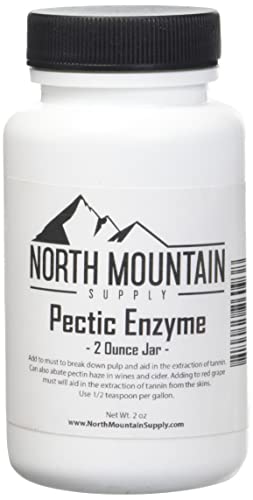
4Pectic enzyme
North Mountain Supply Pectic Enzyme, 2 oz
Breaks down pectin in fruit wines so they do not end up with a haze that will not settle.