Step-by-step guide
How to Make Port Wine at Home: A Port-Style Recipe and How Real Port Is Made
As an Amazon Associate we earn from qualifying purchases. How we choose products.
On this page
The short answer: real Port is made in Portugal’s Douro by adding grape spirit to a fermenting wine to halt it while sugar is left in, and at home you make a port-style wine the same way in principle: ferment a rich dark must with a high-alcohol port yeast, then add brandy and age it for a year or more. Jack Keller’s home recipe uses red grape concentrate, dried elderberries and banana chips, and ends by adding 60 ounces of brandy to a 6 gallon batch.
People search for this with two different questions in mind: how Port is made, and how to make something like it in a kitchen. This guide answers both. The first part is the real method, from the Port and Douro Wines Institute. The second is a home recipe, the fruit-port variations, the brandy arithmetic and the aging.
How Port Wine Is Made
Fortification: stopping the ferment on purpose
The Instituto dos Vinhos do Douro e do Porto (IVDP), which oversees Port, describes the key step on its winemaking page. Beside each treading tank, the must-wine is drained into another tank before grape spirit is added to it to halt fermentation. The most common proportion is one part grape spirit to four parts of must-wine. The spirit raises the alcohol above what the yeast can survive, so fermentation stops while some grape sugar is still in the wine.
Why Port is sweet
The IVDP’s colour and sweetness page explains that the winemaker decides how sweet a Port will be by choosing when to interrupt the fermentation. It lists five sweetness levels, from extra dry, under 40 grams of sugar per liter, to very sweet, over 130 grams per liter. It also says the colour of Port runs from deep red to light gold.
Ruby and tawny in a few lines
Wine Folly’s guide to how Port is made notes that tawny Ports spend years in small oak barrels, usually 10 to 40 years or more for the older ones, where the oxygen exposure gives them a nuttier character. Home winemakers will not reproduce either style exactly, but it explains why oak time matters, which we cover below.
Port vs Port-Style Wine at Home
Real Port comes from the Douro and is made under the IVDP’s oversight, with grape spirit added to the fermenting wine. What you make in a carboy is a different thing. Jack Keller, whose recipes are collected in his Requested Recipes Collection (2020), calls his versions “port-style wine” and so do we.
The home version copies three things: a dark, rich, high-sugar must, a yeast that can ferment to a high alcohol, and the addition of brandy. Not every one of Keller’s port-style recipes uses brandy: his blackberry port, below, relies on a strong yeast and sweetening with grape concentrate afterwards.
One legal point. Federal law lets any adult make wine at home for personal or family use, not for sale, up to 100 gallons per year for a one-adult household and 200 for a household of two or more adults (27 CFR 24.75). It does not override state or local law. Fortifying uses brandy you have bought. Federal law prohibits producing distilled spirits at home, so never distill your own: see the TTB’s home distilling notice.
What You Need
Dark fruit or grape concentrate
Keller’s main recipe builds the body from red grape concentrate, dried elderberries and non-glazed dried banana chips. His fruit ports use blackberries, black currants or blueberries with elderberries, so any very dark, flavorful fruit can be the base.
A yeast that can reach high alcohol
Keller’s warning is blunt: port wine yeast is essential for his recipe, and no substitute should be used. For his black currant and blackberry ports he names Lalvin K1V-1116 (Montpellier), which he says is capable of fermenting to 20% alcohol by volume, as an alternative to a port wine yeast. Our guide to making wine stronger explains tolerance, and the best wine yeasts page compares strains.
Brandy for fortifying
Keller says to use plain brandy and not flavored brandy. Read the bottle for its strength, because the arithmetic below depends on it.
A hydrometer
The sugar goes in at set gravity readings, so you need a hydrometer and a test jar.
Recipe card
Port-style wine, 6 US gallons (Keller)
- Makes
- About 30 bottles (750 ml)
- Time to drink
- About 1 year of aging before tasting
- Difficulty
- Intermediate
Ingredients
- 1 gallon can California red grape concentrate
- 12 lb fine granulated sugar, added in three stages
- 5 gallons warm water
- 6 oz dried elderberries
- 16 oz dried, non-glazed banana chips
- 2 tsp yeast energizer
- 3 oz acid blend
- 5 crushed Campden tablets
- 1 package port wine yeast, as a starter prepared 3 days ahead
- 60 oz plain brandy, added at the end
Method
- Prepare the yeast starter 3 days in advance according to the packet.
- Separate the banana chips in the primary and add the elderberries, grape concentrate, water, 6 lb of the sugar, yeast energizer, acid blend and crushed Campden tablets. Stir well, cover and wait 24 hours.
- Add the yeast starter and stir gently once a day.
- At a gravity of 1.040, draw off 4 to 6 cups of must, slowly dissolve 3 more pounds of sugar in it, and stir it back in.
- At 1.030, strain out the elderberries and banana chips and siphon the wine into a secondary vessel. Fit an airlock and check the gravity daily.
- At 1.010, draw off another 4 to 6 cups, dissolve the remaining 3 lb of sugar in it, and add it back gently.
- Rack as deposits form, no more often than every three weeks. When no more form, allow a month for the wine to clear. If it will not clear, stabilize and fine it, wait 10 days and rack once more.
- Sweeten to taste, add the 60 oz of brandy and bottle. Age one year before tasting.
Quantities and method from Port Wine in Jack Keller’s Requested Recipes Collection (compiled 2020), adapted by him from Stanley F. Anderson and Raymond Hull’s The Art of Making Wine. Keller notes the recipe makes six gallons and suggests halving or thirding it if you do not want that much.
Halving it for 3 gallons
Keller says the concentrate comes in gallon and half-gallon cans, so halving may be the better option. Here is the same recipe at half size.
| Ingredient | 6 gallons | 3 gallons |
|---|---|---|
| Red grape concentrate | 1 gallon can | Half-gallon can |
| Sugar | 12 lb (6, then 3, then 3) | 6 lb (3, then 1½, then 1½) |
| Water | 5 gallons | 2½ gallons |
| Dried elderberries | 6 oz | 3 oz |
| Banana chips | 16 oz | 8 oz |
| Yeast energizer | 2 tsp | 1 tsp |
| Acid blend | 3 oz | 1½ oz |
| Campden tablets | 5 | 2½ |
| Brandy | 60 oz | 30 oz |
Fortifying: How Much Brandy
Keller’s dose in context
Keller’s recipe makes six gallons, which is 768 fluid ounces, and adds 60 ounces of brandy at the end. That is about 7.8% of the volume. His recipe does not give a target alcohol, so the effect depends on how strong the wine and the brandy are.
The mixing formula
To hit a target strength yourself, use this mixing formula, often drawn as a Pearson square:
Volume of spirit = volume of wine × (target % − wine %) ÷ (spirit % − target %)
For example, take 1 gallon of wine at 14%, a brandy that is 40% by volume and a target of 18%. The spirit needed is 1 × (18 − 14) ÷ (40 − 18) = 0.18 gallon, about 23 fluid ounces. These numbers are only an example: read the strengths from your own bottle and your own wine.
As a check on the other end, the IVDP’s one part spirit to four parts wine means 20% of the final volume is spirit. With a 5% wine and a 77% spirit that works out to (77 + 4 × 5) ÷ 5 = 19.4%. Wine Folly gives 77% as the strength of the spirit used in Port. A brandy at a lower label strength needs a bigger share of the volume to get the same result, which is why the formula matters.
Stabilize and sweeten
Keller adds the brandy after the wine has cleared and been stabilized, and after sweetening to taste. For sweetening and stabilizing in detail, see how to stop fermentation and how to backsweeten wine.
Fruit Ports: Blackberry and Blackcurrant
Fruit makes a more approachable port-style wine, and Keller has several. They show the other route: a strong yeast, then sweetening rather than a large brandy dose.
Blackberry port
Keller’s 1 gallon blackberry port uses 8 pounds of ripe blackberries, ½ pint of red grape concentrate, ½ cup of light dry malt, 1¾ pounds of sugar, Lalvin K1V-1116 or a port wine yeast and the usual pectic enzyme, acid blend and nutrient. A friend of his pointed out that port takes twice as many blackberries as a table wine. Keller strains the juice at about gravity 1.030 and adds the grape concentrate at the end after stabilizing. Age it at least a year. Our blackberry wine recipe is the table-wine version.
Black currant port-style wine
Keller’s black currant recipe uses 1½ pounds of fresh black currants, ¾ pound of black raisins, 2 pounds of ripe bananas and 1¾ pounds of sugar, cooked briefly in a pressure cooker. It uses K1V-1116 and a yeast nutrient fortified with yeast hulls, and he sweetens to 1.030 at the end. He says it keeps improving for up to six years.
Blueberry-elderberry port
This one ferments to a 16% dry wine from a starting gravity of 1.118, which Keller then fortifies to 20%, sweetens with grape concentrate and ages for a year.
Aging Port-Style Wine
Keller’s main recipe says to age the wine a year before tasting, and his fruit ports call for a year or more. The IVDP says Port itself is aged either in the Douro or in the Vila Nova de Gaia lodges after the winemaker’s first selection. At home, bottle aging works, and you can add oak: our guide to oaking wine at home compares chips, cubes and spirals, and the best oak barrels page covers small barrels. Make and drink wine responsibly, and only if you are of legal drinking age.
What you need for port-style wine
Gear and additives for the recipe card. You also need red grape concentrate, dried elderberries, banana chips, sugar and plain brandy from a store.
-
1High-alcohol yeast
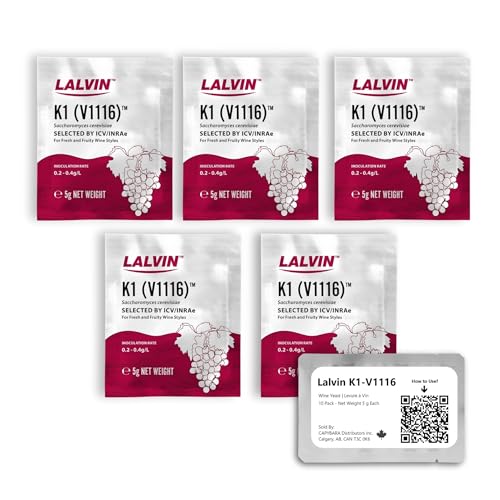
Lalvin K1-V1116 Wine Yeast, 5 Pack
The strain Keller names for his blackberry and black currant ports; he says it can ferment to 20%. His main recipe specifies a port wine yeast.
-
2Hydrometer
Brewer’s Elite Hydrometer and Test Jar Combo
The recipe adds sugar at gravities of 1.040 and 1.010, so you need a triple scale hydrometer.
-
3Yeast nutrient
High-gravity musts stress yeast; follow the dose on the package.
-
4Acid blend
North Mountain Supply Food Grade Acid Blend, 4 oz
The recipe uses 3 ounces for 6 gallons.
-
6Primary fermenter
FastRack 6.5 Gallon Fermenting Bucket
Room for a 3 gallon half batch and its fruit.
-
7Oak
Home Brew Ohio American Medium Toasted Oak Chips, 1 lb
A low-cost way to add oak during aging; see our oaking guide for the dose.


For a wine that ends dry and strong with no brandy at all, see how to make homemade wine stronger.