Ginger Beer Recipe: Brew It With a Ginger Bug or a Pinch of Yeast
As an Amazon Associate we earn from qualifying purchases. How we choose products.
On this page
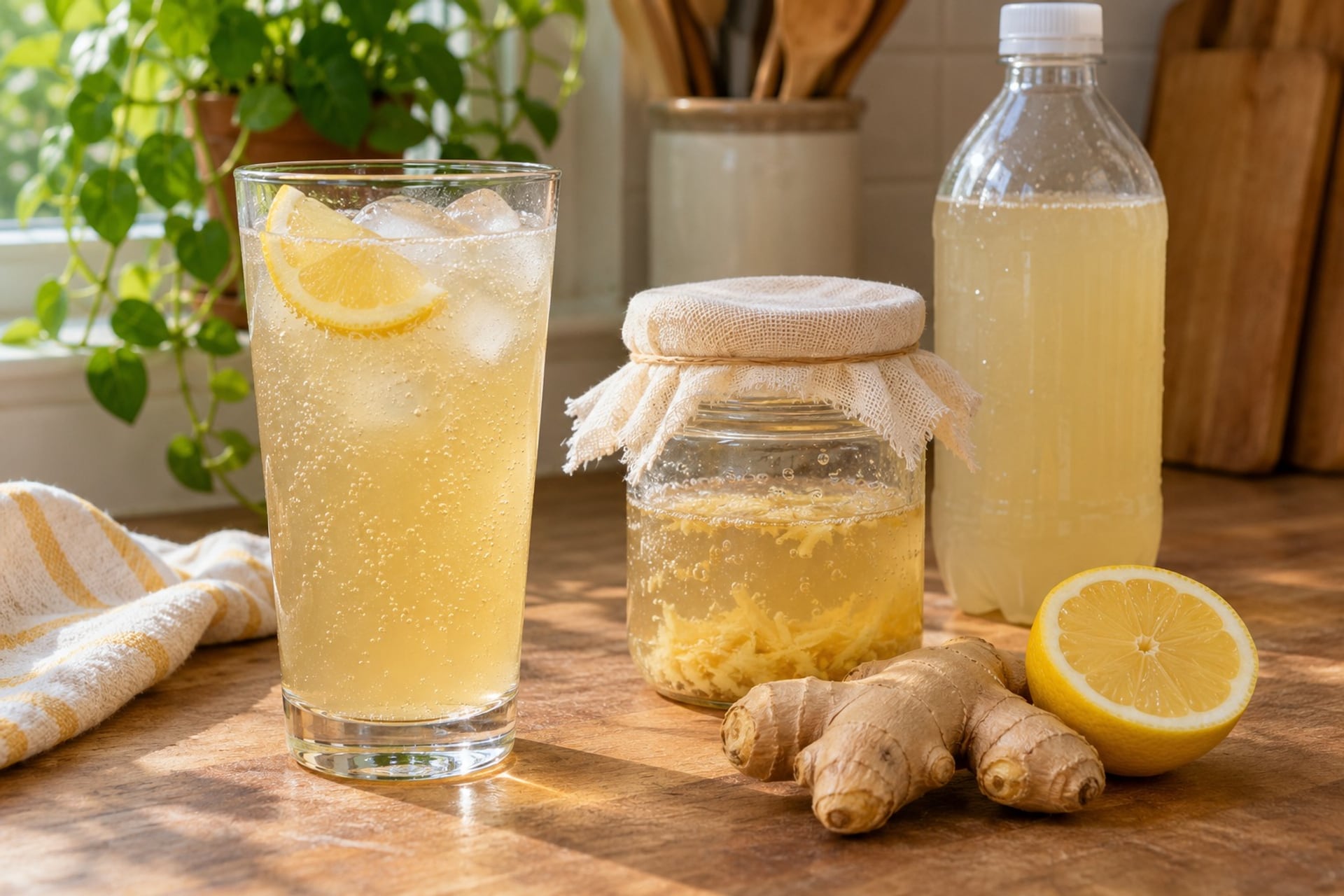
The short answer: real ginger beer is fresh root ginger, lemon, sugar and water, fermented for a short time so the yeast makes carbon dioxide and only a little alcohol. You can start it two ways. A ginger bug is a starter you grow yourself from grated ginger, sugar and water over a few days. Or you add a pinch of dried yeast, and a 1 liter batch is fizzy in about three days. Either way, bottle it in plastic soda bottles, never glass, and move it to the fridge once it is carbonated.
Ginger beer is older than most soft drinks. Dean Madden of the National Centre for Biotechnology Education at the University of Reading, writing in Science in School (2008), traces it to England in the mid-1700s and notes that in 1935 there were more than 3,000 producers in the United Kingdom. Most modern ginger beer, he writes, is made with flavorings and carbonated with pressurized carbon dioxide. The brewed kind is what you make at home. It is a cousin of our ginger wine, which is fermented out and aged; ginger beer is stopped young, while it is still sweet and sparkling.
How to Make a Ginger Bug
A ginger bug is a small jar of sweetened ginger water left to ferment with whatever yeast and bacteria come in on the ginger. It works like a sourdough starter for drinks. A 2024 study in Food Chemistry by de Oliveira and colleagues, which followed ginger bugs and the ginger beer made from them, found that letting the bug activate for longer (96 hours) produced more organic acids and alcohols, more aroma compounds, and a larger population of lactic acid bacteria and yeasts. In plain terms, a bug that has had four days to get going has more life and more flavor to give.
Our starting method
- Day 1. In a clean pint jar, mix 1 tablespoon of grated fresh ginger (skin on, if it is organic and scrubbed), 1 tablespoon of white sugar and 1 cup of unchlorinated water. Cover with a cloth held on by a rubber band, not a lid.
- Days 2 to 5. Once a day, add another tablespoon of grated ginger and another tablespoon of sugar, and stir.
- Ready. The bug is ready when it fizzes when stirred, has small bubbles rising on their own and smells sharp and gingery. At a warm room temperature that is usually somewhere between day 3 and day 7.
Water, sugar and warmth
Chlorinated tap water is meant to keep microbes down, which is the opposite of what a starter needs, so use filtered water, or tap water left to stand uncovered overnight. Plain white sugar is the simplest food for the bug. Keep the jar out of direct sun, somewhere around room temperature. Like any fermentation, a bug slows down in the cold, so a chilly kitchen can turn three days into a week.
When a bug has gone wrong
A white sediment at the bottom is normal. Fuzzy mold on the surface, in blue, green, black or pink, is not: throw the whole jar out and start again with a cleaner jar. The Science in School recipe relies on clean equipment and a large dose of yeast to outcompete contaminants; a bug has no such head start, so cleanliness matters even more.
Keeping it alive
Between batches, the bug can live in the fridge with a lid on, fed with a teaspoon each of ginger and sugar once a week. Before you use it again, bring it back to room temperature and feed it for a day or two until it is bubbly.
Ginger Beer With a Ginger Bug
Make the ginger base
For about 2 quarts, simmer 2 to 3 inches of grated or thinly sliced fresh ginger in 1 quart of water for 15 minutes, take it off the heat and stir in ½ to ¾ cup of sugar until it dissolves. Add another quart of cold water so the base cools faster, then the juice of a lemon. Strain out the ginger.
Add the bug only when it is cool
Heat kills the culture, so wait until the base is at room temperature. Strain in about ½ cup of liquid from the active bug, then top the bug jar back up with water, ginger and sugar so it keeps going.
Bottle and carbonate
Funnel the mix into clean PET soda bottles, leaving a few centimeters of air at the top, and cap them. Leave them at room temperature. Bug ferments are slower than yeast ferments and less predictable, so check them twice a day by squeezing a bottle: when it no longer gives under your thumb, the carbonation is there, and the bottles go straight into the fridge. That usually takes one to three days.
Recipe card
Quick ginger beer with yeast, 1 liter
- Makes
- 1 liter
- Time to drink
- About 90 minutes of preparation, 24 hours in the bowl, up to 48 hours in the bottle
- Difficulty
- Easy
Ingredients
- 1 liter water
- 150 g fresh root ginger (about 130 g once peeled)
- 1 medium lemon, preferably unwaxed
- 140 g sugar, white or brown
- 4 g cream of tartar
- 4 g dried ale or bread yeast (or 8 g fresh yeast)
- Optional spices: chili, nutmeg, licorice, vanilla, cardamom, cloves, juniper, fennel, coriander or star anise
Method
- Peel the ginger and cut it into slices 3 to 5 mm thick. Put the slices in a strong, clean plastic bag and crush them well with a rolling pin.
- Put the ginger in a large bowl or jug, grate the lemon zest over it and add the lemon juice.
- Add the sugar, cream of tartar and any spices, carefully pour on the boiling water, and stir.
- Cover the bowl with a clean cloth and let it cool to 25 to 30°C (77 to 86°F). This takes 60 to 90 minutes.
- While it cools, sterilize a PET plastic bottle and cap and rinse them with clean water.
- Stir the yeast into the warm liquid until it disperses.
- Cover with a clean cloth and leave it somewhere warm for 24 hours.
- Skim off the yeast on top, leaving the sediment in the bowl, and strain the liquid into the bottle, leaving a 3 to 5 cm air gap.
- Let it ferment at room temperature (about 21°C or 70°F) for no more than 48 hours, then put the bottle in the fridge.
- Drink within six days.
Quantities, method and safety rules from Dean Madden’s ginger beer recipe in Science in School, Issue 8 (2008), written for the National Centre for Biotechnology Education. Multiply everything for a larger batch.
How Much Alcohol Is in Homemade Ginger Beer?
A little, by design
Any ginger beer that is brewed with yeast contains some alcohol, because that is what yeast makes from sugar alongside carbon dioxide. Madden notes that the British Excise Regulations of 1855 required ginger beer to contain no more than 2% alcohol, and that it was usually far less potent. For the home recipe above, he writes that the short fermentation period and refrigeration ensure that the alcohol content stays low. He also notes that some religious groups object even to drinks with little alcohol that are produced by brewing, which is worth knowing before you hand a glass to a guest.
Time is the dial
The longer ginger beer ferments, the more of its sugar becomes alcohol. The 2024 Food Chemistry study found exactly that: a longer fermentation of the ginger beer itself, 14 days, increased the ethanol along with the aroma and flavor compounds. Short and cold gives you a sweet, mildly alcoholic soft drink. Long and warm gives you something stronger, drier and, in a sealed bottle, under much more pressure.
Measure it if it matters
You cannot judge alcohol by taste. If you need to know, take a hydrometer reading of the base before the starter goes in and another when you bottle, and run both through our ABV calculator. Our hydrometer guide covers reading one in a sugary liquid.
Alcoholic Ginger Beer
Ferment it in a jug first
For a deliberately alcoholic ginger beer, do not try to get there by leaving sealed bottles out for longer. Ferment the sweetened ginger base in a jug or bucket under an airlock, with a wine or ale yeast, until the gravity drops as far as you want, the same way you would start a wine. Only then bottle it, either still or with a small measured dose of sugar for carbonation, following the bottling rules for beer or cider. Our guide on how to make hard cider covers that kind of priming and bottling.
Or make ginger wine
If what you really want is a strong ginger drink to sip, ginger wine is the better recipe. It is fermented out under an airlock, still rather than sparkling, and improves with age. Our ginger wine recipe has the amounts, the ABV math and a spiced Christmas version.
Flavor Variations
More bite
Grating the ginger instead of slicing it, or simmering it longer, gives a hotter drink. Madden notes that some recipes grate rather than slice and crush, and that others boil the mixture before adding the yeast to extract more flavor. A slice of fresh chili in the bowl adds heat of a different kind.
Jamaican style
Madden mentions that Jamaican ginger beer is sometimes made with lime instead of lemon juice. Swap the lemon for one or two limes and use brown sugar for a darker, rounder drink.
Spiced
His list of optional spices includes chili, nutmeg, licorice, vanilla, cardamom, cloves, juniper, fennel, coriander and star anise. Add them with the ginger and they will be strained out with it. Start with one at a time so you know which one you like.
Make and drink alcoholic drinks responsibly, and only if you are of legal drinking age.
What you need for ginger beer
Ginger beer needs very little equipment. Besides a large bowl or jug, a grater and a clean jar for the bug, these are the useful pieces.
-
1Pressure bottles
SodaStream 1L Carbonating Bottles, 2 pack
Reusable plastic bottles built to hold carbonation, with sealing caps; clean soda bottles you already have also work.
-
2Straining cloth
Regency Ultra Fine Cheesecloth
Fine cotton cloth for straining grated ginger and lemon zest out of the base, and for covering the bug jar.
-
3Funnel
Bellemain 5 inch Stainless Steel Funnel with Strainer
A small funnel with a removable strainer, sized for the narrow neck of a soda bottle.
-
4Hydrometer
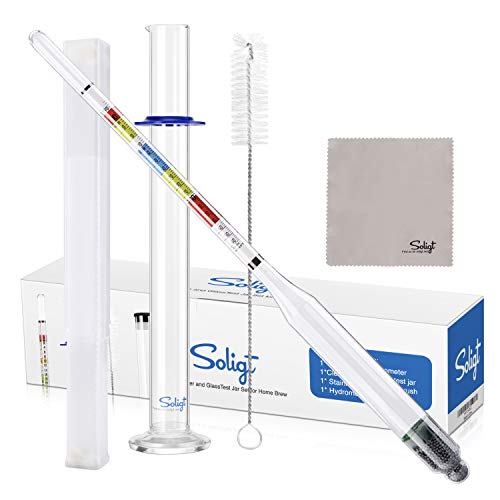
SOLIGT Triple Scale Hydrometer and Test Jar
Only needed if you want to know the alcohol: read the base before fermenting and again at bottling.