Melomel: How to Make Fruit Mead
As an Amazon Associate we earn from qualifying purchases. How we choose products.
On this page
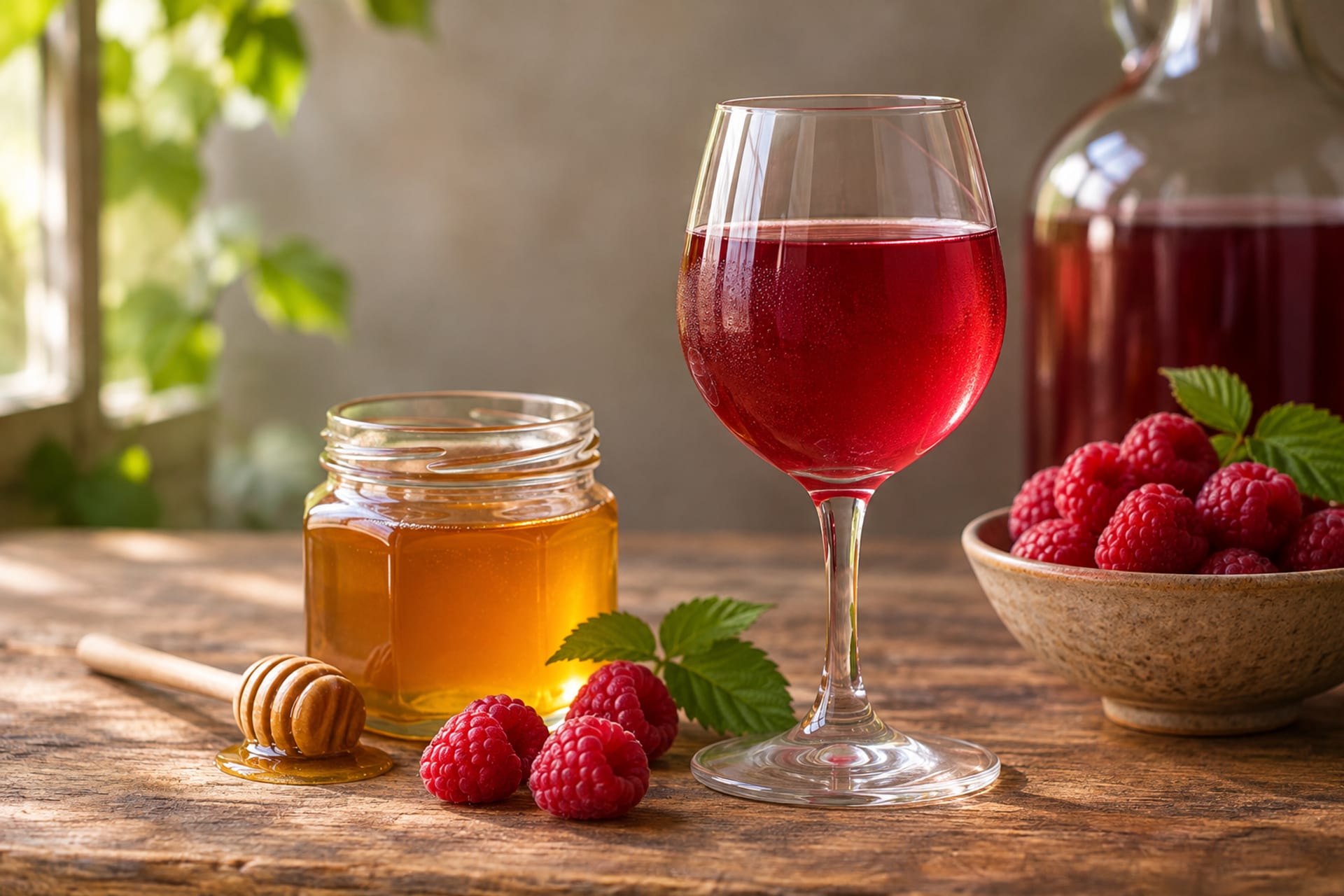
The short answer: a melomel is a mead made with fruit. The Beer Judge Certification Program (BJCP), in its 2015 mead guidelines, puts it simply: a mead made with fruit is called a melomel. You ferment honey, water and yeast as for any mead, and the fruit goes in with the honey or after the first fermentation, to give color, aroma and a little acidity.
This page is the hub for fruit mead: what counts as a melomel, how it differs from a cyser and a pyment, how much fruit to use per gallon, when to add it, and a 1 gallon red raspberry melomel recipe from a published collection. For the method behind every mead, see how to make mead. You must be of legal drinking age to make and drink mead.
What Is a Melomel?
The BJCP uses the word in two ways, which causes confusion. In the broad sense, every fruit mead is a melomel, and the guidelines note that some melomels have other names, such as cyser and pyment. In the 2015 guidelines it is also the name of one subcategory (M2E), for fruit meads that fit no other fruit subcategory: citrus, dried fruit such as dates and raisins, pears, figs, pomegranates, prickly pear, bananas, pineapples and most tropical fruit.
The BJCP describes a well-made melomel as one where the fruit is both distinctive and well incorporated into the honey. Fruit should not taste artificial or raw, and it should not hide the honey. That balance, rather than a fixed recipe, is the style.
The fruit mead subcategories
The 2015 guidelines name these fruit mead entry categories: cyser (apples), pyment (grapes), berry mead, stone fruit mead and melomel (everything else). They are entry categories, not separate drinks, and they all share the same basic method.
Melomel vs Cyser vs Pyment
All three are fruit meads. The difference is the fruit, as the BJCP defines them:
| Name | Fruit | Our page |
|---|---|---|
| Melomel | Any fruit, or the general word for all fruit mead | This page |
| Cyser | Apples, generally cider | Cyser recipe |
| Pyment | Grapes, generally juice | Compare mead and wine in mead vs wine |
A cyser with other fruit added is entered as a melomel, and a pyment with other fruit is too. If spices go in as well, the BJCP calls it a fruit and spice mead, which is different from a plain melomel. Our metheglin guide covers the spice side.
How Much Fruit per Gallon
There is no official figure, so look at what published recipes do. Jack Keller's Red Raspberry Melomel uses 1 lb 4 oz of raspberries and 2 lb 10 oz of honey for a gallon. His Blueberry Melomel (2) goes the other way: no fresh fruit at all, a gallon of unsweetened blueberry juice with 2 1/2 lb of honey. On this site, our blackberry mead uses 3 lb of berries per gallon, our blueberry mead 2 to 3 lb and our strawberry mead 2 lb as a starting point to taste.
So a useful working range for berries is roughly 1 to 3 lb (0.5 to 1.4 kg) per gallon: toward the low end for a delicate honey flavor, toward the high end for a fruit-forward mead. Fruit adds its own sugar, so take your hydrometer reading after the fruit goes in, and use the mead calculator to plan the honey.
Fresh, frozen or juice
Fresh or frozen berries both work: our strawberry mead starts from frozen fruit that is thawed first, and Keller's raspberry recipe specifies defrosted berries. Juice works too, as Keller's blueberry recipe shows, but check the label for added sugar or preservatives, which change the gravity and can stop yeast.
Fruit in Primary or Secondary?
Both work, and the choice mainly trades fresh aroma against ease. Keller's raspberry recipe puts the fruit in at the start, in a nylon bag, and removes the pulp after four days. Other mead makers add fruit to the secondary instead, hoping to keep more fresh fruit aroma.
Fruit in the primary
Mash the fruit in a straining bag at the bottom of the fermenter and pour the honey must over it. The active yeast extracts color and flavor, and nothing needs to be added later. The trade-off is that some delicate fruit aroma may not survive a vigorous fermentation. Remove the bag after the vigorous stage and squeeze gently.
Fruit in the secondary
Rack the mead off its yeast into a jug that already holds the fruit in a sanitized bag. You get a fresher, brighter fruit character and a clearer idea of how much you are adding, because you can taste. Leave it a few weeks, taste, and rack again once the flavor is right.
Pectic enzyme
Fruit contains pectin, which can leave a mead hazy. Our berry meads add pectic enzyme for this, dosed as the package says. Keller's raspberry recipe does not call for it, so treat it as optional there, and see how to clarify mead if the batch stays cloudy.
Recipe card
Red Raspberry Melomel, 1 US gallon
- Makes
- About 1 gallon (3.8 L)
- Time to drink
- About 2 weeks of active fermenting, then racking, and at least 1 year of aging
- Difficulty
- Intermediate
Ingredients
- 2 lb 10 oz (1.2 kg) raspberry honey, or any other honey
- 1 lb 4 oz (570 g) red raspberries, defrosted if frozen
- Water to make 1 gallon (about 3.8 L)
- Juice of 1 lemon
- 1 teaspoon yeast nutrient
- 1/4 teaspoon yeast energizer
- 1 Campden tablet
- 1/2 teaspoon potassium sorbate
- Mead or Champagne wine yeast, for a starter solution
- 1/3 cup honey for sweetening at bottling
Method
- Sanitize everything that touches the mead, and start a yeast starter solution with mead or Champagne yeast.
- Bring one quart of water to a boil, slowly stir in the honey, then add the lemon juice.
- Stir periodically until the water returns to a boil, then hold a low boil for about 40 minutes, skimming off the scum as it rises.
- Meanwhile put the raspberries in a nylon bag, tie it closed and mash the fruit with a flat-bottomed wine bottle in the bottom of the primary.
- Pour the honey water onto the berries, wait 15 minutes, then add the remaining water and the yeast nutrient. Cover and let the must reach room temperature.
- Stir in the yeast energizer and the activated yeast starter solution.
- Stir twice a day for 4 days, then remove the bag and discard the pulp. Ferment two more days and transfer to the secondary with an airlock. Ferment to dryness.
- Rack into a sanitized secondary holding a finely crushed Campden tablet and the potassium sorbate. Top up and refit the airlock.
- Set aside two months and rack again. Stir in 1/3 cup of honey until it dissolves completely, and bottle.
- Age at least one year.
Quantities and method are from Jack Keller, Requested Recipes Collection, Red Raspberry Melomel (the author's own recipe). Keller boils the honey for 40 minutes; many mead makers prefer not to boil to keep honey aroma, as the American Homebrewers Association's tutorial does, and the choice is yours. Use a hydrometer to confirm fermentation has finished before you stabilize and sweeten.
Our Other Fruit Meads
Each of these is a melomel in the broad sense, with its own full recipe. This page covers the shared ideas; those pages give the exact amounts.
- Blackberry mead: a 1 gallon recipe with a 5 gallon scale-up.
- Strawberry mead: a delicate fruit, so timing of the fruit matters most.
- Blueberry mead: a 1 gallon recipe with a 5 gallon scale-up.
- Cyser: apple mead, the fruit mead that starts from juice.
For the sweet and dry choices that apply to every melomel, see dry mead, and plan the honey in each batch with the mead calculator.
What you need for a melomel
A gallon kit for the base mead, a yeast, nutrient and pectic enzyme. You add the honey and fruit.
-
1Mead kit
FastRack Shepherd Made Mead Making Kit, 1 Gallon
A 1 gallon glass jug with airlocks, stopper, yeast nutrient and mead yeast, per the listing.
-
2Yeast
Lalvin 71B Wine Yeast, 10 packs
Lallemand rates 71B to 14% alcohol, a good fit for fruity, medium-strength meads.
-
3Pectic enzyme
Home Brew Ohio Pectic Enzyme (powder), 1 lb
Breaks down fruit pectin so a fruit mead clears; dose as the package directs.
-
4Yeast nutrient
The label directs 1 teaspoon per gallon before fermentation starts.


Not sure which mead to make? See best mead making kits and mead vs wine.