Metheglin: What Spiced Mead Is and How to Make It
As an Amazon Associate we earn from qualifying purchases. How we choose products.
On this page
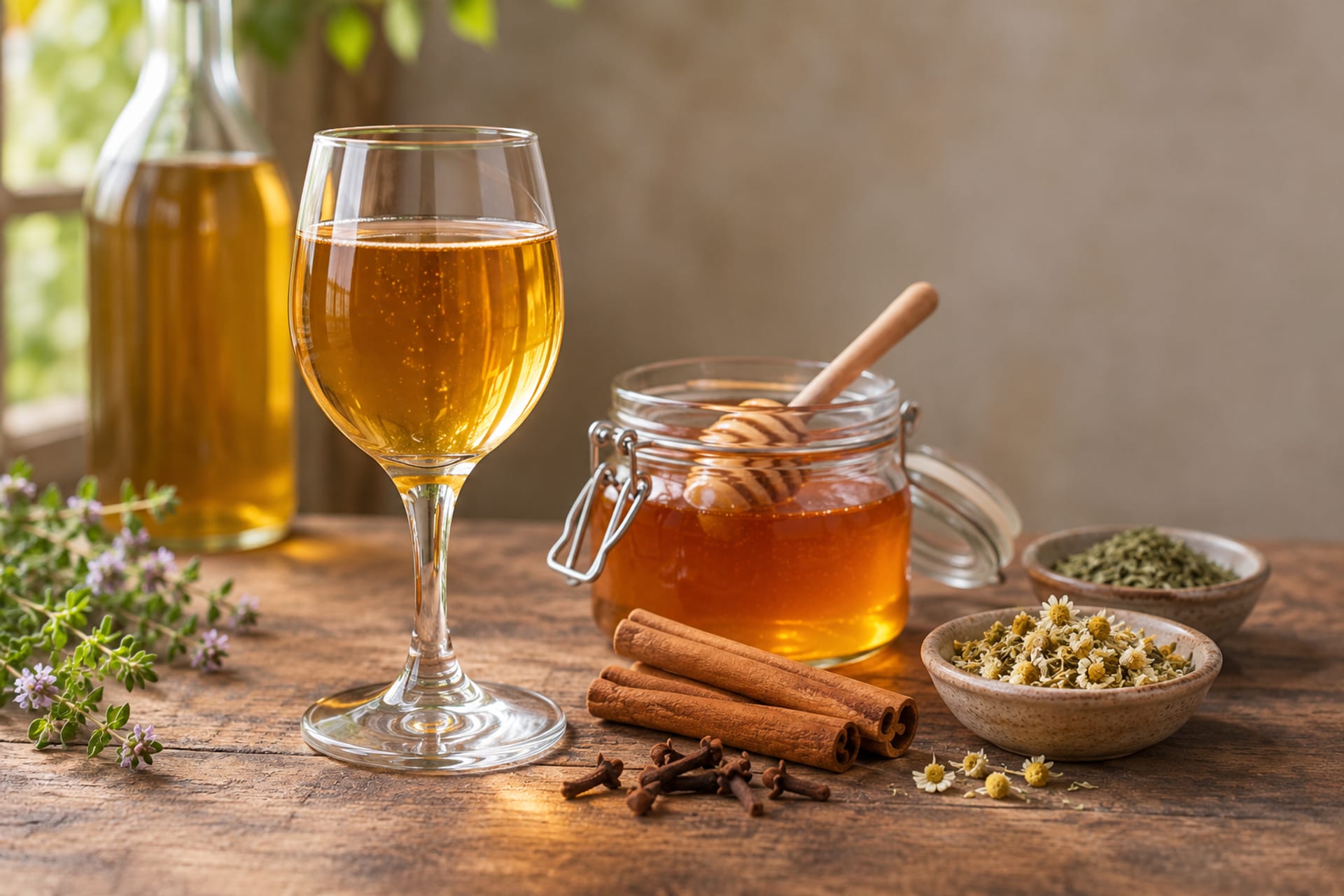
The short answer: metheglin is a mead flavored with spices or herbs. The Beer Judge Certification Program (BJCP), in its 2015 mead guidelines, says that a mead containing only culinary spices or herbs is known as a metheglin. It is honey, water and yeast, plus a restrained handful of something like cinnamon, ginger, chili, thyme or lavender.
This page explains what makes a metheglin, how to choose and time your spices, and gives a 1 gallon herb metheglin recipe adapted from a published collection. If you have never made mead, read how to make mead first: the method is the same, and spices are the only change. You must be of legal drinking age to make and drink mead.
What Is Metheglin?
Metheglin sits inside the BJCP's spiced mead category (M3). The 2015 guidelines split that category into fruit and spice mead, and spice, herb or vegetable mead, and the comment on the latter adds the name: a mead containing only culinary spices or herbs is known as a metheglin. Add fruit as well and the BJCP calls it a fruit and spice mead instead, so a cinnamon and orange mead is not strictly a metheglin.
The same guidelines advise a light hand. The better examples of the style use spices subtly, and when more than one spice goes in, they are chosen to blend. The honey aroma should stay noticeable.
How to pronounce metheglin
Wiktionary lists three English pronunciations, written in IPA as /mɪˈθɛɡlɪn/, /ˈmɛθəɡlɪn/ and /mɛˈθɛɡlɪn/. In plain letters the first and third both come out close to muh-THEG-lin, with the stress on the second syllable, while the second puts the stress up front: METH-uh-glin. All three are accepted, so say it whichever way feels natural.
Where the name comes from
Wiktionary gives the origin as the Welsh meddyglyn, from meddyg (doctor, healer) plus llyn (liquor). The name is old and describes the drink, not a modern marketing term. It does not mean the drink is medicine, and nothing on this page makes a health claim.
Metheglin Ingredients
A metheglin needs the four things any traditional mead needs, plus the spice. Honey is the base and sets both flavor and strength; our mead calculator works out how much you need for a target gravity.
Honey
Honey is the only sugar and a flavor in its own right, so a mild honey lets the spices show, while a strongly flavored honey competes with them. The recipe below, from Jack Keller's collection, uses orange blossom honey, a mild and aromatic choice. Buy pure honey: blends with added syrups change flavor and gravity.
Spices and herbs
Anything you would cook with is a candidate: cinnamon, ginger, vanilla, cloves, coriander, thyme, rosemary, lavender, chili. Use dried spices and herbs from a fresh jar, because old ones taste of dust. Whole spices are easier to lift out than ground ones, which cloud the mead and are hard to strain.
Less is more
Fermentation changes how spice tastes, and a strong spice can take over a batch from a small excess. Start low, taste as you go and add more later, since you can always add more spice but you cannot take it out. Keller's own herb recipe uses just three quarters of an ounce of herbs in a full gallon.
Yeast, nutrient and the rest
A wine yeast such as Lalvin 71B, which Lallemand rates at 14% alcohol, is a dependable choice, and our guide to the best wine yeasts compares others. Honey gives yeast very little to live on, so add yeast nutrient; the Fermax label directs 1 teaspoon per gallon before fermentation begins.
Recipe card
Herbs de Provence Metheglin, 1 US gallon
- Makes
- About 1 gallon (3.8 L)
- Time to drink
- About 2 months of fermenting and racking, then bottle aging of at least 6 months
- Difficulty
- Intermediate
Ingredients
- 3.5 lb (1.6 kg) orange blossom honey
- 3/4 oz (21 g) dried Herbs de Provence
- Warm water to make 1 gallon (3.8 L)
- 1 level teaspoon yeast nutrient (mead or wine)
- 2 level teaspoons acid blend
- 1/8 teaspoon grape tannin
- 1 sachet Lalvin 71B or White Labs WLP720 Sweet Mead yeast, started as the packet directs
- Potassium sorbate and Campden tablet for stabilizing, plus a sanitized marble and a piece of nylon mesh
Method
- Sanitize the primary fermenter, a one gallon secondary, airlock, spoon and the marble.
- Tie the herbs in the nylon mesh with the marble so the bag sinks, and drop it into the primary.
- Dissolve the honey in warm water, add the nutrient and acid blend and stir again.
- Sprinkle the grape tannin on the bottom of the primary and pour in the honey water.
- Cover and let the must cool to room temperature, then add the activated yeast and cover with a sanitized cloth.
- Stir twice a day until the specific gravity drops to 1.030, then remove the herb bag.
- Transfer to the one gallon secondary, top up if needed and fit the airlock.
- When fermentation stops, rack off the sediment, top up and refit the airlock. Repeat, and leave it for about two months. If it is not clear, wait another two months and rack again.
- Stabilize with potassium sorbate and a finely crushed, dissolved Campden tablet, wait 30 days and bottle.
- Age at least six months. The author notes that longer is probably better.
Quantities and method are adapted from Jack Keller, Requested Recipes Collection, Herbs de Provence Metheglin (the author's own recipe). Keller gives yeast as WLP720 Sweet Mead or Lalvin 71B; read your yeast's data sheet for temperature limits and use a hydrometer for the stop point.
Other Metheglins to Try
The same collection holds other spiced meads that show how wide the style runs. These are summaries, so use Keller's own recipes for exact amounts.
Capsicumel, the chili mead
Keller describes capsicumel (or capsimel) as a metheglin made with chilies. He says making it is a balancing act between the heat, the flavor of the honey and the chilies, the alcohol and the leftover sweetness, and that the chili you choose determines the character as well as the heat. One of his versions uses 16 medium jalapeños with 2 1/2 lb of light honey and chopped golden raisins, and takes 60 to 90 days just to ferment dry. Wear rubber gloves when you handle the chilies.
Dandelion mead
Keller's dandelion mead is also labeled a metheglin. It uses loosely packed dandelion petals, white raisins, 2 1/2 lb of honey, and the juice and zest of a lemon and an orange, and it is racked every 45 to 60 days until it stops throwing sediment. Our dandelion wine shows the same flower base made without honey, and our dry mead recipe shows the unspiced base.
Ginger mead (zingimel)
Keller's ginger mead uses 2 1/2 lb of clover honey, 1/2 oz of sliced ginger root and the juice of an orange. He simmers the ginger in water first, strains it into the honey water, and notes that his batch fermented to 0.998 and tasted good young, served chilled.
Adding Spices: Primary or Secondary?
There is no single right moment, and the choice changes the result. Keller's herb recipe adds the herbs at the start and removes them when the gravity falls to 1.030, so the herbs stay in for the early, vigorous part of fermentation only. His chili mead, in contrast, keeps the chili bag in until the vigorous fermentation dies down.
Early: in the primary
Spices added at the start give a rounded, blended flavor and are partly changed by fermentation. The risk is that you cannot judge the final taste, so keep the amount small and put them in a bag you can lift out.
Late: in the secondary
Spices added after the main fermentation keep a fresher, more distinct aroma, and you can taste after each day. Put the spice in a sanitized bag in the secondary jug and taste every day or two, since a spice can go from a hint to too much quickly. Remove the bag the moment it tastes right.
Tea
A gentler route is to steep the spice in a little hot water, strain it and add this spice tea to the mead after fermentation, a spoonful at a time. This lets you dose by taste instead of guessing, and you can stop the moment it is right.
Taste, then bottle
Spiced meads change with age, so judge a young batch with patience. Once it is clear, stable and tastes balanced, bottle it as in our guide to making mead. To compare spiced mead with grape wine, see mead vs wine, and for the fruit version of mead see our melomel guide.
What you need for a metheglin
A gallon kit for the base mead, a yeast and nutrient, and a spare jug for the secondary. You supply the honey and the spices.
-
1Mead kit
FastRack Shepherd Made Mead Making Kit, 1 Gallon
A 1 gallon glass jug with airlocks, stopper, yeast nutrient and mead yeast, per the listing, so the only thing left to buy is honey and spices.
-
2Yeast
Lalvin 71B Wine Yeast, 10 packs
Lallemand rates 71B to 14% alcohol, and Keller names it for his herb metheglin.
-
3Yeast nutrient
The label directs 1 teaspoon per gallon before fermentation starts, and a 1 lb bag covers many batches.
-
4Second jug for racking
1 Gallon Glass Jug with Airlock, Black Polyseal Cap and #6.5 Rubber Bung
The recipe moves the mead to a one gallon secondary, and a second jug lets you rack without pouring.


Planning the honey for your batch? Use the mead calculator, or compare setups in our guide to the best mead making kits.