Strawberry Mead Recipe
As an Amazon Associate we earn from qualifying purchases. How we choose products.
On this page
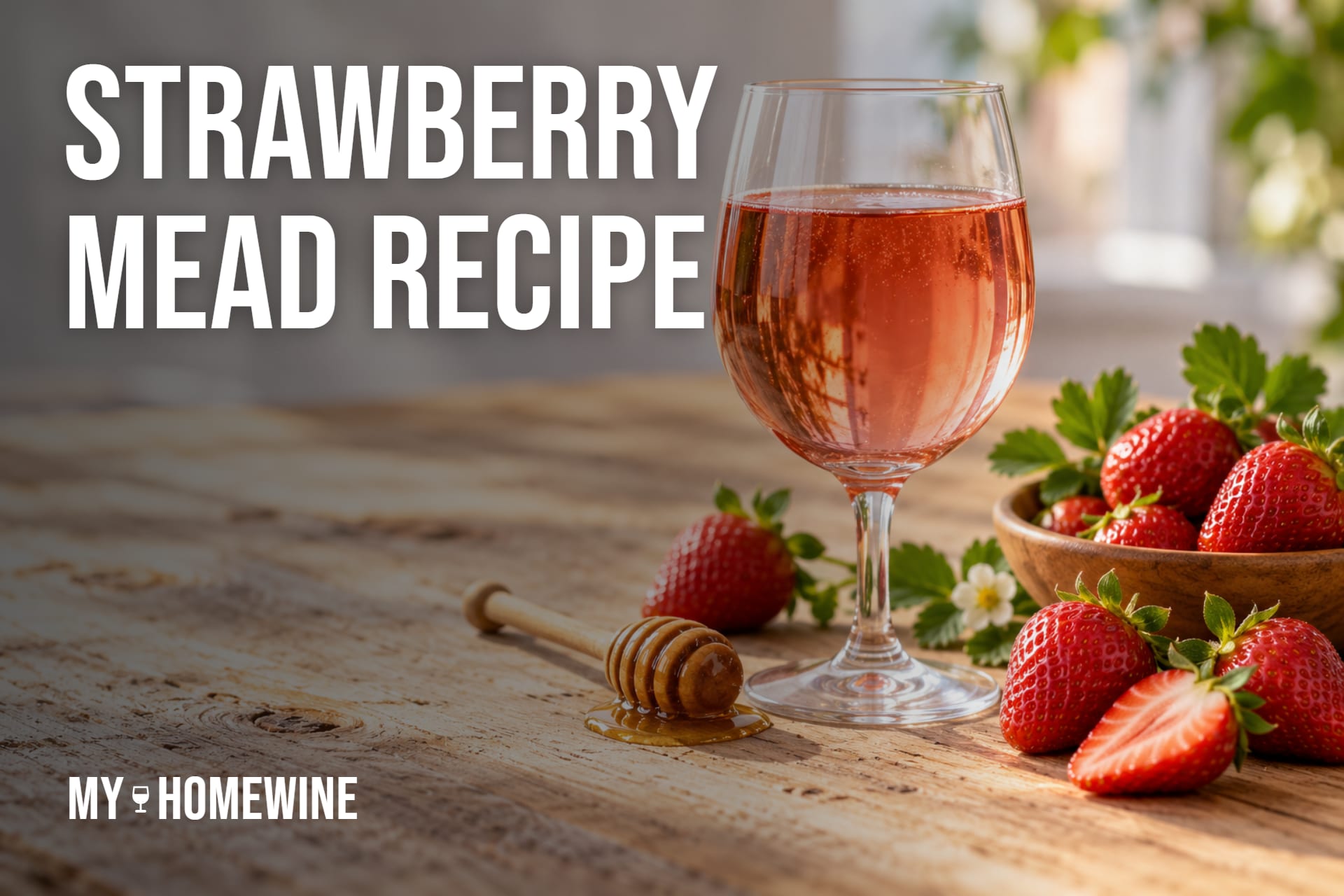
Strawberry mead is honey wine with strawberries in it, the kind of mead the brewing world calls a melomel. It is one of the friendliest fruit meads to start with: the berries are soft, they need no pressing, and the finished drink is pink, fragrant and easy to like. This strawberry mead recipe makes 1 gallon and scales to 5 gallons in the table below.
If you have never made mead, read how to make mead first; this page only covers what changes when strawberries join the batch. The honey amount is worked out with the same formula as our mead calculator, and the timings and temperatures follow the American Homebrewers Association's mead tutorial. You need to be of legal drinking age to make and drink mead.
Recipe card
Strawberry Mead, 1 Gallon
- Makes
- About 1 gallon, roughly four to five 750 ml bottles after racking
- Time to drink
- 2 to 3 weeks in primary, then a few weeks on the fruit and months of aging
- Difficulty
- Easy
Ingredients
- 2.5 lb (1.13 kg) mild honey such as clover or orange blossom
- Spring or filtered water to make 1 gallon (3.8 L) in total
- 2 lb (0.9 kg) strawberries, frozen, then thawed (start here and taste)
- 1 sachet (5 g) wine yeast such as Lalvin 71B
- 1 teaspoon yeast nutrient
- Pectic enzyme, dose as printed on the label
- No-rinse sanitizer for all equipment
Method
- Clean and sanitize the fermenter, spoon, airlock and hydrometer.
- Warm the closed honey container in a bowl of warm water, then mix the honey into about 3 quarts of water until no honey layer is left. Do not boil it.
- Take a hydrometer reading. Honey alone at this rate should read near 1.088, so write down what you actually get.
- When the must is between 60 and 70°F (15.5 to 21°C), shake it well, add the yeast and the nutrient, and fit the airlock.
- Ferment at the cool end of that range. When the airlock slows, usually after 2 to 3 weeks, check the gravity.
- Mash the thawed strawberries and put them, with their juice, in a sanitized straining bag in a clean fermenter big enough for the mead and the fruit. Add the pectic enzyme.
- Rack the mead onto the fruit, leaving the yeast sediment behind, and fit the airlock again.
- Taste every week. When the strawberry flavor is where you want it, lift out the bag without squeezing it and rack the mead into a clean jug.
- Age until clear. Bottle once two hydrometer readings taken 1 to 2 weeks apart match.
Timings and temperatures follow the American Homebrewers Association's mead tutorial; the honey gravity uses the 35 points per pound per gallon rule of thumb. The fruit amount is a starting point, not a measured standard.
Why Strawberry Flavor Fades and How to Keep It
Strawberry is a delicate flavor. A vigorous primary fermentation blows aroma out through the airlock, and a strong or very flavorful honey can overpower what is left. Two choices protect it.
Add the Fruit in the Secondary
Instead of putting the berries in with the honey at the start, ferment the honey first and add the fruit after the main fermentation slows. The yeast has less time to scrub the berry aroma away, and you can taste the mead on the fruit and take it off when it is right. The AHA tutorial does not cover fruit, so this is standard melomel practice rather than a number from a source: start with the amount in the recipe and adjust the next batch.
Pick a Gentle Honey
Clover and orange blossom are mild enough to let the berries lead. Dark, strongly flavored honeys such as buckwheat will taste of themselves. Our mead guide explains the honey choices in more detail.
Fresh or Frozen Strawberries
Frozen berries are the easier choice here. Freezing ruptures the fruit's cell walls, so once the berries thaw they release juice and flavor freely, with no crushing needed. They are also available all year and cheap by the bag. Wash fresh berries, hull them, then freeze them overnight and thaw before use if you want the same effect.
Whichever you use, choose ripe, unspoiled fruit. Mold on a single berry can spread through a batch. Use plain berries with no added sugar, syrup or preservatives. If you are after a wine instead of a mead, we have a separate strawberry wine recipe that uses sugar, not honey.
Which Yeast for Strawberry Mead
Lalvin 71B is the pick in this recipe. Lallemand rates it at 14% alcohol tolerance with a working range of 15 to 30°C (59 to 86°F), which leaves headroom above the roughly 11.5% this recipe can reach if it ferments dry. Lalvin ICV-D47 is the other common mead yeast and a fair alternative; check its tolerance and temperature range on the packet before you pitch.
Strawberry Mead, Step by Step
The recipe card is the short version. These are the parts that matter most.
Mix and Measure
Dissolve the honey fully before you read the hydrometer; an undissolved layer at the bottom gives a false reading. With 35 points per pound per gallon, 2.5 lb of honey in a gallon predicts an original gravity near 1.0875, and a dry finish at 1.000 would mean about 11.5% ABV. Honeys vary, so the reading you take is the one to trust. You can also run your own numbers through the mead calculator. The strawberries add a little sugar of their own, so expect the real number to run slightly higher.
Feed the Yeast
Honey is a thin diet for yeast. Add a teaspoon of yeast nutrient per gallon at the start, as the nutrient's label directs, and shake the must so the yeast gets oxygen early.
Move to the Fruit
Rack gently so you do not splash air into the mead. Keep the fruit in a bag so you can lift it out in one piece. Because the berries and their juice take up room, use a fermenter with spare space, such as a food-grade bucket with a lid and airlock, not a full 1 gallon jug.
Variation: Strawberry Hibiscus Mead
Dried hibiscus flowers add a tart, deep red note that suits strawberry well, and many people search for this pairing. Treat it as a small add-on to the recipe above, not a separate method: steep a small amount of dried hibiscus in the secondary the way you handle the fruit bag, taste often and pull it out early. Hibiscus can turn sharp and dry quickly, so start small and taste.
Scaling to 5 Gallons
Every quantity multiplies by five, and the gravity target stays the same. Dose the nutrient and pectic enzyme by their labels for the larger batch.
| Ingredient | 1 gallon | 5 gallons |
|---|---|---|
| Mild honey | 2.5 lb (1.13 kg) | 12.5 lb (5.67 kg) |
| Strawberries | 2 lb (0.9 kg) | 10 lb (4.5 kg) |
| Water | to 1 gal (3.8 L) | to 5 gal (19 L) |
| Yeast nutrient | 1 tsp | 5 tsp |
| Lalvin 71B | 1 sachet (5 g) | follow the packet |
| Pectic enzyme | per label | per label |
| Predicted OG (honey only) | about 1.088 | about 1.088 |
| ABV if fermented dry | about 11.5% | about 11.5% |
A 5 gallon batch needs a bigger fermenter for the fruit stage and a longer wait before the gravity settles. Use the same hydrometer test before you bottle. A related melomel with a darker flavor is our blackberry mead recipe.
Color and Clearing
Fresh strawberry mead is a lovely pink, but strawberry color is not stable. As a general observation, it fades with light and with time, often turning toward amber or orange, so keep the mead out of sunlight and bottle it in dark glass if you plan to age it. Drink it within a reasonable time for the best color and fruit.
Strawberries also carry pectin, which can leave a haze. Adding pectic enzyme with the fruit helps the mead clear. Rack off the sediment as it settles, and give it time. Cold storage speeds the clearing too.
What you need for strawberry mead
A mead kit covers the fermenting gear, then add the yeast and the enzyme for the fruit. You supply the honey and the strawberries.
-
11 gallon mead kit
FastRack Shepherd Made Mead Making Kit, 1 Gallon
A 1 gallon glass jug with airlocks, a rubber stopper, yeast nutrient and mead yeast, per the listing.
-
2Yeast
Lalvin 71B Wine Yeast, 10 packs
The wine yeast Lallemand rates at 14% alcohol tolerance, used in this recipe.
-
3Pectic enzyme
Home Brew Ohio Pectic Enzyme Powder, 1 lb
For the pectin haze the strawberries bring into the mead.


Related: how to backsweeten wine, the mead calculator and strawberry wine.