Hibiscus Wine Recipe: Tart Red Wine From Dried Hibiscus Flowers
As an Amazon Associate we earn from qualifying purchases. How we choose products.
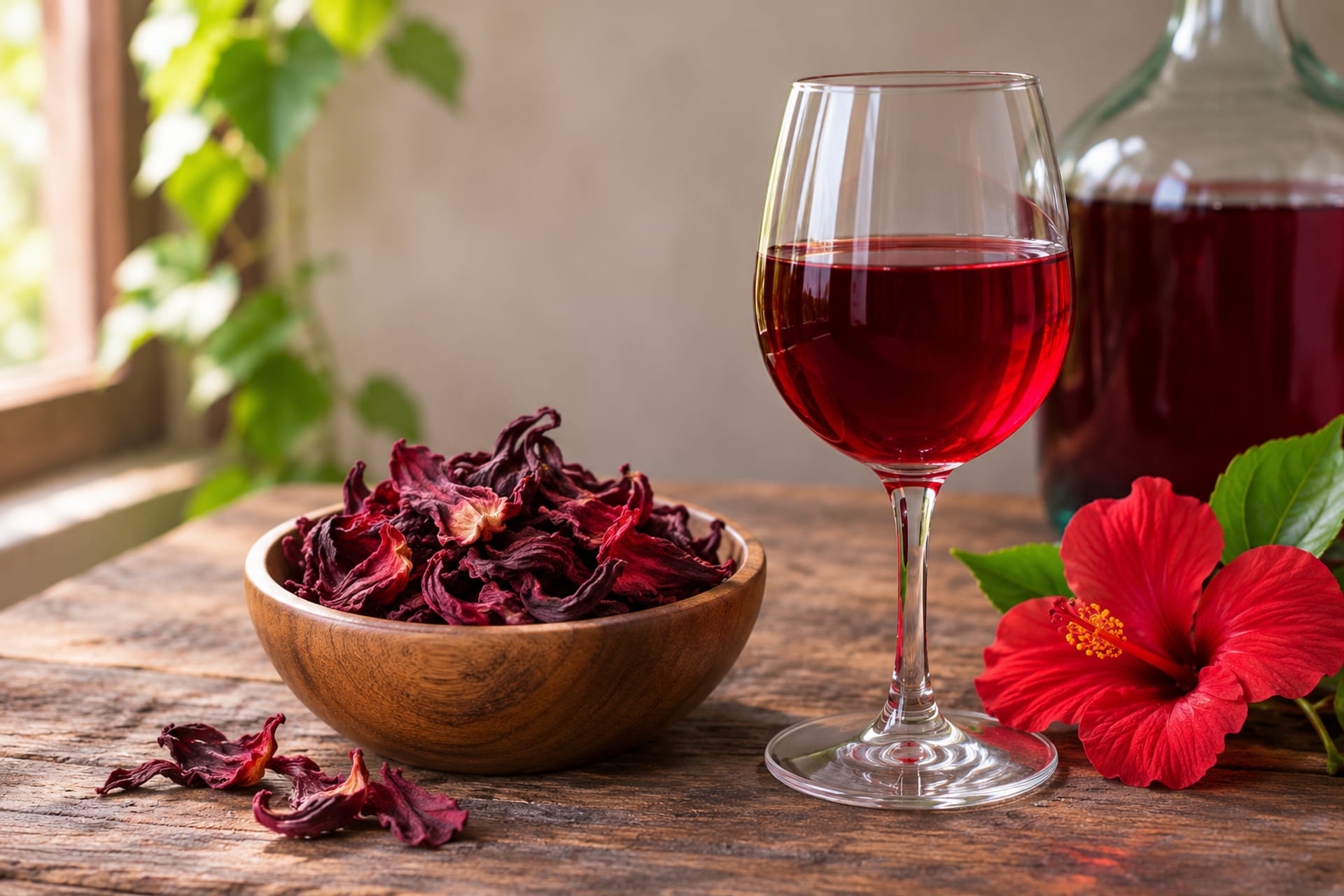
The short answer: hibiscus wine is made from dried hibiscus flowers, and you need very few of them. Jack Keller’s recipe in his Requested Recipes Collection (compiled 2020) uses 1 to 2 ounces of dried flowers, 2 pounds of sugar, 7 pints of water, 1½ teaspoons of acid blend, 1 teaspoon of yeast nutrient and a Côte des Blancs wine yeast. The flowers steep in a nylon bag in the primary fermenter, the wine ferments about a week on the flowers, then it is racked three times over roughly four months before stabilizing and bottling in dark glass. Keller labels it his own recipe and says it can be drunk right away but improves in six months.
New to winemaking? Start with our full guide to making wine at home; this page assumes you know what racking and an airlock are. For more fruit and flower recipes, see the homemade wine recipe collection.
Hibiscus Wine at a Glance
| Detail | Keller’s hibiscus flower wine |
|---|---|
| Dried hibiscus flowers | 1 to 2 oz (about 30 to 60 g), whole or crushed |
| Sugar | 2 lb (about 0.9 kg) |
| Water | 7 pints, topped up at the first racking |
| Acid blend | 1½ tsp |
| Yeast nutrient | 1 tsp |
| Yeast | 1 packet of Côte des Blancs |
| On the flowers | until active fermentation dies down, 7 to 8 days |
| Racking | after 30 days, 30 days later, then after a final 2 months |
| Drinking | right away if you like, better after 6 months |
Keller does not state a yield. With 7 pints of water plus the sugar, then topped up, this is a roughly 1 gallon batch.
Which Hibiscus to Use
The question behind Keller’s recipe came from a reader who drinks hibiscus tea and wondered whether it would make good wine. Keller starts with the plant itself: Hibiscus is a genus in the mallow family, and each species has its own character.
Dried roselle, the one Keller buys
Keller says all hibiscus species have edible flowers, but some are “more edible” than others, and a small percentage of people have problems with certain species, as with almost any plant. Generally, he says, Hibiscus sabdariffa is considered the most edible. He buys H. sabdariffa flowers already dried and ready to be crushed for tea. A friend also sun-dries flowers for him, and he says both make very good wine, but the ones he buys preserve their color better.
Color follows the flower
Keller generally buys dried red or purple flowers, which make red or purple wine. If you want a deep red wine, buy flowers that are red or purple when dry. Whole or crushed flowers both work, since he notes they are sold for tea at many specialty and health food stores.
Garden and ornamental hibiscus
Keller’s list of species includes several garden favorites, but his quantities are written for dried flowers, and the only species he singles out as the most edible is H. sabdariffa. We give quantities only for that route. If you are tempted by a plant from the yard, you are on your own without a tested recipe, so buy flowers sold for tea and check the label for the species.
Recipe card
Hibiscus flower wine, about 1 US gallon
- Makes
- About 1 gallon (Keller states no yield)
- Time to drink
- Ready to drink early; better after 6 months
- Difficulty
- Intermediate
Ingredients
- 1 to 2 oz dried hibiscus flowers, whole or crushed
- 2 lb granulated sugar
- 7 pints water, plus more to top up
- 1½ tsp acid blend
- 1 tsp yeast nutrient
- 1 packet Côte des Blancs wine yeast
Method
- Combine the water and sugar in a pot and bring to a boil, stirring occasionally until the sugar is dissolved.
- Tie the flowers in a nylon straining bag and put the bag in the primary fermenter.
- Pour the boiling sugar water over the flowers and stir in everything except the yeast.
- Cover the primary until the liquid cools to room temperature.
- Squeeze the bag to extract the most flavor, then discard the flowers (or keep them for tea).
- Add the activated yeast, cover again and stir daily until active fermentation dies down, 7 to 8 days.
- Rack to a secondary, top up with water and fit an airlock. Ferment 30 days.
- Rack into a clean secondary, refit the airlock and rack again after another 30 days.
- Wait a final 2 months, rack again and stabilize the wine.
- After 10 to 14 days, bottle in dark glass. It can be drunk immediately but improves in six months.
Quantities and method from Hibiscus Flower Wine in Jack Keller’s Requested Recipes Collection (compiled 2020), which he labels his own recipe. The metric figures are our conversions.
Roselle Variation
Keller gives a second recipe for roselle itself, in a separate entry. Roselle is Hibiscus sabdariffa, which he describes as an Old World tropical plant with yellow flowers. Its floral bracts, when immature, have a pleasant acid flavor and make a delightful jelly, tea and wine.
Fresh blossoms, picked at the right hour
This version uses 1 pound of fresh blossoms and bracts instead of 1 to 2 ounces of dry flowers, plus half a pound of chopped golden raisins or sultanas. Keller says to pick the whole flower, including the bracts, in mid-morning after the dew has evaporated, and to use it within the hour for freshness. It is only worth doing if you grow roselle yourself or can get it fresh the same day.
Recipe card
Roselle wine with golden raisins, about 1 US gallon
- Makes
- About 1 gallon (Keller states no yield)
- Time to drink
- Can be drunk immediately; improves in six months
- Difficulty
- Intermediate
Ingredients
- 1 lb fresh roselle blossoms and bracts
- 2 lb granulated sugar
- ½ lb golden raisins or sultanas, chopped or minced
- 7 pints water, plus more to top up
- 1½ tsp acid blend
- 1 tsp yeast nutrient
- 1 packet Côte des Blancs wine yeast
Method
- Pick the flowers and bracts in mid-morning after the dew has burned off.
- Combine the water and sugar and bring to a boil, stirring occasionally until the sugar is dissolved.
- Tie the flowers, bracts and chopped raisins in a nylon straining bag and put it in the primary.
- Pour the boiling sugar water over the bag and stir in everything except the yeast. Cover until the liquid cools to room temperature.
- Add the activated yeast, cover again and squeeze the bag daily until active fermentation dies down, 7 to 8 days.
- Squeeze the flowers and raisins to extract the most flavor, then discard them. Let the liquid settle overnight.
- Rack to a secondary, top up and fit an airlock. Ferment 30 days, then rack into a clean secondary.
- Refit the airlock and rack every 30 days until the wine clears.
- Wait a final 2 months, rack again and stabilize. Wait 10 to 14 days and bottle.
Quantities and method from Roselle Wine in Jack Keller’s Requested Recipes Collection (compiled 2020), which he labels his own recipe.
Balancing the Tartness
Keller’s hibiscus recipe adds 1½ teaspoons of acid blend, and he describes the roselle bracts as having a pleasant acid flavor. Neither recipe says anything about sweetening, and we have no tested numbers for it, so what follows is a method rather than a recipe.
Backsweeten only after stabilizing
Both of Keller’s recipes stabilize the wine before bottling. That is the point at which sweetening becomes an option: a stabilized, fully fermented wine can be sweetened to taste without restarting fermentation. Our guide to how to backsweeten wine covers the method. Taste a small glass first and add sweetener a little at a time, since a tart wine can look like it wants more sugar than it does.
Other flower wines to try
If hibiscus appeals, you may also like dandelion wine, elderflower champagne and rose petal wine. Make and drink wine responsibly, and only if you are of legal drinking age.
What you need for hibiscus wine
Items from the recipe card that are easy to forget. You also need a nylon straining bag, a dark or clear 1 gallon jug with an airlock, and Côte des Blancs yeast.
-
1Dried hibiscus flowers
Dried Whole Hibiscus Flowers and Petals, Flor de Jamaica, 1 lb
Whole dried flowers sold for tea, per the listing. Keller prefers Hibiscus sabdariffa, so check the label for the species.
-
2Acid blend
North Mountain Supply Food Grade Acid Blend for Winemaking, 4 oz
Keller’s hibiscus and roselle recipes both call for 1½ teaspoons.
-
3Yeast nutrient
Both recipes call for 1 teaspoon; follow the dose on the package.
-
4Primary fermenter
FastRack 6.5 Gallon Fermenting Bucket
A food grade HDPE bucket with a lid drilled for an airlock grommet, per the listing, with room for the flower bag.
-
5Secondary
1 Gallon Glass Jug with Airlock, Black Polyseal Cap and Rubber Bung
The listing includes an airlock and bung, which this recipe needs for its three rackings.


