Beet Wine Recipe: Beetroot Wine That Doesn't Taste Earthy
As an Amazon Associate we earn from qualifying purchases. How we choose products.
On this page
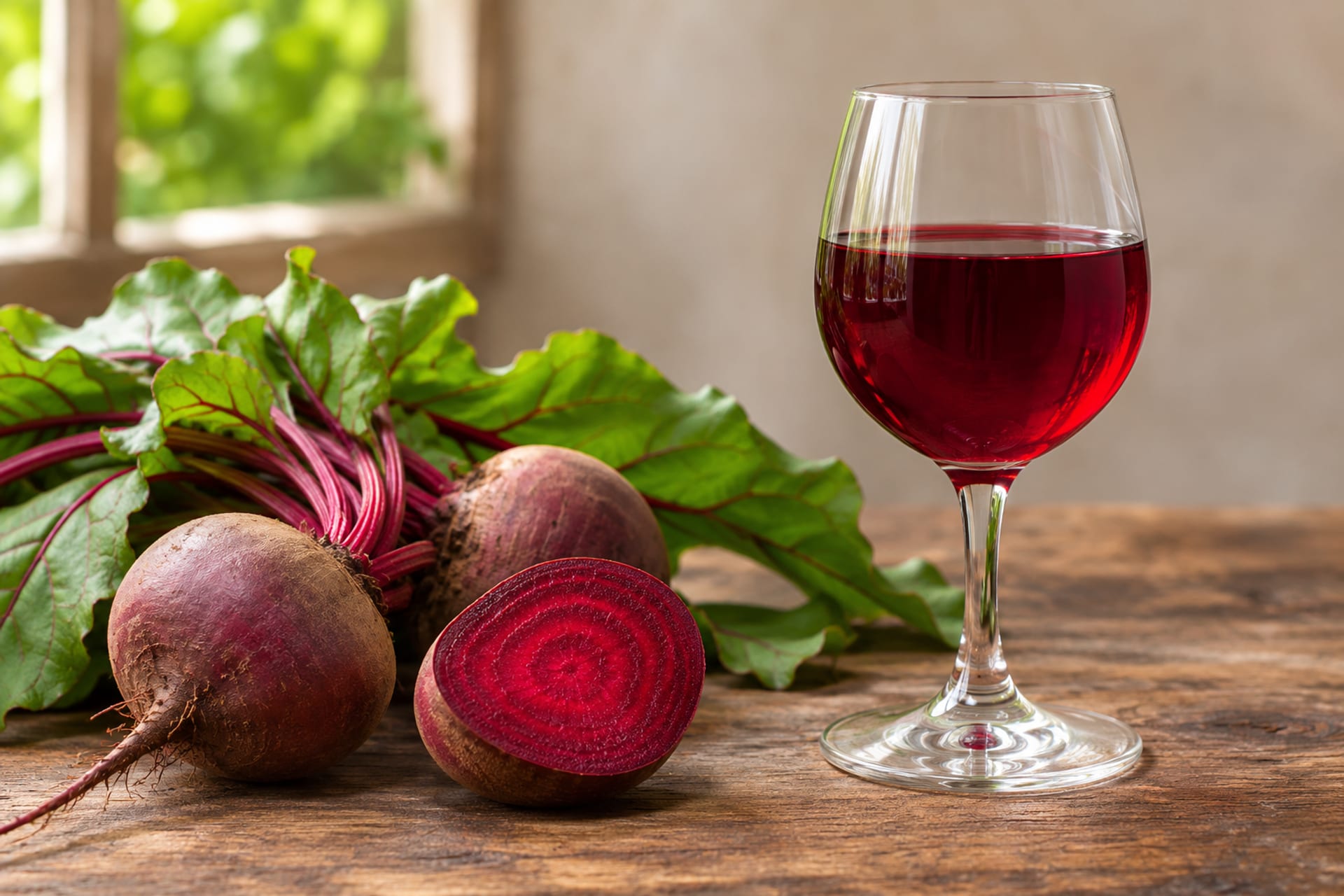
The short answer: yes, you can make a full-bodied beet wine that does not taste earthy, and the trick is time. Jack Keller’s beetroot wine uses 5 pounds of fresh beets, 2 lemons, 2 pounds of white sugar and 1 pound of light brown sugar per gallon. You cook the sliced beets, ferment the liquid for three weeks, add the brown sugar, ferment to dryness, then age it in the dark: six months in bulk and another 12 to 18 months in the bottle before tasting. Keller says the earthy flavor often attends young beet wines but disappears with aging. The recipe is from his Requested Recipes Collection (compiled 2020), where he labels it his own.
New to winemaking? Start with our full guide to making wine at home. For more vegetable and fruit wines, see the homemade wine recipe collection.
Beet Wine at a Glance
| Detail | 1 gallon |
|---|---|
| Beets | 5 lb fresh, scrubbed, sliced thin, not peeled |
| Sugar | 2 lb white, plus 1 lb light brown after three weeks |
| Lemons | 2, zest and juice |
| Water | 6½ pints |
| Yeast | Montrachet, activated in a starter solution |
| Fermentation | 3 weeks, then 30 to 45 days to dryness |
| Bulk aging | 6 months, in a dark place |
| Bottle aging | 12 to 18 months more, before tasting |
This is a two year wine, so start it with that in mind.
Beet Wine or Beetroot Wine?
They are the same wine. Keller’s section begins with exactly that question, and his answer is yes: what Americans call beets have traditionally been called beetroots by the British, to tell them apart from beet tops or greens, which are boiled or steamed and eaten. So a search for beetroot wine and one for beet wine are looking for the same recipe, and the one below works for both.
Keller has other beet wines on his site, but says this one, which he developed more recently, yields a more full-bodied wine. In a separate section on fennel wines he also writes that, of the three recipes there, he likes the beet wine best, but that it needs two years of aging to be mature enough to drink.
Why Beet Wine Can Taste Earthy, and How Keller Avoids It
The earthy flavor is real. Keller says it often attends young beet wines. His fix is not an extra ingredient but patience: since beet wines should be aged at least a year before sampling, and preferably two, he says no earthy taste should be noted if the recipe is followed precisely.
Cook the beets, then use only the liquid
The beets are scrubbed, sliced thin without peeling, and brought to a boil covered with the lemon zest and part of the water, then cooked at a low boil for another 20 minutes. They come out with a slotted spoon. Keller notes you can eat them once the peelings are removed. What goes on to ferment is the cooking liquid, not the beets.
Lemons and two kinds of sugar
The lemon zest goes in with the beets and the juice goes into the pot afterward, together with the white sugar and the yeast nutrient. The light brown sugar comes later, after three weeks of fermentation, and is stirred in gently but well before topping up. Keller says this recipe yields a more full-bodied wine than his other beet recipes.
Do not skip the wait
If you taste a bottle early and it is earthy, that does not mean the batch failed. By Keller’s account it means it is young.
Recipe card
Beetroot wine, 1 US gallon
- Makes
- About 5 bottles (750 ml)
- Time to drink
- About 2 years from start to tasting
- Difficulty
- Intermediate
Ingredients
- 5 lb fresh beetroot
- 2 lemons, zest and juice
- 2 lb finely granulated white sugar
- 1 lb light brown sugar
- 6½ pints water
- 1 tsp yeast nutrient
- Montrachet wine yeast, activated in a starter solution
- 1 Campden tablet, finely crushed and dissolved, for the first racking after fermentation
Method
- Scrub the beetroots well and slice them thinly without peeling.
- Put the slices in a large pot with the zest of the lemons and 1½ quarts of the water (this comes from the 6½ pints, leaving 3½ pints for later). Bring to a boil covered, reduce the heat and cook at a low boil for another 20 minutes.
- Remove the pot from the heat and lift out the beets with a slotted spoon.
- To the pot add the white sugar, the juice of the lemons and the yeast nutrient. Stir until the sugar is completely dissolved, then add the remaining water.
- Cool to 90°F, transfer to a secondary, add the activated yeast and attach an airlock.
- Ferment three weeks and rack. Add the brown sugar and stir gently but well to dissolve, then top up. Refit the airlock and ferment to dryness, 30 to 45 days.
- Rack, add the finely crushed and dissolved Campden tablet, top up, refit the airlock and bulk age in a dark place for six months.
- Rack into dark bottles and store in a dark place for 12 to 18 more months before tasting.
Quantities and method from Beetroot Wine in Jack Keller’s Requested Recipes Collection (compiled 2020), which he labels his own recipe. Keller specifies a dark secondary and dark bottles.
The Color Problem
Keller gives the reason for the dark secondary and dark bottles in so many words: they are specified to prevent any exposure to light from bleaching out the beautiful color of this wine. That is the whole color strategy in his recipe, and it explains why the card above says dark vessels and a dark place at every aging stage.
Dark glass, or wrap a clear jug
If you only have a clear 1 gallon jug for the secondary, wrap it in brown paper or keep it inside a box or cupboard. This is a simple way to apply Keller’s advice, not something he spells out for beet wine.
Dark bottles for the long wait
The wine sits in the bottle for 12 to 18 months before it is tasted, so that is where light has the most time to work. Keep the bottles in a dark place. Our guide to how long homemade wine lasts covers storage, and common wine faults will help you tell a young wine from a flawed one.
Serving Beet Wine
Open your first bottle only after the full wait, which by Keller’s schedule is about two years from the day you start. That is also when the earthy note he warns about should have faded.
Taste it at the right age
Keller writes that the wine will taste earthy if tasted earlier, and he recommends two years of aging. If you want to see how it changes, keep a few bottles back instead of opening them all at the one year mark.
More garden vegetable wines
If beets are your first vegetable wine, see our tomato wine and potato wine recipes. Make and drink wine responsibly, and only if you are of legal drinking age.
What you need for beet wine
Items from the recipe card that are easy to forget. You also need a large pot, a slotted spoon, a Campden tablet, Montrachet wine yeast, dark bottles and a way to keep the secondary out of the light.
-
1Yeast nutrient
Keller’s beetroot wine calls for 1 teaspoon of yeast nutrient, stirred in with the sugar.
-
2Secondary
1 Gallon Glass Jug with Airlock, Black Polyseal Cap and #6.5 Rubber Bung
The cooled liquid goes straight into a secondary with an airlock, and a 1 gallon glass jug is sold with one, per the listing. Wrap it or keep it dark.

