Rice Wine Recipe: How to Make Rice Wine at Home
As an Amazon Associate we earn from qualifying purchases. How we choose products.
On this page
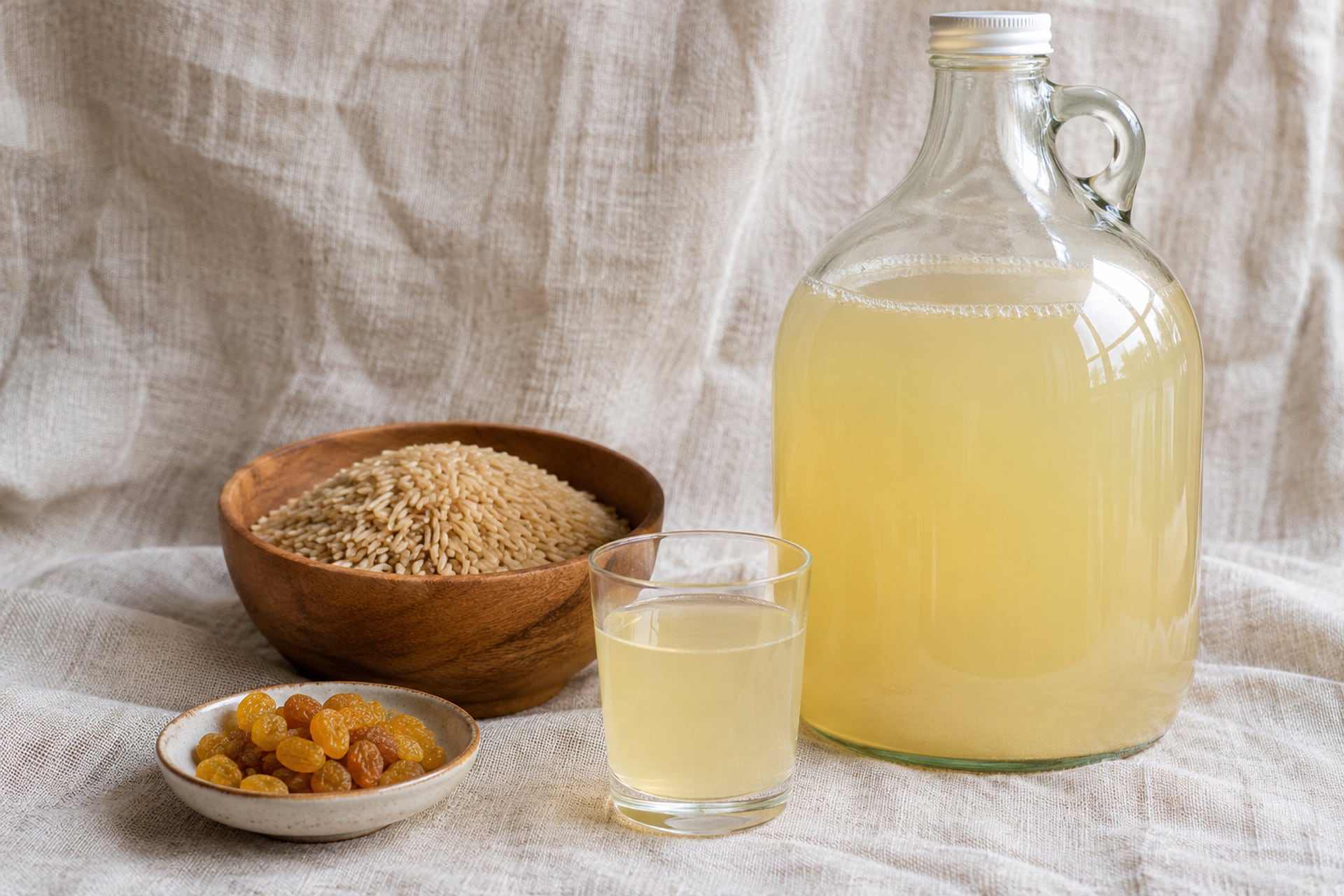
The short answer: this rice wine recipe makes 1 gallon from 2 pounds of long grain brown rice, 2 pounds of sugar and 1 pound of chopped golden raisins, soaked overnight and fermented with Champagne or Sherry wine yeast. The rice and raisins sit in a straining bag in the primary for two weeks, the wine is racked twice, three months apart, and it is bottled when clear. It keeps well and is served chilled.
The recipe is from Jack Keller’s Requested Recipes Collection (compiled 2020), adapted by Keller from Terry Garey’s The Joy of Home Winemaking. Keller opens it with a warning worth repeating: rice wine should not be confused with sake, although sake is certainly rice wine. The two are made very differently, and this is a Western country wine method, not a sake method. The section below on sake explains the difference. For the basics of any wine made at home, see our guide to making homemade wine, and for other unusual bases, the homemade wine recipe collection.
Rice Wine at a Glance
| Detail | 1 gallon batch |
|---|---|
| Yield | About 5 bottles (750 ml) |
| Rice | 2 lb long grain brown rice, soaked 12 hours |
| Raisins | 1 lb golden, chopped |
| Sugar | 2 lb granulated |
| Yeast | Champagne or Sherry wine yeast |
| In the primary | 2 weeks, stirred daily |
| Racking | At 3 months, again 3 months later |
| Serve | Chilled |
Expect a pale, light wine. Most of what you taste comes from the fermentation and the raisins, with the rice in the background.
Ingredients and Equipment
Brown rice or paddy rice
Keller explains the choice of grain. Most recipes for this kind of rice wine call for paddy rice, the grain still in its husk, but paddy rice is hard to find and brown rice is easy, so the card uses long grain brown rice. If you do have paddy rice, he says to use it instead. White rice is not on the card.
Why there are raisins and sugar
Wine yeast cannot ferment starch, only sugar. In sake, the koji mold converts rice starch to sugar, which is the step that makes sake sake. This recipe has no koji, so the alcohol comes from the 2 pounds of sugar and the raisins, while the soaked rice and its soaking water give the wine its flavor and body. The raisins also add the “vinous” character Keller uses them for across his collection.
The additives
Rice and sugar water have almost no acid and no tannin of their own, so the card adds 4 teaspoons of acid blend and ½ teaspoon of tannin to the gallon. Pectic enzyme and yeast nutrient go in too, and a crushed Campden tablet a day before the yeast. Our guide to wine making additives explains what each powder does.
Equipment
You need a glass bowl for the overnight soak, a nylon straining bag, a pot, a primary fermenter with a cover, a 1 gallon jug with an airlock, a siphon and bottles.
Recipe card
Rice wine, 1 US gallon
- Makes
- About 5 bottles (750 ml)
- Time to drink
- 12 hour soak, 2 weeks in the primary, 6 months of racking, then bottle when clear
- Difficulty
- Easy
Ingredients
- 2 lb long grain brown rice
- 2 lb granulated sugar
- 1 lb golden raisins, chopped
- 7½ pints water
- 4 tsp acid blend
- 1 tsp pectic enzyme
- 1 tsp yeast nutrient
- ½ tsp tannin
- 1 Campden tablet, crushed
- Champagne or Sherry wine yeast
Method
- Rinse the rice well and put it in a glass bowl with just enough water to cover it.
- Chop the raisins, add them to the rice and add enough water to cover them too (1 quart of the water in total). Soak overnight, or 12 hours.
- Pour the rice and raisins into a nylon straining bag, saving the soaking water.
- Put the sugar in the remaining water in a large pot, bring it to a boil and take it off the heat, stirring until the sugar dissolves.
- Put the straining bag in the primary and pour in the soaking water. Add the acid blend, yeast nutrient and tannin.
- Pour the sugar water over and stir. Cover with a clean cloth and set aside to cool.
- At room temperature, add the crushed Campden tablet and stir. Cover and leave 24 hours.
- Add the wine yeast and cover. Stir daily for two weeks.
- Remove the bag and let it drip drain into the primary. Do not squeeze it.
- Cover and let the wine settle overnight, then rack into a secondary and fit an airlock.
- Rack after 3 months, top up and refit the airlock. Repeat 3 months later.
- When the wine is clear, stabilize, wait 10 days and rack into bottles.
Quantities and method from the rice wine recipe in Jack Keller’s Requested Recipes Collection (compiled 2020), adapted by Keller from Terry Garey’s The Joy of Home Winemaking. The card lists pectic enzyme but does not say when to add it; we add it with the other additives in step 5.
Step by Step Notes
The overnight soak
The soak is where the rice gives up its flavor. Rinse the rice first so loose starch does not cloud the wine, then soak it with the chopped raisins in a single quart of water. That soaking water is the most flavorful liquid in the recipe, so save every drop when you lift the bag out.
Do not squeeze the bag
Keller is specific about the end of the two weeks: remove the bag and let it drip drain, “do not squeeze.” Swollen rice grains break into fine starch under pressure, and that starch is what gives a rice wine a haze that will not settle. Let it hang over the bucket until it stops dripping, then let the wine settle overnight before you rack it.
Long racking intervals
Unlike most fruit wines, this one is racked only twice, three months apart. Leave it alone in a cool dark place between rackings. Our guide on how to rack wine shows the siphon method, and if it still looks cloudy after six months, read how to clear wine.
How Strong Is Homemade Rice Wine?
Keller gives no gravity figure. From the sugar alone, using the arithmetic on our sugar calculator (one pound of sugar in a gallon adds about 46 gravity points), 2 pounds of sugar gives a starting gravity near 1.090 before the raisins add their share. Our potential alcohol formula, (starting gravity minus 1) × 131.25, turns 1.090 into about 11.8%.
Champagne yeast will take it dry
Keller suggests Champagne or Sherry yeast, both strong fermenters. The Lalvin EC-1118 listing gives an alcohol tolerance of up to 18%, well above what this must can reach, so expect the wine to finish dry unless you sweeten it after stabilizing. Take your own reading before the yeast goes in and use the wine ABV calculator with your final reading for a real figure.
Rice Wine vs Sake
Sake is a rice wine, but it is made by a method found almost nowhere else. The Japanese brewer Kikusui describes it this way: koji enzymes convert the starch in the rice into glucose, the yeast converts that glucose into alcohol, and both happen at the same time in the same mash tank. That is called multiple parallel fermentation, and Kikusui calls it relatively unique to Japanese sake. Wine grapes are already full of sugar and need no such step.
How sake is traditionally made
In Kikusui’s outline, the rice is polished, washed, soaked and steamed for 40 to 60 minutes. Part of the steamed rice is used to grow koji under careful control of heat and humidity. Steamed rice, water, yeast and koji are then combined in a small tank as a starter mash, a technique Kikusui says dates to the Edo period, before more koji, rice and water are added for the main fermentation.
What this means at home
Making real sake at home means sourcing koji and controlling temperature for weeks, which is a project of its own and not what this card is. Keller’s rice wine is the shortcut: sugar does the work that koji does in sake, the rice brings flavor, and a wine yeast finishes it. If that sounds like the kind of country wine you enjoy, the raisin wine recipe uses the same chop, soak and strain logic with dried fruit alone.
Bottling and Serving
When the wine is clear, Keller says to stabilize it, wait 10 days and rack it into bottles. He adds two notes that set expectations: this wine will keep well, and it should be served chilled. If you prefer it off-dry, stabilize first and then add sugar a little at a time; our backsweetening guide has the method. Our guide to bottling and corking wine covers the last step. Make and drink wine responsibly, and only if you are of legal drinking age.
What you need for rice wine
Items to have ready besides the brown rice. You also need a straining bag, a primary fermenter, a Campden tablet and a 1 gallon jug with an airlock.
-
1Golden raisins
Sunview Jumbo Golden Seedless Raisins, 3 x 15 oz
The pound of golden raisins on the card; the listing says no sugar added.
-
2Acid blend
North Mountain Supply Acid Blend, 4 oz
A malic, citric and tartaric blend; the recipe needs 4 teaspoons in the gallon.
-
3Wine tannin
North Mountain Supply Wine Tannin, 2 oz
Powdered tannin for the ½ teaspoon that gives a rice wine some structure.
-
4Pectic enzyme
Home Brew Ohio Pectic Enzyme, 1 lb
The teaspoon on the card, for the pectin the raisins bring.
-
5Champagne yeast
Lalvin EC-1118 Wine Yeast, 10 pack
A Champagne strain, one of the two Keller names. The listing says one 5 g sachet covers 4.5 to 23 liters.


