Pruno (Prison Wine): What It Is and Why It Is Dangerous
As an Amazon Associate we earn from qualifying purchases. How we choose products.
On this page
Pruno is improvised alcohol, also called prison wine, toilet wine or hooch, made by fermenting fruit and sugar in a sealed bag with no proper equipment. It is not a recipe worth copying. The US Centers for Disease Control and Prevention (CDC) has documented several botulism outbreaks among people who drank it, including one that was the largest of its kind in the country in nearly four decades.
This page explains what pruno is, why it can poison people, what the CDC says to do if you suspect botulism, and how to get the same hobby the safe way: a clean one-gallon batch of real wine, which is legal for adults in the United States.
What Is Pruno?
Pruno is a name for alcohol that people make out of sight, most often in prisons, using food they can get hold of. The CDC calls it prison-made illicit alcohol. The ingredients in the CDC outbreak reports include fruit, sugar, water and a potato, and one patient in the Mississippi report described honey, potatoes, apples and tomato paste. In that account the mix was hidden in a sealed bag and left at room temperature for 3 to 5 days.
Other Names: Toilet Wine, Prison Wine, Hooch
The same drink goes by several names. People search for prison wine and toilet wine, and the Mississippi report notes that inmates there called it both hooch and pruno. The names describe the setting and the look, not a recognized style of wine.
Why It Is Not Real Wine
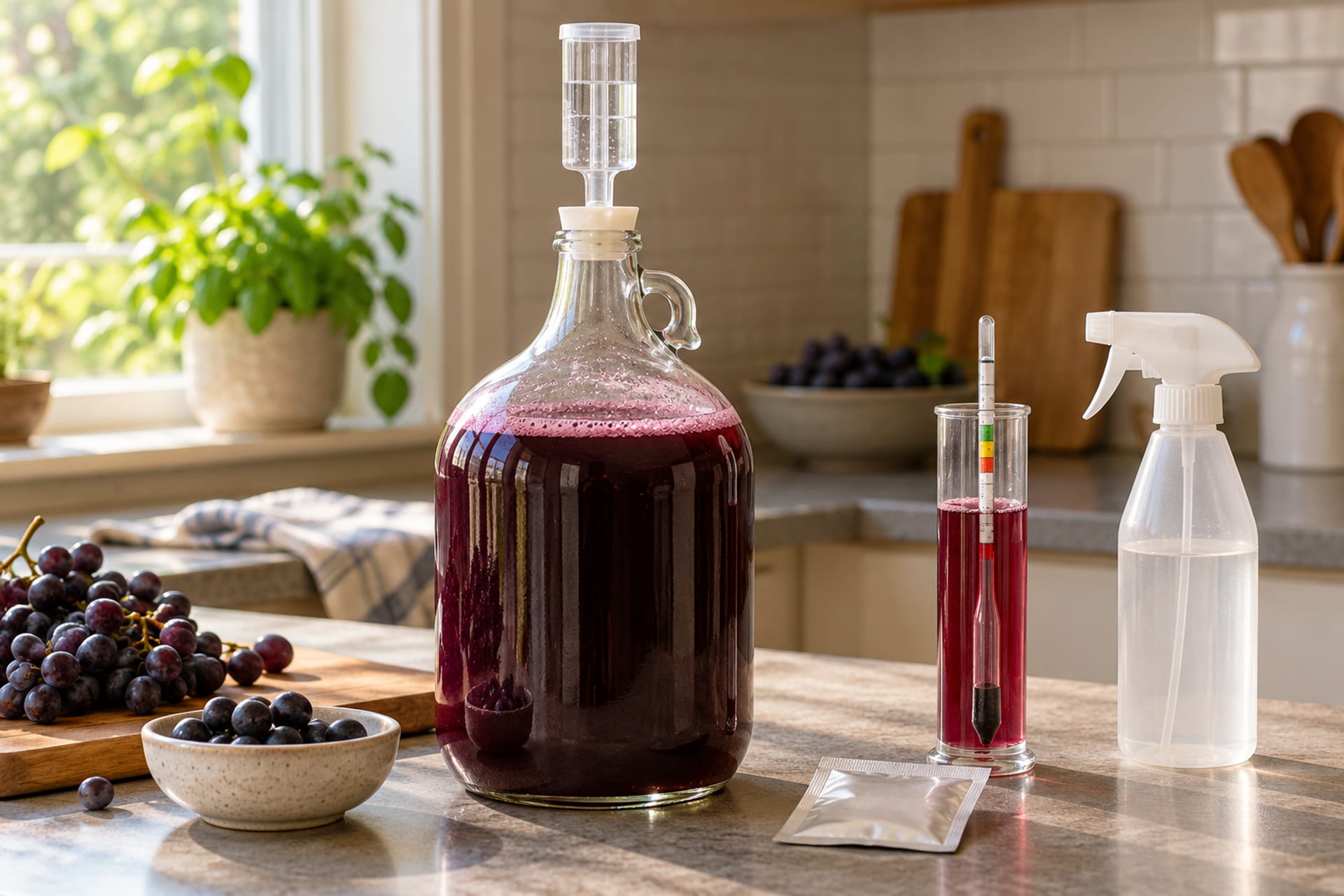
Real home winemaking depends on three controls that pruno does not have. Equipment is sanitized before it touches the juice. A wine yeast, chosen for the job, does the fermenting. And an airlock lets carbon dioxide out while keeping air in check. Pruno has none of these, which is why we do not give a pruno recipe or tips for hiding a batch. What matters is understanding the risk.
How Strong Is It?
There is no reliable number. Without a hydrometer nobody knows the starting sugar, and without a known yeast nobody knows how far fermentation went. Any alcohol percentage quoted for pruno is a guess, so we do not print one.
Why Pruno Causes Botulism
Botulism is a rare but serious illness caused by a toxin made by the bacterium Clostridium botulinum. The bacteria form tough spores that survive in soil and food, and they make toxin when conditions are right: little oxygen, warmth and time. A sealed bag of warm, sugary, starchy mash left for days can offer exactly those conditions. The CDC reports below show how often that has happened.
Utah, 2011
In the CDC report Botulism From Drinking Prison-Made Illicit Alcohol, Utah 2011, eight inmates were diagnosed with botulism. The report describes pruno as mainly fruit, sugar and water; the batch that made people ill also contained a baked potato that had been kept at room temperature for weeks in a sealed bag or jar before it went in. Specimens from five of the eight confirmed patients were positive for C. botulinum type A or its toxin. Three patients needed mechanical ventilation and nobody died. Investigators concluded that the potato was the likely source of the spores, and that the toxin was probably made once it was in the low-acid pruno, fermenting without air.
Arizona, 2012
The CDC's Notes from the Field on Arizona, 2012 describes eight male inmates at a maximum security prison who met the case definition. Serum from all eight tested positive for botulism toxin, and so did the batch of pruno, which was type A. Both Arizona outbreaks that year were linked to pruno made with potatoes, and the report notes that outbreaks in California and Utah since 2004 were also associated with potato-based pruno. After the outbreak the prison banned potatoes from its kitchen.
Mississippi, 2016
The CDC's report on a federal correctional facility in Mississippi, June 2016 counts 31 cases, 24 of them hospitalized and none fatal, and calls it the largest botulism outbreak in the United States since 1978. The authors say the exact ingredients of the responsible batch are unknown. Possible sources of the toxin included tomato paste, potatoes, other ingredients or environmental contamination, and they note that potatoes have been hypothesized as the source in other pruno outbreaks.
The pattern across the three reports is not one ingredient. It is an unsanitized, sealed, warm mix of food that was never meant to be fermented, drunk without any testing.
Symptoms and What to Do
This section only repeats what the CDC says on its botulism signs and symptoms page. We are winemakers, not doctors.
Symptoms
The CDC lists these common symptoms: trouble swallowing, weak muscles, double vision, drooping eyelids, blurry vision, slurred speech, trouble breathing and difficulty moving the eyes. Foodborne botulism may also cause vomiting, nausea, stomach pain and diarrhea.
What to Do
The CDC states that botulism is a medical emergency. If you or someone with you has these signs after drinking an improvised or unknown homemade drink, get to an emergency room right away. In the United States, call 911 in an emergency. The CDC's advice is plain: do not wait.
The Safe Way to Make Jailhouse-Style Wine at Home
The appeal of pruno is simple: fruit, sugar and time, with very little money. That appeal is real, and there is a safe way to get it. Ferment a gallon of ordinary grape juice with a proper wine yeast, in a jug you sanitized, under an airlock. It costs little, needs no special skill and teaches the habits every winemaker uses.
The Safe Version in Short
- One gallon of juice with no preservatives, in a one-gallon glass jug.
- A wine yeast, not bread yeast, because Clemson Cooperative Extension warns that bread, beer and cider yeasts cannot tolerate the alcohol in wine and die before fermentation is complete.
- An airlock and bung, so carbon dioxide leaves and air and fruit flies stay out.
- A hydrometer, so you know how much sugar you start with and when fermentation has finished.
- A sanitizer on everything that touches the juice. See how to use Star San for the no-rinse method.
The full recipe is in our guide to making wine from grape juice, and the overview for new winemakers is how to make wine at home. If a batch smells or looks wrong, our wine faults guide helps you identify it, and the Campden tablet guide explains how sulfite protects a batch.
Is It Legal?
In the United States, yes, for adults. The federal rule 27 CFR 24.75 lets an adult make up to 100 gallons a year for personal use, or 200 gallons if two or more adults live in the household, without paying tax. You cannot sell it, and state or local rules can be stricter, so check yours first.
A one-gallon starter kit
If you want to skip assembling the gear yourself, a starter kit built for one-gallon batches covers the basics.
-
1One-gallon starter kit
Master Vintner 1 Gal Wine Making Starter Kit
A starter set sized for one-gallon batches, so your first fermentation is a small, low-cost one. Compare other options in our wine making kits guide.

Pruno vs Real Homemade Wine
| Pruno | One-gallon homemade wine | |
|---|---|---|
| Hygiene | No sanitizing; unknown containers | All equipment sanitized before use |
| Yeast | Whatever is available or already in the mix | A wine yeast chosen for the job |
| Airlock | None; sealed bag | Airlock lets gas out and keeps air and flies away |
| Measuring | None | Hydrometer readings for sugar and finish |
| Ingredients | Leftover food, sometimes including starchy items such as potato | Plain juice, or fruit prepared for winemaking |
| Risk | Linked to botulism outbreaks in CDC reports | Failed batches taste bad; they are not a known botulism route in the reports above |
| Legal status | Illicit where it is made, per the CDC reports | Legal for adults for personal use under 27 CFR 24.75 |
Once you have made the juice batch, our wine making kit comparison and our free wine making log are the next steps.
Pruno: FAQ
There is no safe way to improvise it. CDC reports from Utah, Arizona and Mississippi link pruno outbreaks to botulism, and potatoes were the suspected source in several. If you want to ferment at home, use sanitized equipment, a wine yeast, an airlock and a hydrometer, as in a one-gallon batch of juice wine.
Inside prisons, yes. The CDC reports call it prison-made illicit alcohol, and the Arizona prison banned potatoes from its kitchen after an outbreak. Outside prison, making wine at home is legal for adults in the United States under 27 CFR 24.75, though state and local rules can be stricter.
There is no reliable figure. Pruno is made without a hydrometer, a known yeast or a controlled process, so nobody can state its strength with confidence. For wine you make yourself, a hydrometer reading before and after fermentation tells you the real alcohol level.
In the United States, yes, for adults making it for personal use. Federal rule 27 CFR 24.75 allows up to 100 gallons a year in a one-adult household, or 200 gallons where two or more adults live, without paying tax. You cannot sell it, and state or local rules can be stricter, so check yours.